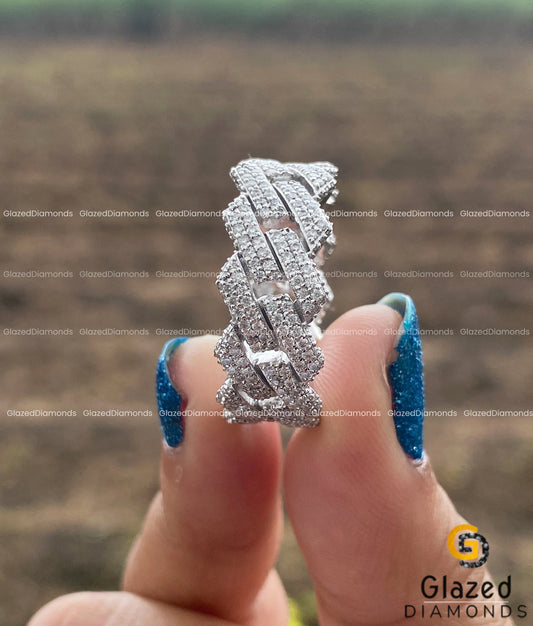

Best Miami Cuban Chains for Daily Wear in USA
Miami Cuban Chains are a classic jewelry choice. They stand out because of the linked design. The finish looks clean ...
Read More →
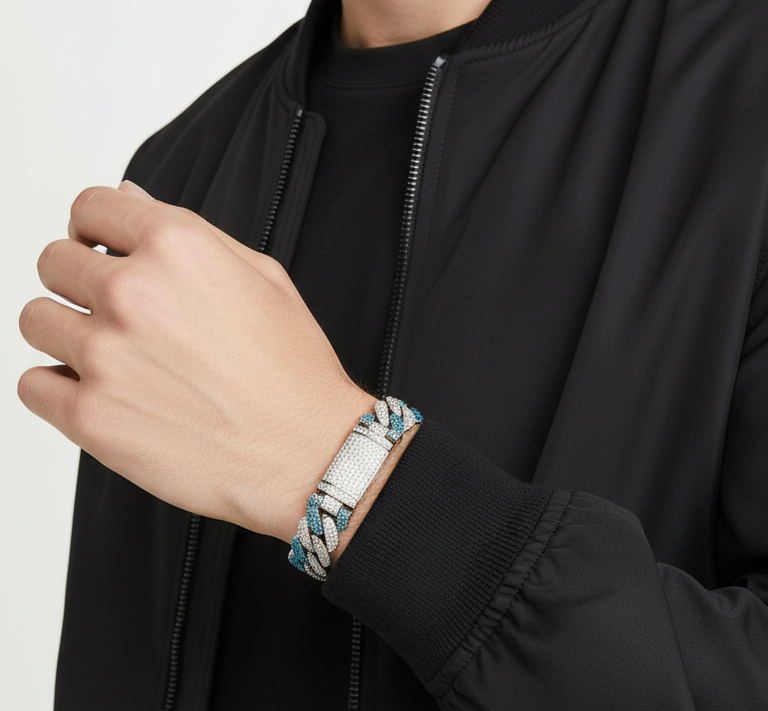
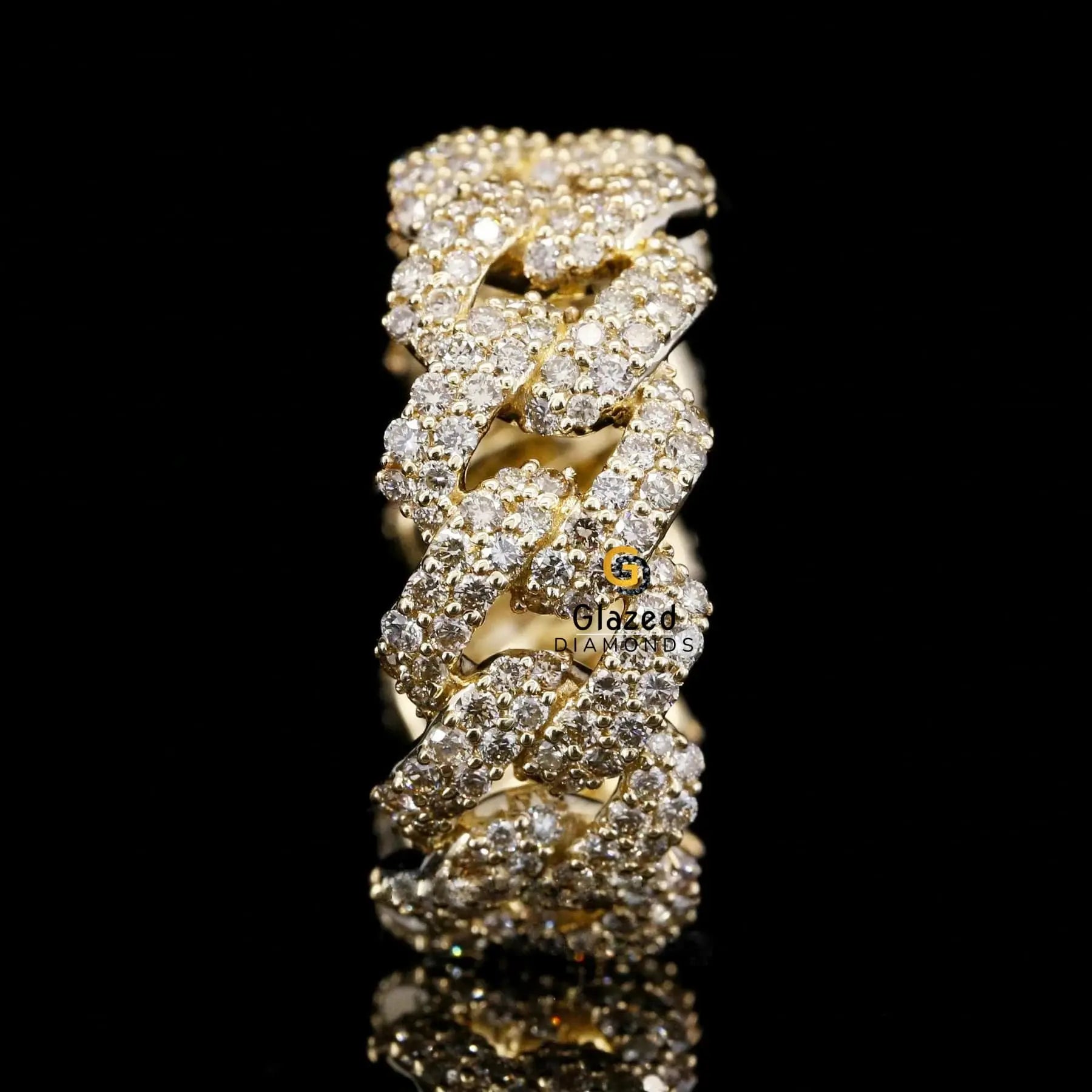
Cuban Link Moissanite Diamond Studded Ring 925 Silver
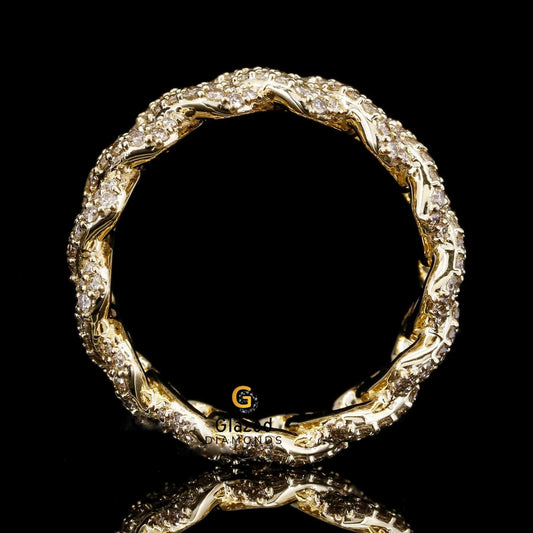
Men's Iced Out Moissanite Miami Cuban Link Rapper Ring
4MM Unique Moissanite Cuban Link Hip Hop Band Ring
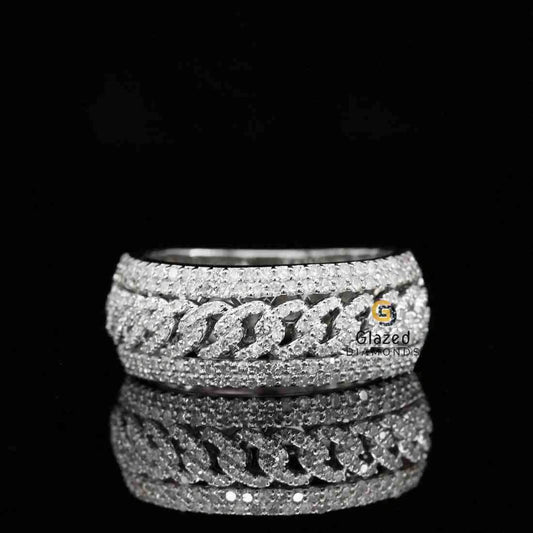
10MM Iced Out Round Moissanite Cuban Link Ring
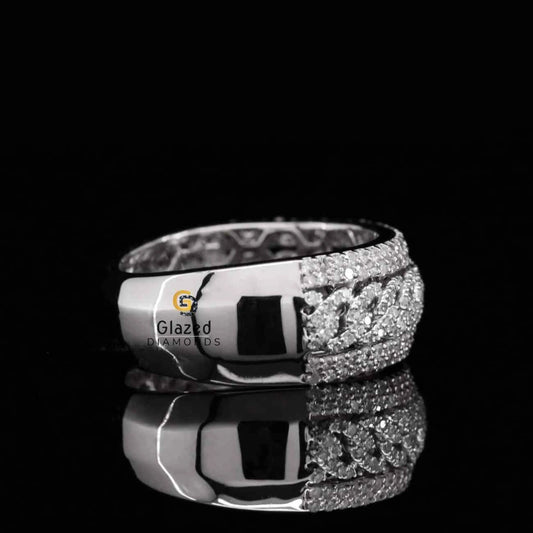
Iced Out Round Moissanite Spinning Cuban Link Ring
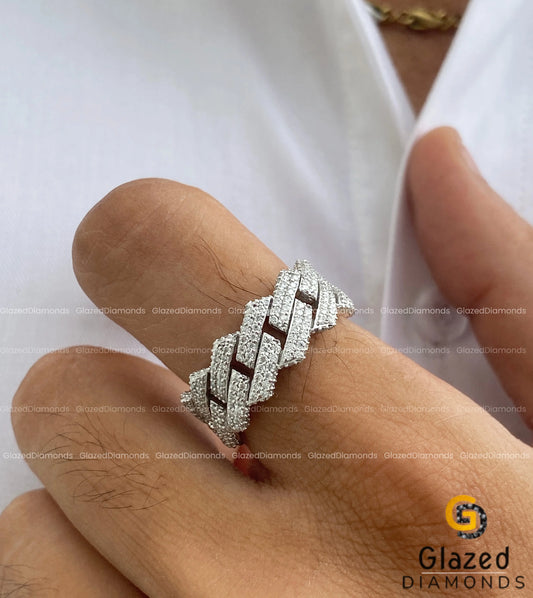
10MM Bold Monaco Cuban Link Chain Hip Hop Ring
Ask a Jeweler to name the one link pattern everyone recognizes on sight, and most will say the same thing: the Cuban link. It's the thick, interlocking chain you've seen on wrists and necks for decades, and in the last several years it's made a steady move onto rings.
The same flattened, tightly woven link gets wrapped into a band, so the texture and shine of a chain sit permanently on your finger instead of moving with a chain's drape. It's a small design shift with a big visual payoff, and the style has become one of the more requested in modern fine and fashion jewelry alike.
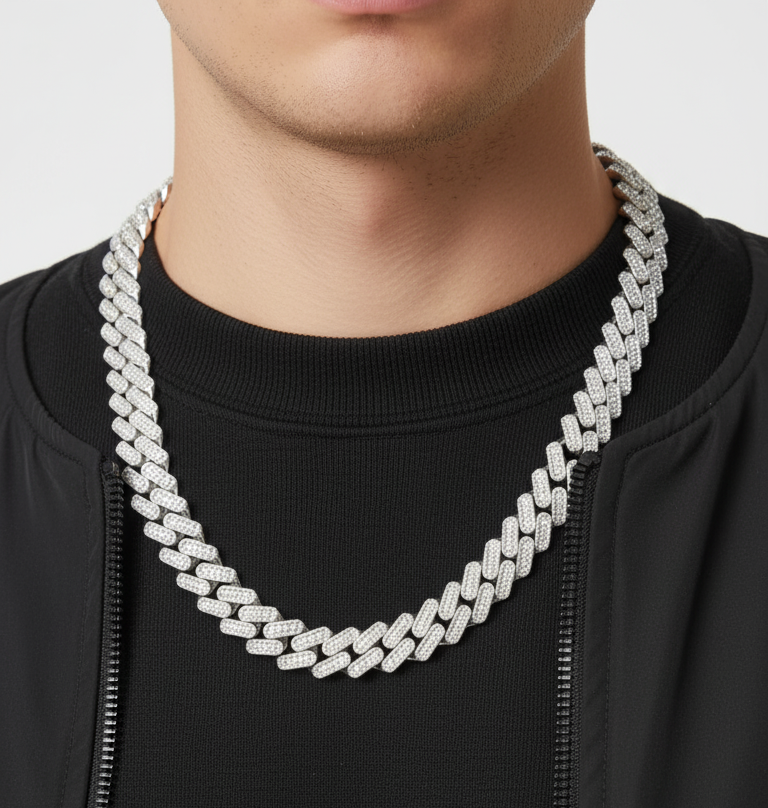
The pattern traces its popularity to Miami's Cuban-American jewelry scene in the mid-20th century, where craftsmen refined a chunky, interlocking design that laid flat against the skin rather than twisting like a Rope chain. The defining feature is the link itself: each oval is flattened and interlocked at an angle, so a chain reads as a continuous, almost armor-like surface rather than a series of separate loops. That density is what gives these pieces their reputation for durability there's more metal, and more interlocking structure, than in a simple curb or rope chain.
By the 1970s and 80s, this style of chain had become a signature piece in hip hop Jewelry culture and was closely tied to ideas of status and craftsmanship. Rings followed a similar path, though later designers realized that the same weave that worked around a neck could be compressed into a circular band without losing its identity.
A ring has far less surface area to work with than a chain, so not every link pattern translates well to a band. Delicate or airy patterns can look flimsy shrunk down to ring size.
This one avoids that problem because its links are already dense and low-profile. Wrapped into a circle, the weave keeps its structure and its shine, and the finished piece reads as substantial without being bulky in the way a solid slab of metal would be.
There's also a practical upside: the built-in texture hides everyday wear small scratches and scuffs better than a smooth polished band. That makes it a popular pick for people who wear a piece daily and don't want to think about it.
These bands show up across almost every price point, which is part of why they've spread so widely. At the accessible end, you'll find stainless steel or gold-plated brass versions, often finished with a layer of rhodium or gold vermeil to resist tarnish.
These are a reasonable way to try the look before committing to a finer piece, though plating will wear over months of daily use, especially with water and friction exposure.
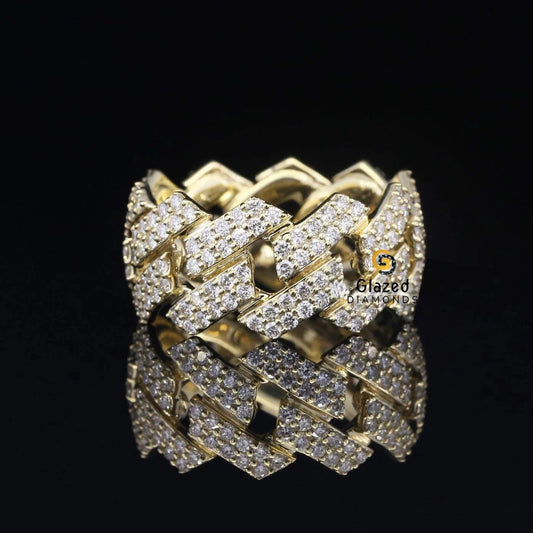
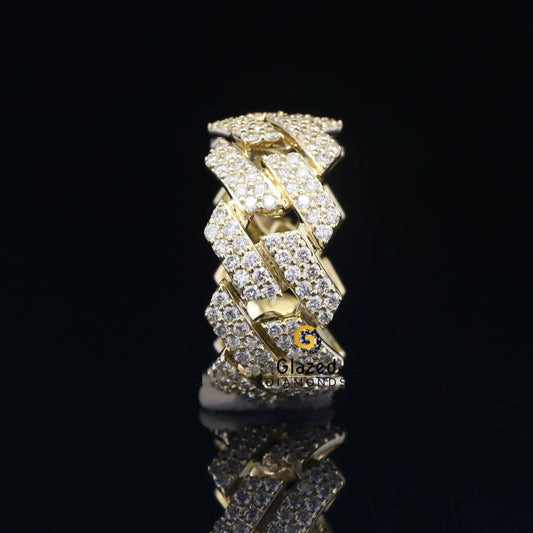
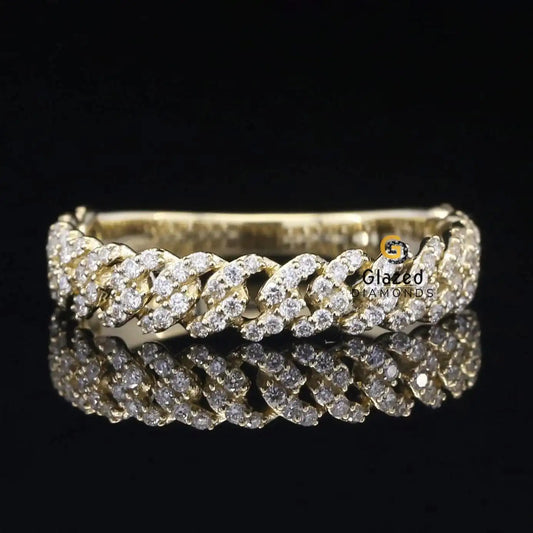
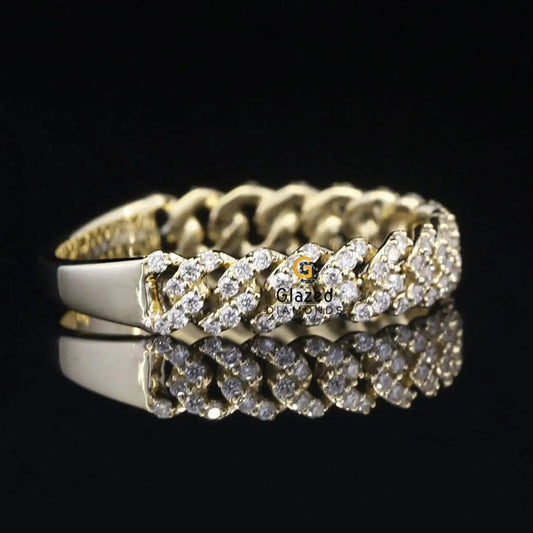
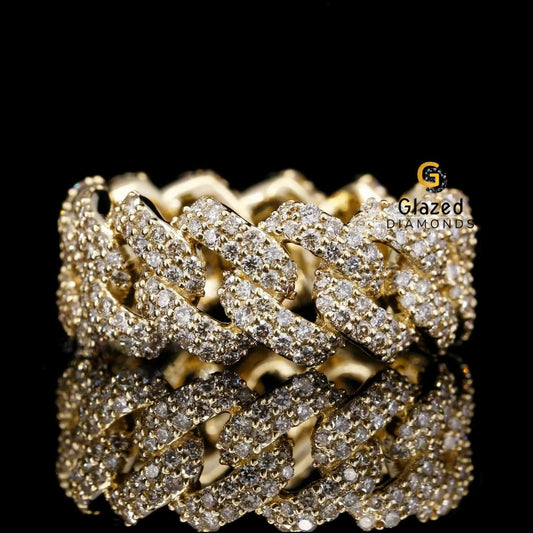
Sterling silver versions sit in the middle: solid rather than plated, with genuine weight and a cooler tone. At the top end are solid gold options usually 10k, 14k, or 18k sometimes finished with pavé diamonds set into the flat faces of the links for a piece that catches light without changing its silhouette.
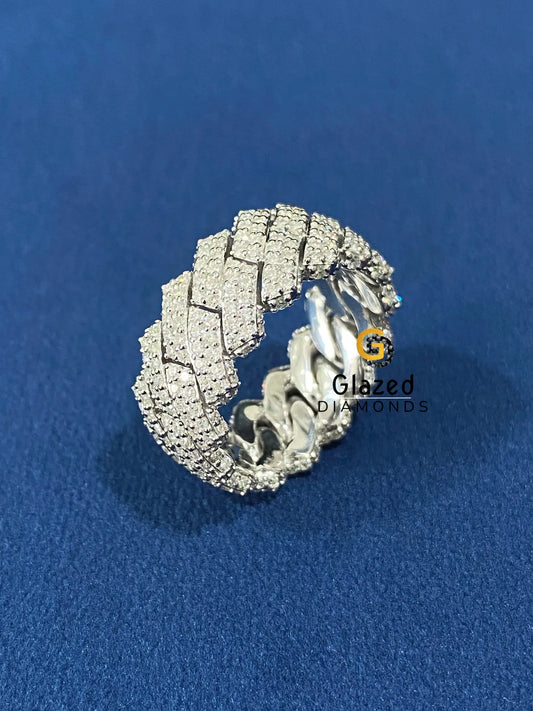
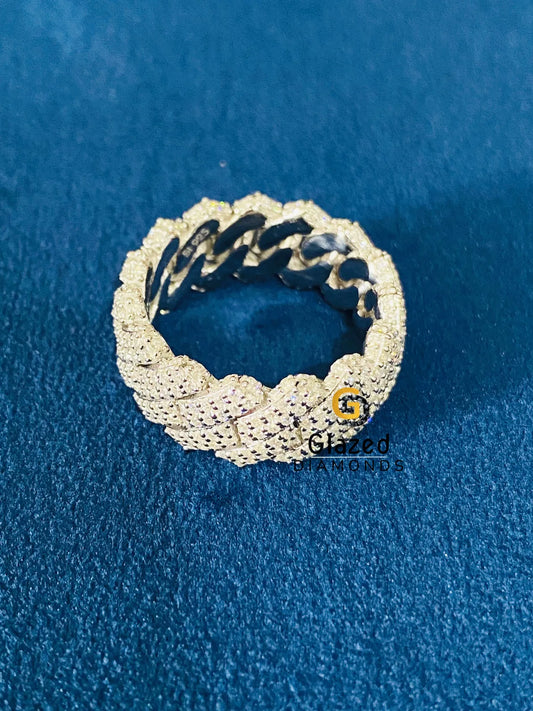
Diamond-set versions have become particularly popular as a step up from a plain band, since the stones sit inside the existing pattern rather than requiring a different design.
Because these bands run wider and heavier than a standard ring, sizing deserves a bit more care than usual. A finger that fits comfortably in a thin band can feel snug in a wide version, since more metal touches more skin.
Jewelers generally recommend sizing up half a size from your usual measurement when trying a wide style for the first time, and trying it on later in the day, when fingers are slightly more swollen from normal daily activity.
Width matters too. Narrower versions, in the 4–6mm range, tend to work well stacked with other rings or worn on smaller fingers, while options at 8mm and up read as a standalone statement piece and usually look best worn alone or paired with a simple plain band.
A few checks help separate a well-made piece from a mass-produced one. Run a finger over the surface: the links should feel evenly spaced with no visible gaps or loose movement between them. Check the inside of the band for a stamp indicating metal purity (925 for sterling, 10k/14k/18k for gold), since a missing stamp is often a sign of lower-quality plating. Weight is another signal a solid piece has real heft for its size, while a hollow or thinly plated one will feel noticeably light.
Finally, ask about the clasp or join if it's adjustable, and about plating thickness if it isn't solid metal. Thicker plating (measured in microns) simply lasts longer before it needs to be redone.
Because the design has more surface texture than a plain band, dirt and soap residue can settle into the grooves between links. A soft brush, warm water, and a small amount of mild soap, followed by a thorough rinse and dry, keeps the pattern clean without damaging plating.
Solid gold and silver pieces can be cleaned this way indefinitely; plated versions should be dried carefully and kept away from chlorine, which accelerates the breakdown of the plating layer.
Store these bands separately from other jewelry when possible the raised pattern can catch on softer chains or scratch other pieces if left loose in a jewelry box.
What you're really Buying is the chain's logic density, interlock, low profile applied to a smaller, circular form. That's what makes it durable, recognizable, and easy to wear daily without much fuss. Whether you go with a plated starter piece or a solid gold version with diamonds set into the links, the appeal stays the same: a pattern with real history, sized down to fit a single finger.

Recommended Products