


Okay so I see this question come up ALL the time and most articles explaining it read like a chemistry textbook written by someone who's never actually bought jewelry. So let me just break it down properly.
Gold has three things you need to understand: color, karat (purity), and how it's built. That's it. Once you get those three, you'll never get played at a jewelry counter again.
First — What Even Are the Types of Gold?
Real talk, when people say "types of gold" they usually mean one of three things:
-
What color it is (yellow, white, rose, etc.)
-
How pure it is (the karat number)
-
How it's made into a piece (solid gold vs plated vs filled)
Most people only know yellow vs white. That's like knowing vanilla and chocolate exist but not knowing there's a whole menu. Let me fix that.
Gold Colors — There's More Than Yellow and White
Yellow Gold — The Classic, No Explanation Needed
Yellow gold is the OG. Pure gold is naturally yellow, so when you see yellow gold jewelry, you're basically seeing gold mixed with silver and copper to make it harder. Higher karat = deeper, richer yellow tone. Lower karat = a bit lighter.
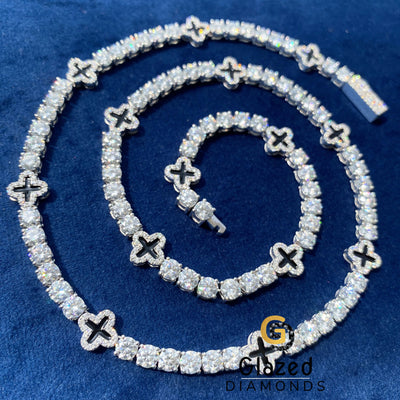
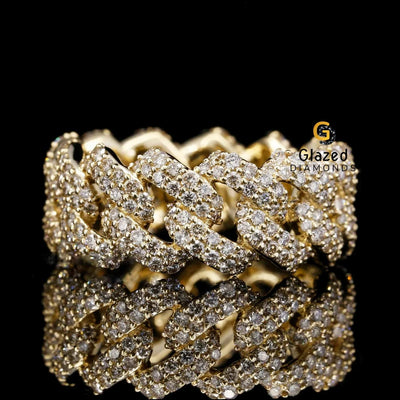
In hip-hop culture, yellow gold Cuban link chains and pendants have been the default forever and honestly the look never gets old. If you're pairing moissanite stones with yellow gold, you get a warmer, vintage-feeling sparkle which a lot of people genuinely prefer over the icy-white look.
White Gold — Not Actually Silver, FYI
Okay this trips people up. White gold is NOT silver and it's NOT platinum. It's regular gold mixed with nickel, palladium, or silver — which makes it look pale — and then it gets coated with rhodium on top to give it that bright silver-white finish you see in most rings.
Here's the catch nobody tells you: that rhodium coating wears off. Over a few years of daily wear, especially on rings, you'll start seeing a slightly yellowish tint coming through. That's the actual gold underneath. You just get it replated, it's not a big deal, but good to know upfront. The white gold guide has the full breakdown if you want to go deep on this.
White gold + colorless moissanite is honestly one of the best combinations going. The cool metal tone makes the stone look even brighter.
Rose Gold — The Trendy One That's Actually Earned Its Reputation
Rose gold gets its pinkish color from copper. More copper in the mix = redder tone. Standard 18K rose gold is 75% gold, 25% copper. Simple.
What's actually great about rose gold vs white gold is it doesn't need replating. The copper alloy is naturally durable and holds its color. It's not just a trend — it's genuinely practical. Works really well for rings, bracelets, and pendants.
Green Gold and Black Gold — The Rare Ones
Green gold (historically called electrum) is a natural alloy of gold and silver. Gives a subtle greenish-yellow tone. You won't see it at most stores — it's mostly for artisan or custom pieces.
Black gold is not natural at all. Jewelers create the black surface through oxidation, dark rhodium plating, or PVD coating. The gold underneath is still whatever karat grade it's stamped as. It's a bold look — statement jewelry vibes.
Karat Levels — This Is Where People Get Confused
Karat measures purity out of 24 parts. 24K = 24 out of 24 parts gold = 99.9% pure. Got it? Here's the full table:
|
Karat |
Gold Purity |
What It's Used For |
|
24K |
99.9% |
Investment bars, coins — NOT daily jewelry |
|
22K |
91.6% |
High-end ceremonial jewelry |
|
18K |
75% |
Fine jewelry, engagement rings |
|
14K |
58.3% |
Everyday chains, rings, bracelets |
|
10K |
41.7% |
Budget-friendly jewelry |
24K Gold — Beautiful, Completely Impractical
Pure gold. Gorgeous color. So soft you could literally scratch it with a fingernail. Don't buy 24K jewelry for daily wear. It's for investment and ceremonial purposes.
22K Gold — Popular in South Asian Jewelry, Less Common in the USA
You'll see 22K a lot in South Asian and Middle Eastern jewelry traditions. Still too soft for stone-set rings or everyday USA-style chains. If you're buying through that context, fine. Otherwise, skip it.
18K Gold — The Fine Jewelry Standard
This is where things get good. 18K is 75% pure gold, strong enough to hold prong settings and gemstones, and it still has a really rich color. It's hallmarked as "750" internationally — that number literally means 750 parts per thousand of gold. You can read more about what that stamp means in the 750 jewelry marking guide.
Moissanite engagement rings and bridal sets in 18K are genuinely excellent quality for the price.
14K Gold — The Sweet Spot for the USA Market
Honestly, 14K is what most people should buy for everyday jewelry and that's not a compromise — it's practical. It's harder than 18K so it takes daily wear better. Still looks clearly gold. The price per gram is lower. Win-win-win.
Most chains, men's rings, and everyday bracelets in the USA run 14K for exactly this reason.
10K Gold — The Budget Pick That Still Counts as Real Gold
10K is the legal minimum in the USA to be called gold. At 41.7% pure, it's the hardest and most durable of the common grades. Good for budget chains and rings that need to survive heavy daily use. Nothing wrong with it.
Solid Gold vs Gold-Filled vs Plated — This Is the One That Actually Protects Your Wallet
This is probably the most important section and people skip it constantly.
|
Type |
Gold Layer |
Base Metal |
How Long It Lasts |
|
Solid Gold |
The whole piece |
None |
Your whole life |
|
Gold-Filled |
At least 1/20 of total weight |
Brass or copper |
10 to 30+ years |
|
Gold Vermeil |
Minimum 2.5 microns |
Sterling silver |
2 to 5 years |
|
Gold Plated |
About 0.5 microns |
Any base metal |
1 to 2 years |
Solid Gold means the entire piece is a gold alloy, core to surface. The karat stamp tells you the purity. This stuff doesn't fade, peel, or tarnish. Can be resized, repaired, handed down. Worth the price.
Gold-Filled is a thick layer of gold heat-bonded to a brass or copper core. By US law that layer must be at least 1/20 of the piece's total weight. Much more durable than plated. Tarnish-resistant under normal wear. Legitimately good for daily use.
Gold Vermeil (fancy word, simple concept) is sterling silver with a thick gold plating on top — at least 2.5 microns. Better quality than standard plated but it still wears down over time, especially on ring shanks and bracelet links that take friction.
Gold Plated is a very thin gold layer, typically around 0.5 microns, over whatever base metal they felt like using. Cheapest option. Fades fastest. Nothing wrong with buying it if you know what you're buying — just don't pay solid gold prices for plated jewelry.
Gold Finishes — Quick One
The finish only changes how the surface looks and feels. It does NOT change the karat or purity. Here's the main ones:
-
Polished — The shiny mirror finish you see on most jewelry. Shows fingerprints more. Classic look.
-
Matte / Satin — Flat, non-reflective surface. Clean and modern. Hides wear better than polished.
-
Brushed — Fine parallel lines give a soft texture. Very popular for men's bands and watches.
-
Hammered — Small dents and dimples across the surface. Artisan, handcrafted look. Genuinely cool on statement rings.
-
Florentine — A crosshatch pattern engraved into the surface. Vintage-inspired. Less common.
So Which Gold Type Should You Actually Buy?
For chains and pendants: 14K yellow gold. Handles daily wear, holds color, right weight for rope chains and Cuban link chains with moissanite. 18K if you want to step it up.
For rings: 14K or 18K, white or yellow, depending on your stone. Moissanite rings in 14K white gold are one of the most popular combinations in the USA right now for a reason.
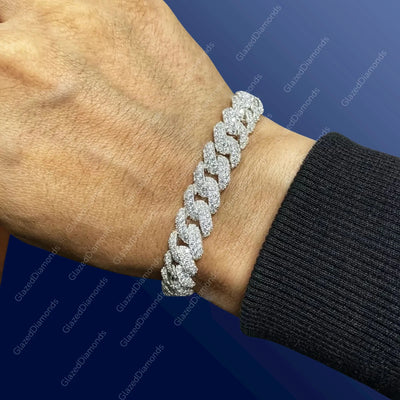
For bracelets: 14K gives you the right balance of weight and durability. If you're looking at tennis bracelets set with moissanite, 14K white or yellow gold is the standard.
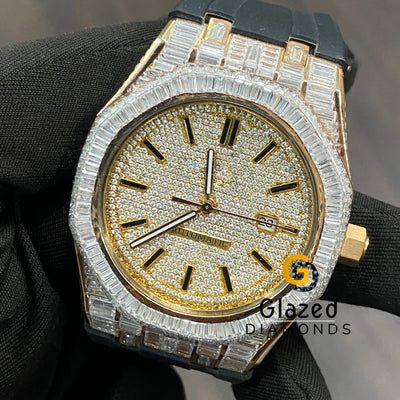
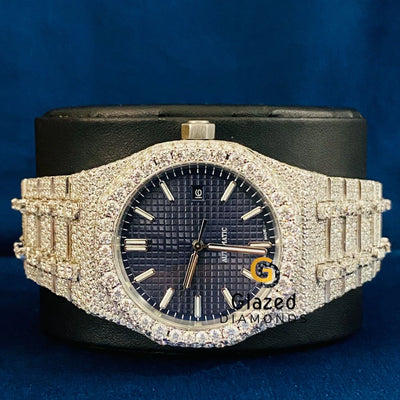
For watches: Most iced-out watch cases use gold PVD coating or gold-tone plating over stainless steel — that's different from karat gold jewelry. Solid gold watch cases exist but are rare and extremely expensive.
Skin tone tip: Yellow gold tends to complement deeper and medium skin tones. White and rose gold suit lighter and cooler complexions. But honestly — wear what looks good to you, not what a formula says.
Please review the returns policy before purchasing any gold jewelry.
Quick Summary
Gold types break into three buckets: color (yellow, white, rose, plus specialty), karat purity (10K through 24K), and construction (solid, filled, vermeil, plated). For most people in the USA, 14K or 18K in yellow or white gold covers 90% of what you'd actually want to buy. Learn the difference between solid and plated before you spend anything. That one piece of knowledge alone is worth more than the rest of this post combined.
Full range of moissanite jewelry set across gold types available at Glazed Diamonds.
FAQs — Quick Answers
Q: What are the different types of gold colors?
Yellow, white, rose, green, and black. Yellow, white, and rose are the ones you'll actually find at most USA jewelry stores. Green and black are specialty finishes.
Q: How many karat types of gold are there?
Main ones are 10K, 14K, 18K, 22K, and 24K. In the USA, 14K is the most commonly bought for everyday jewelry. The 10K vs 14K gold comparison explains the real-world differences well.
Q: What is the purity at each karat level?
24K = 99.9% pure. 18K = 75% pure. 14K = 58.3% pure. 10K = 41.7% pure. Lower karat = harder, more durable, more affordable.
Q: What are the different types of gold finishes?
Polished, matte, brushed, hammered, and Florentine. Finish is purely aesthetic — it does not affect gold purity or karat grade.
Q: Does white gold actually need to be replated?
Yes. The bright silver-white color comes from rhodium plating, not the gold itself. It wears down, especially on rings. Typically needs reapplication every two to four years. The rhodium plating durability guide covers how long it lasts in different conditions.
Q: What is the difference between gold-filled and gold-plated?
Gold-filled has a thick bonded gold layer — at least 1/20 of the piece's total weight by US law. Gold-plated has a super thin electroplated coating around 0.5 microns. Gold-filled lasts significantly longer. Don't pay filled prices for plated.
Q: Which gold types work best for moissanite jewelry?
14K and 18K white gold are the most popular pairings for moissanite because the cool metal tone makes the stone's colorless brilliance pop harder. Yellow and rose gold in the same karat grades give a warmer, more vintage feel. For hip-hop styles, chains and pendants in yellow gold are classic.