


Many shoppers hear the phrase synthetic moissanite and feel unsure. So, what is synthetic moissanite? Is it fake or just lab made? Synthetic moissanite is a gemstone created in a lab from silicon carbide. However, real moissanite is mined from the ground.
This guide explains what synthetic moissanite is and how it grows in a lab. You will also learn simple ways to judge its quality in daily wear. Down the line, you're spending money, and it’s your right to know even the deepest details.
Recent US data shows lab-grown stones now appear in over half of new engagement rings, up sharply from about 12%.
What’s the Right Way to Say Moissanite?
Moissanite is pronounced: MOY-suh-nite
-
Three syllables, with stress on the first
-
Phonetic spelling: /ˈmɔɪ.sə.naɪt/
Syllable breakdown:
-
MOY — rhymes with "boy"
-
suh — a soft, unstressed sound
-
nite — rhymes with "night"
Put together: MOY-suh-nite
If you want a detailed guide, check our right way to say moissanite guide.
Understanding Synthetic Moissanite
Synthetic moissanite is a gemstone grown inside a lab instead of mined out of the ground. Put simply, when you see the term "synthetic", think of something that has been created in a laboratory. The term does not refer to a bogus or inferior product.
Chemists use only 100% pure materials and maintain an extremely precise temperature during the heating/melting of these base materials to produce a synthetic crystal. When the crystal of synthetic moissanite is cut in the correct manner, it has the ability to produce an extraordinary amount of sparkle. This sparkle is greater than most diamonds, yet costs significantly less.
Natural Origins Versus Lab Growth
Natural moissanite appears in very small grains inside certain rocks. Those grains are too small for a watch dial or engagement ring. That is why labs grow nearly every moissanite stone you see in stores.
The lab version copies what nature does in a tighter time frame. Instead of waiting long ages under rock pressure, the material forms under man made conditions in a few weeks or months.
Is Synthetic Moissanite a Fake Diamond
Many people first notice moissanite because it looks like a diamond. The two stones share clarity and shine. That does not make synthetic moissanite a fake diamond. It is a separate gemstone with its own identity.
Price trackers in the US estimate lab-grown diamonds cost around 80% less than natural diamonds on average, which pushes many buyers to explore synthetic options like moissanite.
The crystal comes out of silicon carbide, not pure carbon. It bends light in a stronger way than diamond, which creates bold fire under bright light. Good brands are open about this difference.
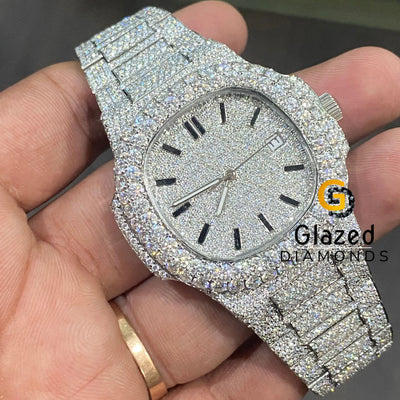
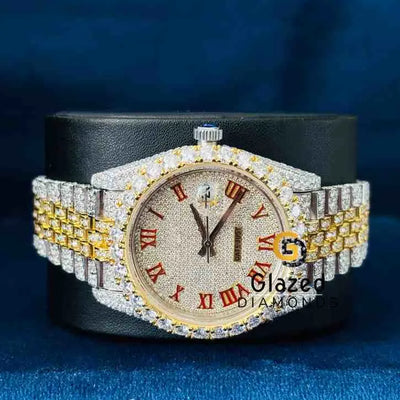
They mark their pieces clearly as moissanite. Glazed Diamonds highlights stone type and size along with setting details on each moissanite watch product page so buyers know exactly what they are getting.
How Synthetic Moissanite is Made

The exact recipes stay protected by each maker, yet the broad steps follow a similar pattern. The lab team starts with a tiny seed crystal. Around that seed, layers of silicon and carbon build up under controlled heat and pressure until a larger crystal forms.
After growth, the team cools the crystal, checks it for internal marks, then sends it for cutting. Modern methods keep improving, so newer stones often show fewer tints and cleaner clarity than older generations.
Lab Growth Process in Simple Words
Growth begins with a seed set inside a high tech chamber. Gases that carry silicon and carbon move around this seed. Heat and pressure push those atoms to attach to the seed layer by layer.
If the team controls the chamber well, growth stays even on every side. This creates a solid, stable crystal that can handle daily wear in a watch or ring. Mistakes during growth can cause cloudy areas or cracks that lower the stone grade.
Cutting, Grading and Certification
After growth, each crystal travels to a cutting workshop. Skilled cutters study the shape, then mark the best way to slice and polish each part. Their goal is simple. They want a strong sparkle with minimum waste.
Next comes grading. Independent labs look at colour and clarity along with cut and size. They issue reports that confirm what the stone offers.
One 2025 consumer survey found about 80% of shoppers had heard of lab-grown diamonds, yet nearly half did not feel confident telling them apart from mined stones.
Some moissanite pieces also ship with branded certificates. When you shop, you can ask for these papers or at least clear online details before you pay.
Quality, Colour and Durability

For most buyers, two questions sit in the mind. How bright will synthetic moissanite look, and how long will that shine last? The answers depend on both the stone itself and the setting around it.
On the stone side, moissanite scores high on hardness. It sits just below diamond on common hardness scales. That means it resists scratches much better than softer gems like cubic zirconia. A high quality moissanite piece can serve well in a daily wear watch.
Sparkle, Fire and Clarity in Daily Life
Moissanite has strong brilliance. Light that enters the stone splits and bounces in a lively way. Many buyers notice small rainbow flashes under direct light. This is normal for moissanite and adds to its character.
Clarity also matters. High clarity stones have fewer internal marks. This helps light move smoothly through the crystal. Brands such as Glazed Diamonds choose higher clarity grades for making moissanite watches so each dial looks crisp in both daylight and soft evening light.
Care Tips For Long Lasting Shine
Synthetic moissanite does not fade, yet it can collect surface film. Hand cream and soap, plus sweat and dust, can all leave a thin layer on the stone or metal parts. That layer blocks light and makes the piece look older.
A simple care routine helps. Use warm water with a drop of mild liquid soap in a small bowl. Soak the watch or ring for a short time, then brush gently with a soft toothbrush. Rinse with clean water and pat dry with a lint free cloth. Store the piece in a soft pouch so it does not rub hard against other items.
Frequently Asked Questions About Synthetic Moissanite
Is synthetic moissanite real moissanite or just glass?
Synthetic moissanite is a real gemstone with the same base material as rare natural moissanite. It is far harder than glass and keeps its shine much longer under normal wear.
Does synthetic moissanite lose sparkle over time?
The crystal itself keeps its brilliance. Any dull look usually comes out of dirt, oil film or tiny scratches on surrounding metal. A gentle clean often restores the bright, sharp look.
How is synthetic moissanite different to lab grown diamond?
Lab grown diamonds use pure carbon. Synthetic moissanite uses silicon carbide. Moissanite bends light more strongly and shows stronger fire. It usually costs less per carat in similar sizes.
Is synthetic moissanite a good choice for watches and daily rings?
Yes. Its hardness and stable structure make it a strong pick for regular wear, especially in sturdy settings that protect edges and corners during daily tasks and light knocks.
Why choose a brand like Glazed Diamonds for synthetic moissanite?
A focused brand tests each stone carefully and discloses grades. It also uses solid metals. With Glazed Diamonds, you get clear specs, neat finishing and designs that show off moissanite at its best.