

Moissanite is pronounced: MOY-suh-nite.
Three syllables. Stress on the first.
Phonetic spelling: /ˈmɔɪ.sə.naɪt/
Syllable-by-syllable breakdown:
-
MOY — rhymes with "boy"
-
suh — a soft, unstressed middle syllable
-
nite — rhymes with "night"
Put it together: MOY-suh-nite.
Common Mispronunciations to Avoid
Many first-time buyers stumble on the word. The most frequent mistakes:
-
"moy-SAN-ite" — wrong stress placement
-
"moys-ih-NITE" — incorrect syllable break
-
"moi-ZAN-ite" — wrong consonant sound on the second syllable
The stress always falls on the first syllable: MOY. Once that anchors the word, the rest follows naturally.
Is the Pronunciation the Same Everywhere in the USA?
Jewelers, gemologists, and buyers across the USA use MOY-suh-nite consistently. Regional accents may slightly color the vowel sounds, but the syllable structure and stress pattern remain the same from New York to Los Angeles.
Where Does the Name Moissanite Come From?
The name moissanite comes directly from Henri Moissan, a French chemist who first identified the mineral in 1893. Moissan was analyzing rock samples from a meteorite impact crater in Canyon Diablo, Arizona, when he discovered microscopic crystals of silicon carbide — a compound that had never been observed in nature before.
He initially believed the crystals were diamonds. Further analysis revealed they were something entirely different: a naturally occurring silicon carbide mineral with exceptional hardness and light performance.
The mineral was named moissanite in his honor. Henri Moissan was later awarded the Nobel Prize in Chemistry in 1906 for his contributions to science, including the first isolation of elemental fluorine.
From a Meteorite to a Mainstream Gemstone
Natural moissanite is extraordinarily rare. It forms primarily in meteorite impact sites and in specific types of rock formations under extreme pressure and heat conditions. Because natural supply is so limited, moissanite used in jewelry today is produced in laboratories using advanced thermal growth processes.
Lab-created moissanite carries the identical chemical composition — silicon carbide (SiC) — and the same physical properties as the naturally occurring mineral. The only difference is origin. The stone itself is chemically and structurally the same. You can learn more about its background in the history of moissanite.
What Is Moissanite?
Moissanite is a gemstone made of silicon carbide (SiC). It ranks 9.25 on the Mohs hardness scale, making it one of the hardest gemstones available — second only to diamond, which sits at 10.
Key properties at a glance:
-
Hardness: 9.25 Mohs (diamond = 10)
-
Chemical composition: Silicon carbide (SiC)
-
Refractive index: 2.65–2.69
-
Fire dispersion: 0.104
-
Origin: Lab-created from silicon carbide
The refractive index measures how much a stone bends light. Moissanite's refractive index is higher than diamond's, which gives it its signature brilliance — a sharp, high-intensity sparkle that performs especially well under direct light.
For a full breakdown of how moissanite compares to other stones, the moissanite vs diamond properties guide covers the technical differences in detail.
Why Moissanite Pronunciation Matters When Shopping
When shopping in-store or online, using the correct pronunciation signals buyer confidence. Jewelers take buyers more seriously when they speak the language of the product. Saying MOY-suh-nite clearly — rather than stumbling through it — gets you better service and sharper conversations about quality, cut, and setting.
Beyond pronunciation, understanding where the name comes from also helps buyers appreciate what makes moissanite distinct. It is not a synthetic imitation. It is a mineral with a documented scientific history, named after a Nobel Prize-winning chemist who found it in a meteorite.
That context matters when you are selecting a moissanite ring for an engagement, or choosing a moissanite pendant as a centerpiece piece.
Moissanite in USA Jewelry Culture
Since lab-created production became commercially available in the late 1990s, moissanite has grown from a niche gemstone into a mainstream choice across USA jewelry markets. Its combination of diamond-grade hardness, high brilliance, and accessible price point drove adoption across multiple categories.
Moissanite is now widely used in:
-
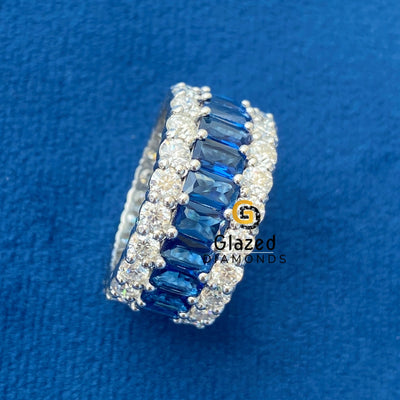
Engagement rings and wedding bands
-
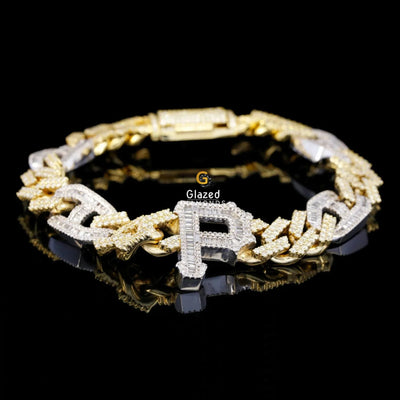
Cuban link chains — full pavé and partial stone coverage
-
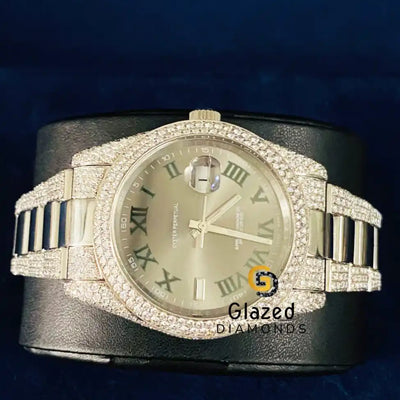
Iced out timepieces — the moissanite watches for men category has seen significant growth
-
Pendants, grillz, and custom hip-hop jewelry pieces
In hip-hop and luxury streetwear culture specifically, moissanite has become a dominant stone for visibility-first pieces — jewelry designed to catch light at every angle. The stone's fire dispersion (0.104) makes it one of the highest-performing options for iced out builds.
Glazed Diamonds offers a full range of moissanite jewelry across every major category — from classic settings to fully custom iced out designs. Please review the returns policy before purchase.
Conclusion
Moissanite is pronounced MOY-suh-nite — three syllables, stress on the first. The name honors Henri Moissan, the French chemist who discovered silicon carbide in a meteorite crater in Arizona in 1893. As a gemstone, moissanite is lab-created silicon carbide with a hardness of 9.25 Mohs and a refractive index higher than diamond — properties that make it one of the most high-performing stones in modern jewelry. Whether you are researching moissanite watches for men, rings, or chains, you now have the full background on the stone behind the name.
FAQs
How do you pronounce moissanite?
Moissanite is pronounced MOY-suh-nite. Three syllables, with stress on the first.
Is moissanite a French word?
The name derives from French chemist Henri Moissan, but in American English it is fully anglicized and pronounced MOY-suh-nite.
What does moissanite mean?
Moissanite is a proper noun — the name of a mineral given in honor of Henri Moissan, who discovered it in 1893.
How many syllables does moissanite have?
Three syllables: MOY-suh-nite.
Is the pronunciation different in jewelry stores?
No. MOY-suh-nite is the standard pronunciation used consistently across the USA jewelry industry.
What is moissanite made of?
Moissanite is made of silicon carbide (SiC). Modern moissanite used in jewelry is lab-created.
Is moissanite a real gemstone?
Yes. Moissanite is a naturally occurring mineral (silicon carbide) first discovered in a meteorite crater. The version used in jewelry is lab-created but chemically identical to the natural stone.
Who is moissanite named after?
Moissanite is named after Henri Moissan, a French chemist and Nobel Prize laureate who first identified silicon carbide crystals in 1893.