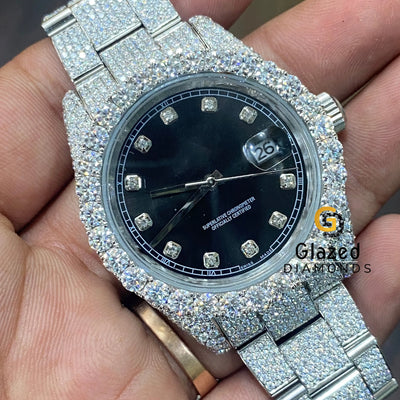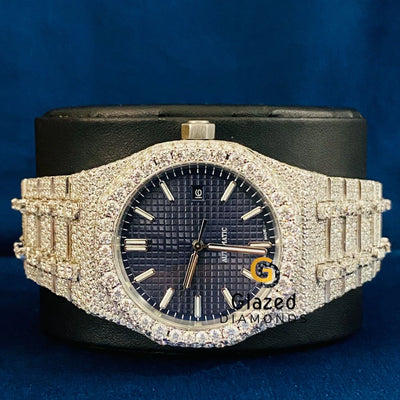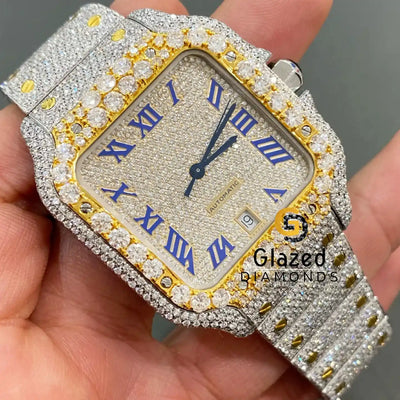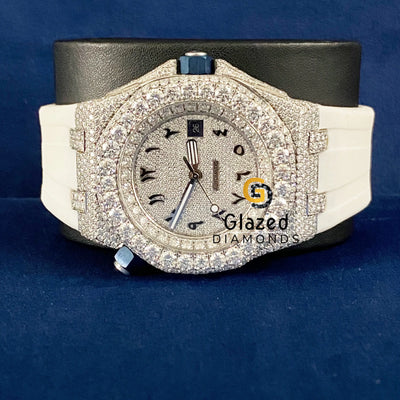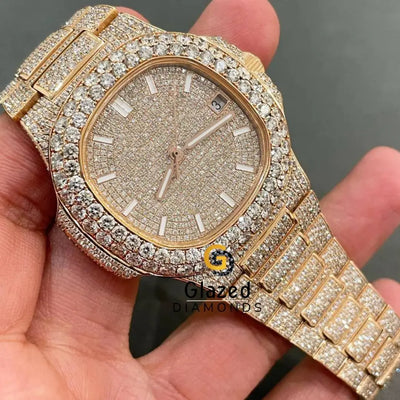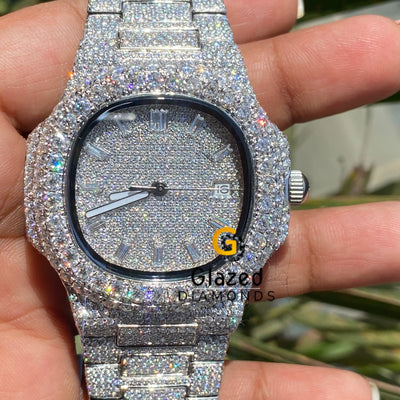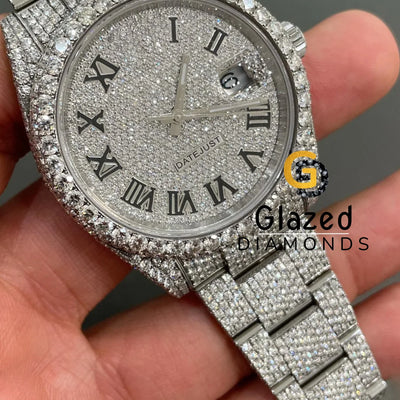

Moissanite is a brilliant gemstone that resembles a diamond but costs way less. If you've been wondering what moissanite really is, you're in the right place. More guys between 18-45 who love hip hop, gold, and diamonds are checking out moissanite because it gives you that iced-out look without draining your wallet.
This guide breaks down everything about moissanite - where it comes from, what makes it shine so hard, and why it's taking over the jewelry and watch game. If you're thinking about copping some fresh moissanite pieces, keep reading.

What is Moissanite?
Moissanite is silicon carbide, a mineral discovered by French scientist Henri Moissan in 1893 inside a meteorite crater in Canyon Diablo, Arizona. At first, he thought he found diamonds. But in 1904, he realized these crystals were silicon carbide, not diamonds.
Since natural moissanite is extremely rare, today moissanite is exclusively grown in laboratories. That doesn't mean it's fake. It means scientists create real moissanite in controlled conditions, which makes it consistent in quality and way more available than trying to mine the natural stuff.
What is Moissanite Made From?
When you ask what moissanite is made of, the answer is silicon carbide (SiC). Silicon carbide forms through strong covalent bonding, similar to diamonds, which gives moissanite its hardness and ability to handle high temperatures.
In nature, carbon atoms are surrounded by silicon in a tetrahedral form, but this arrangement is super rare. That's why lab-created moissanite uses the same chemical structure but in a controlled environment.
While diamonds are pure carbon, moissanite combines silicon and carbon. This combination is what makes moissanite shine differently - often more colorful and fiery than diamonds.
What is Lab Created Moissanite?
Lab created moissanite is moissanite made by scientists in laboratories using advanced technology. Chemical Vapor Deposition (CVD) is the most commonly used method to grow moissanite.
Here's how it works:
The Manufacturing Process:
-
High-purity silicon is combined with carbon and heated in an inert atmosphere
-
Silicon carbide powder is heated until it becomes gas under controlled conditions
-
The right balance of elements allows moissanite to grow over several months
-
It takes 2-3 months to produce a single gem
-
Once crystals form, they're cut and polished into gemstones
Lab-created moissanite and natural moissanite are chemically and physically identical. The only difference is where they come from. Lab creation means steady supply, ethical sourcing, and consistent quality.
Why Lab Created is Better:
-
Zero Mining: No environmental damage or unethical labor
-
Consistent Quality: Every stone meets high standards
-
Affordable: Mass production keeps prices low
-
Traceable: You know exactly where your stone comes from
What is a Moissanite Stone?
A moissanite stone is a clear gemstone used in rings, chains, earrings, bracelets, and watches. Many people ask if it's a real gemstone - and yes, it absolutely is. It's just grown in a lab instead of mined from the ground.
Moissanite has a hardness of 9.25-9.50 on the Mohs Hardness Scale, making it harder than all other gemstones except diamonds (which are a 10). This means moissanite can handle daily wear without scratching or breaking.
This is exactly why you see moissanite in everything from engagement rings to iced-out watches. It's tough enough for everyday flexing.
Where You'll Find Moissanite:
-
Engagement rings and wedding bands
-
Luxury watches (bezel, dial, hour markers)
-
Earrings and bracelets
-
Pendants and grillz
Moissanite stones come in different shapes - round, oval, pear, cushion, princess cut, and more. They're set in gold, silver, or platinum, and they look clean in any metal.

What is a Moissanite Gem?
When people talk about "moissanite gem," they mean the same thing as a moissanite stone. The word "gem" just refers to any precious stone used in jewelry - and moissanite definitely qualifies.
Moissanite's dispersion is 0.104, which exceeds that of many gemstones, including rubies, sapphires, and emeralds. This creates intense flashes of rainbow light when light hits the stone.
What Makes Moissanite Special:
The refractive index of moissanite is 2.69, meaning it displays slightly more brilliance than diamond (with a refractive index of 2.42). That's why moissanite often looks more sparkly than diamonds, especially in sunlight.
Moissanite gems are graded similar to diamonds using color and clarity:
-
Colorless (D-F range): No visible color, looks like a premium diamond
-
Near-Colorless (G-I range): Slight warmth that most people can't detect
-
Faint Color (J-K range): Visible yellow or gray tint in certain lights
Moissanite vs Diamond: Key Differences
A lot of guys ask about moissanite vs diamond, so let's break down the real differences.
Composition and Origin
Diamonds are composed of carbon and moissanites are composed of silicon carbide. Moissanite was discovered in 1893 inside a meteorite, but natural moissanite remains very rare. Today's moissanite is lab-created, while diamonds can be mined or lab-grown.
Hardness and Durability
Diamond is physically harder than moissanite, which is a 9.25 on the Mohs hardness scale compared to a diamond's rating of 10. But honestly, both are tough enough for daily wear. You won't notice the difference unless you're specifically trying to scratch them.
Brilliance and Fire
This is where it gets interesting. Moissanite has a higher refractive index, meaning it produces more rainbow 'fire' than a diamond when light hits the stone's surface.
Moissanite displays both brilliance and fire but typically exhibits more fire than diamond, producing more colored light flashes. Some people love this rainbow effect - it makes the stone pop in any light. Others prefer the more subtle sparkle of diamonds.
Price Difference
This is the big one. A 1 carat diamond ring may cost $6,000, while a 1 carat moissanite ring averages just $1,000. That's 85-95% savings for a stone that looks nearly identical to most people.
For a 2-carat stone, you're looking at $15,000-$40,000 for a diamond versus under $1,200 for moissanite. That's a massive difference.
How to Tell Them Apart
The distinct sparkle of a diamond combines reflected light and color refraction, while moissanite features more than two times the fire, showing more intense flashes of rainbow light.
To the untrained eye, they look almost identical. But trained jewelers can spot moissanite using special testers that measure electrical conductivity, since moissanite conducts electricity while diamonds don't.
Price Comparison Table:
|
Stone Size |
Moissanite Price |
Diamond Price |
Savings |
|
0.5 carat |
$300-500 |
$1,500-3,000 |
80-90% |
|
1 carat |
$600-1,000 |
$3,000-8,000 |
85-90% |
|
2 carats |
$800-1,200 |
$15,000-40,000 |
95%+ |
Why Choose Moissanite?
 There are 5 solid reasons why moissanite is blowing up right now:
1. Maximum Sparkle and Shine
Moissanite's refractive index is 2.65 compared to diamond's 2.42, meaning moissanite bends light more and gives maximum sparkle. Plus, moissanite has higher dispersion than diamond, reflecting more colored sparkle (fire).
2. Built to Last
With a hardness of 9.25-9.50, moissanite is harder than all other gemstones except diamonds. It's scratch-resistant and can handle daily wear without losing shine.
3. Way More Affordable
Moissanite costs $300 to $1,500 per carat based on quality and size, offering 85-95% savings over comparable diamonds. You can get a bigger, more impressive stone for the same money.
4. Eco-Friendly and Ethical
Moissanite is lab-created, significantly reducing the environmental impact associated with traditional mining practices that diamonds require. No mining means no environmental damage and no unethical labor practices.
5. Never Loses Its Shine
Because moissanite contains some silicon, it is less likely to attract grease or dirt than a diamond, meaning it sparkles more between cleanings. Your jewelry stays clean longer.
Moissanite in Watches: The Ultimate Flex
Moissanite isn't just for rings anymore. The watch game has been revolutionized by moissanite, and it's becoming the go-to choice for guys who want that luxury look without the crazy price tag.
Why Moissanite Watches Are Taking Over
Moissanite watches use real moissanite stones graded D-color and VVS clarity, which guarantees exceptional sparkle and brilliance. These aren't cheap imitations - they're premium stones that pass diamond testers.
High-end watchmakers are adding moissanite to bezels, hour markers, and fully iced-out designs. Moissanite has a greater refractive index than diamond and displays a special fire and brightness that might seem even stronger.
Types of Moissanite Watches
Fully Iced-Out Watches: Every surface covered in VVS moissanite stones. Maximum shine, maximum attention.
Bezel-Set Watches: Moissanite around the watch face for a clean, luxury look without going overboard.
Skeleton Watches: See the mechanical movement inside while moissanite adds sparkle to the design.
Two-Tone Watches: Mixed metals (rose gold with silver or yellow gold) featuring moissanite accents for contrast.
Quality Standards
These timepieces combine technical craftsmanship with elegant design, powered by high-quality mechanical movements carefully assembled by experienced watchmakers. You're getting real luxury craftsmanship, not some cheap knockoff.
Most moissanite watches come with:
-
VVS clarity stones (very, very slightly included - nearly flawless)
-
D-F color grade (completely colorless)
-
Automatic or mechanical movements
-
Water resistance
-
Scratch-resistant sapphire crystal
Price Comparison
A fully iced-out diamond watch from a luxury brand can run $50,000-$200,000+. A comparable moissanite watch costs $2,000-$10,000. You're getting the same look for a fraction of the price.
How to Identify Moissanite
 If you're trying to spot moissanite, here are 3 key indicators:
1. Double Refraction
Moissanite is birefringent, meaning light sent through the material splits into separate beams, which can be easily seen. If you look closely through the side of a moissanite, you might see a doubling effect. Diamonds don't do this.
2. Rainbow Fire
Moissanite features more than two times the amount of fire than diamonds, showing more intense flashes of rainbow light. This "disco ball effect" is more prominent in larger stones.
3. Jeweler's Test
Professional jewelers use electrical conductivity testers to identify moissanite. Moissanite exhibits higher electrical conductivity values than diamond, which is the most reliable way to tell them apart.
At first glance, moissanite looks like diamonds, but it has its own character that makes it unique.
Moissanite Pricing Guide 2025-2026
Let's talk real numbers. Moissanite costs range from $300 to $1,500 per carat based on quality and size.
Factors Affecting Price
Carat Weight: Larger stones cost more. A 0.5-1 carat stone runs $300-600, while a 2-3 carat stone costs $800-1,500.
Color Grade: Colorless stones (D-F) cost more than near-colorless (G-I) or faintly colored (J-K) stones. The price difference is usually 15-25%.
Clarity: VVS clarity (very, very slightly included) costs more than VS (very slightly included) or SI (slightly included). But here's the thing - moissanite doesn't have inclusions visible to the naked eye, so you don't need to stress about this like you would with diamonds.
Cut Quality: Premium cuts like Hearts and Arrows fetch higher prices due to superior brilliance and fire.
Complete Ring Cost Estimates (2026)
-
Entry-Level: $500-$1,200 (0.5-1 carat, simple setting)
-
Mid-Range: $1,200-$2,500 (1-1.5 carat, enhanced setting)
-
Luxury: $2,500-$5,000+ (2+ carats, custom design)
Final Thoughts
Moissanite is way more than just a diamond substitute. It's a unique gemstone with its own strengths. Lab-grown moissanite uses the most advanced technology and has remarkable sparkle, durability, and value.
Moissanite is just as atomically stable as a diamond, meaning it will not change color or lose its optical properties over time. Your jewelry will keep shining for life.
If you're looking for a stone that's ethically sourced, affordable, and beautiful, moissanite is worth considering. Whether you're copping an iced-out watch, a fresh chain, or an engagement ring, moissanite gives you that premium look without the premium price.
Moissanite isn't trying to be a diamond - it's its own stone with its own fire. That's exactly why so many people are choosing moissanite jewelry and watches in 2025-2026.
Frequently Asked Questions
Is moissanite a fake diamond?
No. Moissanite is a real gemstone with its own chemical composition (silicon carbide). It's not trying to be a diamond - it's its own stone that happens to look similar.
Does moissanite lose its sparkle over time?
Moissanite is just as atomically stable as a diamond and will not change color or lose its optical properties over time. It keeps its brilliance forever with basic cleaning.
Can you tell moissanite from diamond?
To the untrained eye, they look almost identical. But jewelers can tell the difference using electrical conductivity testers and by examining the stone's fire and double refraction.
Is moissanite worth buying?
If you want maximum shine for your money, yes. You get 85-95% savings compared to diamonds while getting a stone that's nearly as hard and often more brilliant.
Why is moissanite so cheap?
It's lab-created, which means no expensive mining operations. The manufacturing process is controlled and efficient, keeping costs low while maintaining quality.
Does moissanite pass a diamond tester?
Moissanite passes standard diamond testers that measure thermal conductivity. But testers that measure electrical conductivity will identify it as moissanite.