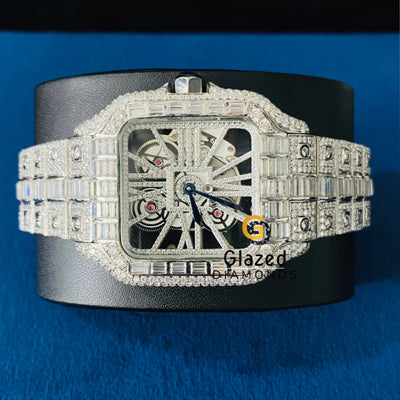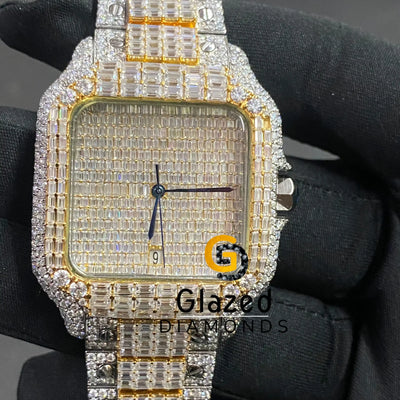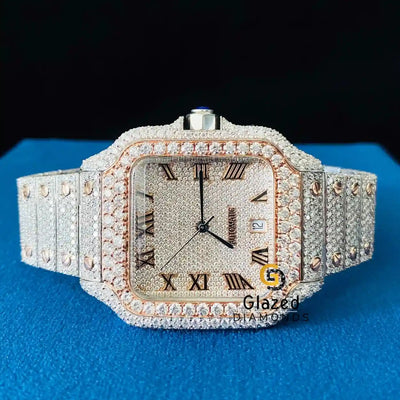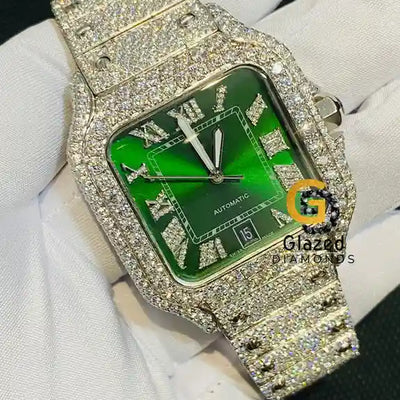


Moissanite is a lab-grown gemstone made from silicon carbide — not carbon — that looks nearly identical to a diamond to most people. It rates 9.25 on the Mohs hardness scale, produces more colorful sparkle than any other popular stone, and costs 70–90% less than a comparable diamond. Buyers across the USA are choosing moissanite for everything from iced-out watches to engagement rings, and the reasons go well beyond price. This guide covers the science, the specs, and the key facts to know before making a decision.
What Is Moissanite?
Moissanite is a gemstone composed of silicon carbide (SiC). It was first identified in 1893 by French chemist Henri Moissan in rock samples taken from a meteor crater in Arizona. The stone he found was originally mistaken for diamond. Natural moissanite is extremely rare on Earth. Every piece of moissanite sold in jewelry today is lab-grown, produced under controlled conditions to consistent quality standards.
Key specs at a glance:
-
Chemical formula: Silicon carbide (SiC)
-
Mohs hardness: 9.25 (diamond is 10)
-
Natural occurrence: Near-zero on Earth
-
Color: Colorless to near-colorless
-
Origin: Lab-grown
Because it is manufactured, moissanite can be produced with fewer inclusions and more predictable clarity than mined gemstones.
How Is Lab Grown Moissanite Made?
All commercial moissanite starts in a lab. Technicians grow single crystals of silicon carbide under high heat and pressure. Each crystal takes several weeks to develop. Once grown, the crystals are cut and polished to finished gemstone standards.
This controlled process eliminates most of the variability found in mined stones. Color, clarity, and dimensions are tightly managed before any stone reaches a jeweler. For a technical breakdown of the production steps, the moissanite manufacturing process guide covers this in full.
Moissanite vs Diamond — Key Differences
Moissanite and diamond share a similar appearance but differ in chemical composition, optical properties, weight, and cost. For a full side-by-side breakdown, the moissanite vs diamond properties comparison goes deeper on each spec.
|
Feature |
Moissanite |
Diamond |
|
Hardness (Mohs) |
9.25 |
10 |
|
Refractive Index |
2.65–2.69 |
2.42 |
|
Fire (Dispersion) |
0.104 |
0.044 |
|
Price (1 carat est.) |
$300–$600 |
$4,000–$10,000+ |
|
Origin |
Lab-grown |
Mined or lab-grown |
|
Weight |
Lighter |
Heavier |
Moissanite produces more colorful, rainbow-style flash due to its higher dispersion value. Diamond returns more white light. Both are durable enough for daily wear. For most buyers, the most significant difference is cost.
Moissanite Durability — Does It Hold Up?
At 9.25 on the Mohs scale, moissanite is one of the hardest gemstones available. Only diamonds rate higher among widely sold stones. This means moissanite resists scratches from everyday objects including steel, concrete, and most metals.
It is also thermally stable, resistant to most household chemicals, and does not cloud, fade, or change color over time. A stone purchased today will look the same in 20 years with basic care.
For jewelry worn daily — rings, chains, or watches — moissanite performs reliably. It does not require special storage or professional maintenance. The full breakdown of scratch resistance and long-term wear data is covered in the moissanite scratch resistance guide.
Moissanite Price — What It Actually Costs
Moissanite is significantly less expensive than diamond at every size.
-
1-carat moissanite: approximately $300–$600
-
1-carat diamond (good quality): $4,000–$10,000+
-
Price gap: 70–90% less than a comparable diamond
This gap is consistent. It reflects the fundamental difference between lab production costs and diamond mining costs, combined with diamond's brand pricing power.
The practical effect: buyers who choose moissanite can afford a larger stone, a better setting, or a custom design without increasing their budget. A full cost comparison is detailed in the moissanite vs diamond cost guide.
The Science Behind Moissanite's Sparkle
Two optical properties explain moissanite's visual performance.
Refractive index: Moissanite measures 2.65–2.69. Diamond measures 2.42. A higher refractive index means more internal light refraction, producing a brighter overall appearance.
Dispersion (fire): Moissanite's dispersion value is 0.104, compared to diamond's 0.044. This is responsible for the colorful, prismatic flashes visible when a stone moves through light. Moissanite produces more fire than diamond, making it more visually active in motion.
These properties are built into silicon carbide's crystal structure and do not diminish with use or time.
Moissanite Shapes, Styles, and Uses
Moissanite is available in all standard gemstone cuts: round brilliant, cushion, oval, emerald, radiant, and pear. Common uses in jewelry include:
-
Rings — engagement rings, wedding bands, signet rings
-
Chains and pendants — Cuban links, tennis chains, custom pieces
-
Earrings — studs and small hoops
-
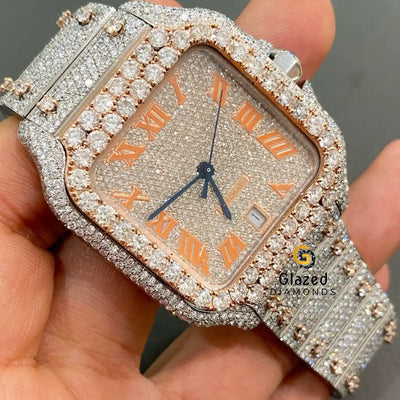
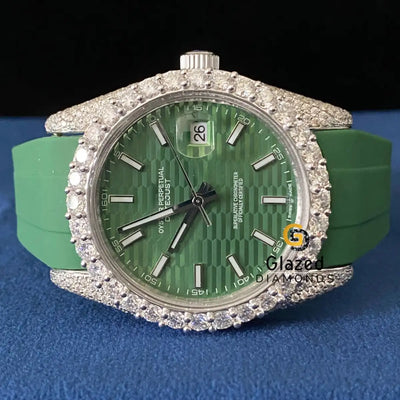
Watches — bust-down styles and iced bezels
Black moissanite, produced through surface treatment, is rising in popularity for pieces where a darker aesthetic is preferred.
The moissanite rings collection covers standard and custom ring options. For engagement and bridal pairings, moissanite engagement rings include the full range.
How to Clean and Care for Moissanite
Moissanite is low-maintenance. Its hardness protects against surface scratching during everyday wear. Basic cleaning is enough to keep it looking new.
Routine cleaning:
-
Wipe with a lint-free cloth after wearing
-
Wash with warm water and a drop of dish soap
-
Use a soft toothbrush to clear buildup around the setting
-
Rinse under running water and dry fully before storage
Avoid harsh chemical solvents. Moissanite itself can handle most cleaning methods, but some metal settings cannot. The stone does not cloud, tarnish, or discolor, maintaining its appearance over decades without professional service.
How to Pronounce Moissanite
Moissanite is pronounced: MOY-suh-nite
-
Three syllables, with stress on the first
-
Phonetic spelling: /ˈmɔɪ.sə.naɪt/
Syllable breakdown:
-
MOY — rhymes with "boy"
-
suh — a soft, unstressed sound
-
nite — rhymes with "night"
Put together: MOY-suh-nite
If you want a detailed guide, check our how to pronounce moissanite guide.
Is Moissanite Ethical?
Moissanite is lab-grown, which means no mining is involved. It is free from the supply chain concerns associated with diamond extraction in certain regions. Every stone is produced under controlled conditions with a traceable origin.
For buyers who factor sourcing into purchase decisions, moissanite offers a clear, conflict-free option. This is one reason it has gained traction among buyers who want transparency about where their products come from.
Conclusion
Most people asking "what is moissanite" are really asking one thing: is it worth it?
The data says yes. The optical properties beat diamond on fire and brilliance. The hardness sits within one point of the hardest natural substance on earth. The price is 70–90% lower for the same visual result. The sourcing is clean and traceable.
Whether that trades well depends on what matters in a piece. Some buyers want the brand story that comes with a mined diamond. Others want the most impressive stone per dollar. Moissanite is the answer to the second question. At Glazed Diamonds, the full moissanite collection covers rings, watches, chains, and custom pieces built for that decision. Please review our returns policy before purchase.
FAQs
Is moissanite a real gemstone?
Yes. Moissanite is a real gemstone made of silicon carbide. It has its own chemical formula, crystal structure, and optical characteristics. It is not a synthetic copy of diamond — it is a distinct material with its own identity.
Will moissanite pass a diamond tester?
Traditional diamond testers measure thermal conductivity. Because moissanite has similar thermal properties to diamond, it can produce a "diamond" reading on older testers. Electrical conductivity testers can distinguish between the two. A gemologist with advanced equipment will identify moissanite accurately.
Does moissanite look fake?
To most observers, moissanite looks nearly identical to diamond. The visible difference is its higher dispersion, which produces more colorful sparkle. In certain lighting conditions, this is noticeable to those familiar with both stones. Most people cannot tell the difference without testing equipment.
Is lab grown moissanite lower quality than natural moissanite?
No. Lab-grown moissanite is the industry standard and produces more consistent quality than rare naturally occurring moissanite. Lab conditions allow for tighter control over clarity and color at every stage of production.
What is the difference between moissanite and cubic zirconia?
Cubic zirconia (CZ) is made from zirconium dioxide and rates 8–8.5 on the Mohs scale. Moissanite rates 9.25 and is made from silicon carbide. Moissanite is harder, more durable, and maintains its optical performance significantly longer. CZ tends to scratch and cloud over time. Moissanite does not.
Can moissanite be used in watches?
Yes. Moissanite is used in watch bezels, dials, and strap accents. Its hardness makes it suitable for wrist jewelry that takes daily impact, and it is widely used in bust-down and iced-out watch styles.