

A moissanite gemstone is a lab-created silicon carbide stone prized for its exceptional hardness, intense light performance, and diamond-like appearance at a fraction of the price. Originally discovered inside a meteorite crater in Arizona in 1893, moissanite has become one of the most widely used diamond alternatives in the USA across engagement rings, fine jewelry, and fully iced out moissanite watches that rival the look of far more expensive pieces.
This guide covers the origin, stone properties, grading, comparison with diamond, and every jewelry category where moissanite is now the preferred choice for smart buyers.
Where Does Moissanite Come From?
Moissanite was first identified in 1893 by French chemist Henri Moissan. Examining rock samples from a meteorite impact site near Canyon Diablo, Arizona, Moissan found microscopic crystals he initially mistook for diamonds. By 1904, he confirmed the material was silicon carbide, a compound previously unknown in its natural mineral form. The stone was later named moissanite in his honor.
Natural moissanite is extraordinarily rare. Deposits exist only in meteorites and trace quantities found in upper mantle rock and kimberlite formations. Because natural supply is essentially zero at commercial scale, all moissanite used in jewelry today is lab-created, grown in controlled thermal conditions using advanced technology.
Lab-grown moissanite carries the same chemical formula (SiC) and physical properties as its natural counterpart. The production process is fully traceable and requires no mining.
How to Say Moissanite (Correct Pronunciation)
Moissanite is pronounced: MOY-suh-nite
-
Three syllables, with stress on the first
-
Phonetic spelling: /ˈmɔɪ.sə.naɪt/
Syllable breakdown:
-
MOY — rhymes with "boy"
-
suh — a soft, unstressed sound
-
nite — rhymes with "night"
Put together: MOY-suh-nite
If you want a detailed guide, check our how to say moissanite guide.
Moissanite Stone Properties
Moissanite stands apart from other gemstones due to its specific combination of hardness, optical output, and thermal stability.
Hardness
Moissanite rates 9.25 to 9.5 on the Mohs hardness scale. Diamond is the only material ranked higher at 10. This places moissanite second among all gemstones, making it highly resistant to scratching and suitable for daily wear in rings, bracelets, and watches.
Brilliance and Fire
Moissanite has a refractive index of 2.65 to 2.69, compared to diamond's 2.42. A higher refractive index means more light bends and reflects back to the eye, producing stronger visual brilliance. Moissanite also has a dispersion value of 0.104, more than double the diamond figure of 0.044. Dispersion is what creates rainbow-colored flashes of light, commonly called fire. The result is a stone that outperforms diamond in raw light performance per carat.
Color Grading
Moissanite is graded on the same D-to-K color scale used for diamonds. D, E, and F grades are colorless. G, H, and I grades are near-colorless. Premium colorless moissanite in the D-F range shows no visible tint to the naked eye.
Thermal Conductivity
Moissanite conducts heat efficiently, so efficiently that it registers as diamond on standard thermal-based diamond testers. This property reflects the stone's atomic density and long-term stability.
Is Moissanite a Real Gemstone?
Moissanite is a real gemstone with a defined chemical composition, measurable physical properties, and a confirmed natural origin.
Lab-created moissanite shares the exact chemical structure as naturally occurring moissanite. It is not glass. It is not cubic zirconia. Cubic zirconia is made from zirconium dioxide and scores approximately 8 to 8.5 on the Mohs scale, well below moissanite's 9.25 to 9.5. Moissanite is also significantly more brilliant and far more durable than cubic zirconia in long-term wear.
Moissanite is a distinct gemstone category with its own grading standards, optical characteristics, and proven durability record.
Moissanite vs Diamond Gemstone
Moissanite and diamond are visually similar but fundamentally different materials. The comparison matters for buyers deciding between the two.
|
Property |
Moissanite |
Diamond |
|
Composition |
Silicon Carbide (SiC) |
Pure Carbon (C) |
|
Mohs Hardness |
9.25 to 9.5 |
10 |
|
Refractive Index |
2.65 to 2.69 |
2.42 |
|
Dispersion (Fire) |
0.104 |
0.044 |
|
Origin |
Lab-created |
Mined or Lab-grown |
|
Price Per Carat |
Significantly lower |
High |
The most practical difference for buyers is price. Moissanite delivers comparable visual performance to a natural diamond at roughly one-tenth of the cost per carat. For pieces requiring significant stone coverage, including moissanite Cuban link chains, bust-down watches, or fully iced pendants, the cost difference is substantial.
Diamond holds a slight hardness advantage at 10 on the Mohs scale, but for daily wearability, moissanite's 9.25 to 9.5 rating is more than adequate in every real-world scenario.
Moissanite Gemstone Benefits
Durability Rated 9.25 to 9.5 on the Mohs scale, moissanite resists chips, scratches, and breakage with consistent performance across rings, chains, and watches worn daily.
Light Performance More fire and brilliance per carat than diamond. The higher dispersion value produces visible rainbow flashes that intensify under direct light and across different lighting environments.
Price Efficiency Significantly lower cost per carat compared to diamond. Buyers access larger stones, fuller icing, and more elaborate designs without the diamond price premium.
Ethical Production All jewelry-grade moissanite is lab-created. No mining is involved. The production process is environmentally cleaner and fully traceable from lab to finished piece.
Long-Term Stability Moissanite does not cloud, fade, or change color over time. It is atomically stable and maintains its optical properties indefinitely, unlike some coated diamond alternatives that degrade with regular wear.
Moissanite Jewelry Gemstone: What Can You Buy?
Moissanite is now used across every major fine and hip-hop jewelry category in the USA market.
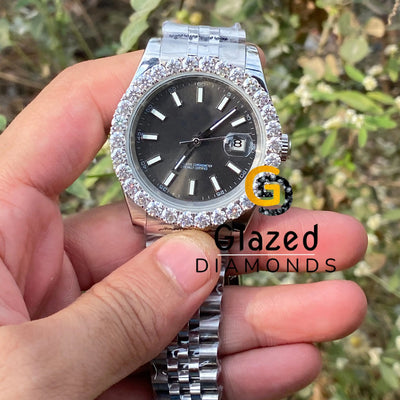
Watches — Moissanite watches for men range from presidential-dial styles to full skeleton and two-tone iced designs. The stone coverage possible at moissanite price points makes these pieces a direct competitor to natural diamond-set timepieces costing far more.
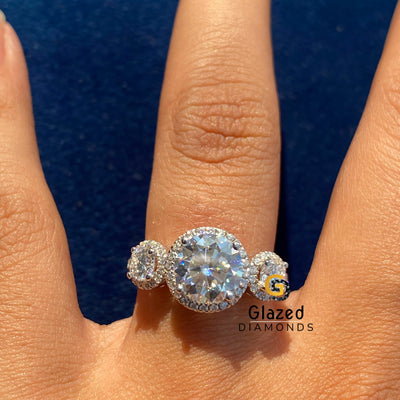
Rings — Moissanite rings are available in solitaire, halo, pavé, and full iced settings. Fashion rings and pinky rings in this category have grown significantly in the USA men's jewelry market.
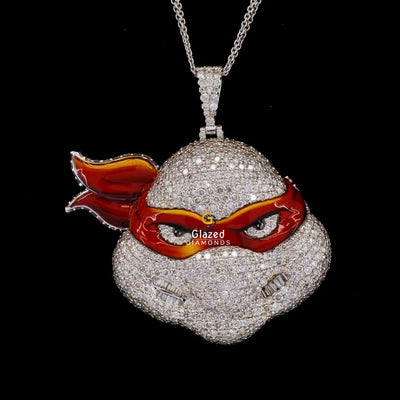
Pendants — Moissanite pendants include Jesus pieces, cross pendants, and custom nameplate designs. These are among the most visible hip-hop jewelry items worn by USA buyers today.
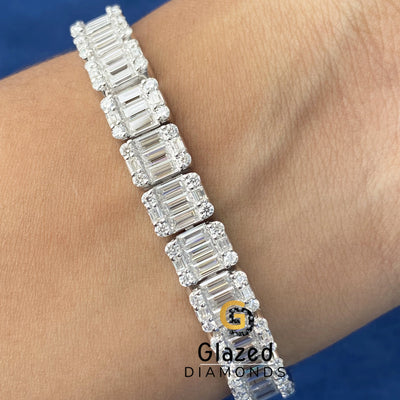
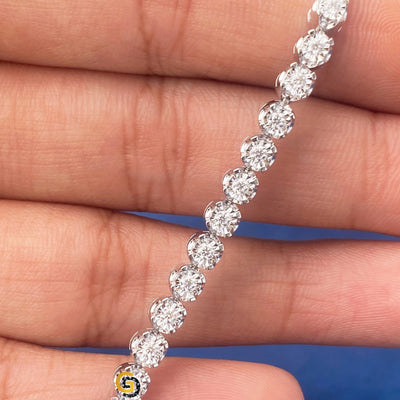
Bracelets — Tennis styles and Cuban-format moissanite bracelets deliver strong iced coverage for both daily wear and statement occasions.
Earrings — Stud and hoop moissanite earrings in colorless grades are popular across men's and women's styling in the USA.
Conclusion
Moissanite is a scientifically defined gemstone with verifiable properties, ethical production, and strong performance across hardness, fire, and color stability. For jewelry buyers in the USA, whether the goal is an engagement ring, a statement pendant, or a fully iced watch, moissanite delivers a clear combination of visual performance and price efficiency that few gemstones can match at any price point. Glazed Diamonds carries a full range of moissanite jewelry including watches, rings, chains, pendants, and bracelets. Please review the returns policy before purchase.
FAQs
Is moissanite a real gemstone?
Moissanite is a real gemstone composed of silicon carbide with a documented natural origin and lab-grown equivalent. It is not cubic zirconia and is not glass.
What does moissanite gemstone meaning refer to?
Moissanite carries no formal birthstone designation but is associated with cosmic origin due to its meteorite discovery. In modern jewelry, it represents durability and brilliance in both engagement and fashion categories.
How does moissanite compare to diamond?
Moissanite is slightly less hard than diamond on the Mohs scale but produces more fire and brilliance due to a higher refractive index and dispersion value. It costs significantly less per carat.
Will moissanite pass a diamond tester?
Standard thermal-based diamond testers may read moissanite as diamond due to its high thermal conductivity. Advanced electrical conductivity testers distinguish the two accurately.
Does moissanite lose its sparkle over time?
No. Moissanite is atomically stable and does not cloud, yellow, or lose optical performance with age. Its appearance holds long-term under regular wear.
What shapes is moissanite available in?
Moissanite is cut in round brilliant, oval, emerald, cushion, pear, princess, and marquise shapes. Most cuts are optimized to maximize the stone's fire and light output.