
Moissanite is rarer than diamond in its natural form. It is a silicon carbide mineral first identified by Nobel Prize-winning chemist Henri Moissan in 1893 inside a meteorite crater near Canyon Diablo, Arizona. Natural deposits on Earth are so minute they cannot support commercial use. Every moissanite used in jewelry today is grown in a laboratory — making a genuinely rare space mineral accessible for the first time in human history.
If you want a full breakdown of what this stone actually is, the guide on what is moissanite covers the basics in depth.
Where Natural Moissanite Comes From
The origin of moissanite is unlike any other gemstone on Earth.
Roughly 50,000 years ago, a meteorite struck what is now the Arizona desert, creating the site now known as Meteor Crater. The impacting rock carried microscopic particles of silicon carbide — the compound we now call moissanite. When Henri Moissan examined rock fragments from that crater in 1893, he initially believed the crystals were diamonds. By 1904, laboratory analysis confirmed they were an entirely different mineral: naturally occurring silicon carbide, a compound that had never before been documented in nature.
The mineral was formally named moissanite in his honor in 1905.
How Rare is Natural Moissanite
Natural moissanite is, by a significant margin, rarer than diamond.
Diamonds form deep within the Earth's mantle under intense pressure over billions of years. They exist in large enough quantities to support a global mining and commercial trade industry. Natural moissanite does not. Until 1958 — over 60 years after its discovery — no source of moissanite had ever been found outside of meteorite samples. Geologists then located trace amounts in the Earth's upper mantle near Wyoming, and small quantities have since been found in certain rock formations. But in every case, the crystals are microscopic.
No natural moissanite deposit has ever produced stones large enough to cut into a gemstone. Not even close.
That single fact places moissanite in a category that no mined diamond can claim.
The Silicon Carbide Gemstone — What Makes It Different
Diamonds are pure carbon. Moissanite is silicon carbide.
The chemical difference is significant. Silicon carbide (SiC) forms only under extreme conditions — conditions found primarily in space or deep within certain rock formations subjected to massive cosmic impact energy. That specific formation environment is why natural moissanite is so scarce. Diamond forms under high pressure, but carbon is abundant in the Earth's crust. Silicon carbide with gemstone-grade crystalline structure is not.
This composition also gives moissanite a distinct optical identity. Its refractive index of 2.65–2.69 is higher than diamond's 2.42. Its dispersion rating of 0.104 is more than twice diamond's 0.044. Both numbers translate to a stone that produces more colorful fire and higher brilliance than diamond under direct light. The moissanite refractive index article explains exactly what these numbers mean in practice..
How Lab Creation Solved the Supply Problem
The natural supply of moissanite is effectively zero for commercial purposes.
In the late 1990s, researchers developed a method to grow silicon carbide crystals in controlled laboratory environments. The process replicates the conditions under which natural moissanite forms, producing stones with identical chemical structure, hardness, and optical properties to the natural mineral. The patent for this process was initially held by a single company. When it expired around 2010, production expanded globally, and prices dropped significantly.
Lab-created moissanite is not a synthetic imitation of moissanite. It is moissanite — the same mineral, the same compound, grown by science rather than by cosmic impact.
This is the same principle behind lab grown vs mined diamonds — a lab origin does not change what a stone is.
Moissanite Physical Properties — The Numbers
Understanding why moissanite stands on its own requires knowing its core physical data.
-
Hardness: 9.25–9.5 on the Mohs scale. Diamond is 10. No other gemstone used in fine jewelry comes this close.
-
Refractive index: 2.65–2.69 vs. diamond's 2.42. Higher refractive index means more white light returned to the eye.
-
Dispersion (fire): 0.104 vs. diamond's 0.044. Moissanite produces 2.4 times more rainbow fire.
-
Composition: Silicon carbide (SiC), naturally occurring only in meteorite impact sites and deep mantle rock.
-
Double refraction: Moissanite is doubly refractive. Diamond is not. This creates a distinct visual pattern under magnification.
These properties are not compromises. They are characteristics of the stone itself — products of its specific chemistry and crystal structure.
The full comparison is broken down in the moissanite vs diamond difference article.
Natural Moissanite vs Lab Moissanite — What Changes
The origin changes. The material does not.
Natural moissanite particles are microscopic, found only in specific geological conditions, and have never been recovered in jewelry-grade size. Lab moissanite is grown from the same chemical compound — silicon carbide — using a controlled thermal process that produces large, clear, facetable crystals.
Chemical analysis cannot distinguish the two. Optical properties are identical. Hardness is identical. The only difference is that one formed in the aftermath of a meteorite strike 50,000 years ago, and one formed in a laboratory.
For buyers, this means every moissanite stone is a lab stone. That is not a limitation — it is the entire reason the stone is available at all.
Henri Moissan — The Discovery That Started It All
Henri Moissan was a French chemist who won the Nobel Prize in Chemistry in 1906 — one year before his death.
His work covered a wide range of chemical discoveries, but the 1893 identification of silicon carbide in the Canyon Diablo meteorite samples became one of his most referenced findings. The mineral bearing his name outlasted most of his other contributions in terms of public interest. It took over a century from his initial discovery before the technology existed to grow the stone in sufficient size and quality for jewelry use.
The moissanite on the market today is a direct result of that 1893 observation.
Moissanite in Hip-Hop and Luxury Jewelry Culture
The moissanite stone's optical properties — high fire, high brilliance, near-diamond hardness — made it a natural fit for iced-out jewelry.
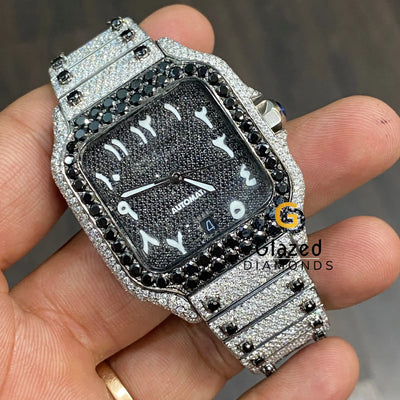
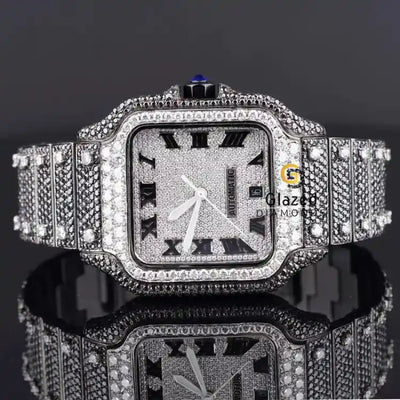
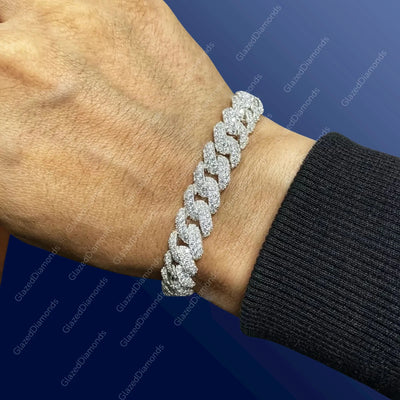
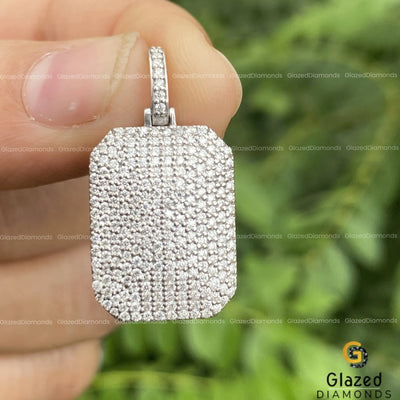
Its dispersion rating produces vivid color flashes under stage lighting, natural sunlight, and video production conditions. That visual performance, combined with accessible pricing relative to diamonds, has made it the stone of choice for custom chains, pendants, and watches across the USA luxury and hip-hop market.
For context on how moissanite performs in different piece types, the moissanite hip hop jewelry and moissanite engagement rings sections cover both ends of the use spectrum.
Glazed Diamonds carries a full selection of moissanite jewelry for anyone looking to explore the stone across different piece types.
Conclusion
Natural moissanite is genuinely one of the rarest minerals on Earth — rarer than diamond by a significant margin, with no natural supply capable of supporting commercial jewelry production. Its origin in meteorite impacts, its silicon carbide composition, and its near-zero terrestrial availability place it in a category no mined stone can match. Lab creation solved the only problem: supply. The stone itself, its chemistry, its hardness, and its optical properties, remains exactly what Henri Moissan found in that Arizona crater in 1893.
FAQs
Is moissanite rarer than diamond?
Yes. Natural moissanite is significantly rarer than diamond. Natural deposits are microscopic and have never yielded a gem-grade stone. All jewelry moissanite is lab-grown because the natural supply is commercially nonexistent.
Where does moissanite come from?
Natural moissanite originates from meteorite impact sites. Henri Moissan first identified it in 1893 in rock samples from the Canyon Diablo meteor crater in Arizona. Trace quantities have since been found in deep mantle rock and specific mineral formations.
Is moissanite found in space?
Moissanite is found in meteorites and has been detected in certain stardust particles. Its natural formation environment involves extreme temperatures found in space or produced by high-energy cosmic impacts on Earth.
What is moissanite made of?
Moissanite is a silicon carbide gemstone. Its chemical formula is SiC. This composition distinguishes it from diamond, which is pure carbon, and gives it distinct optical and physical properties.
How hard is moissanite on the Mohs scale?
Moissanite rates 9.25–9.5 on the Mohs hardness scale. Diamond is 10. No other gemstone used in fine jewelry scores higher than moissanite on this scale.
Is natural moissanite available to buy?
No. Natural moissanite has never been found in jewelry-grade sizes. Every moissanite sold commercially is lab-created — grown from silicon carbide using a controlled thermal process that produces the same stone as the natural mineral.
How does moissanite brilliance compare to diamond?
Moissanite has a higher refractive index (2.65–2.69) than diamond (2.42) and more than twice the dispersion (fire). It produces more colorful light flashes, particularly under direct sunlight or studio lighting.
When was moissanite first discovered?
Henri Moissan identified the mineral in 1893 inside meteorite crater rock samples. The mineral was formally named moissanite in his honor in 1905. Lab cultivation for jewelry use began commercially in the late 1990s.