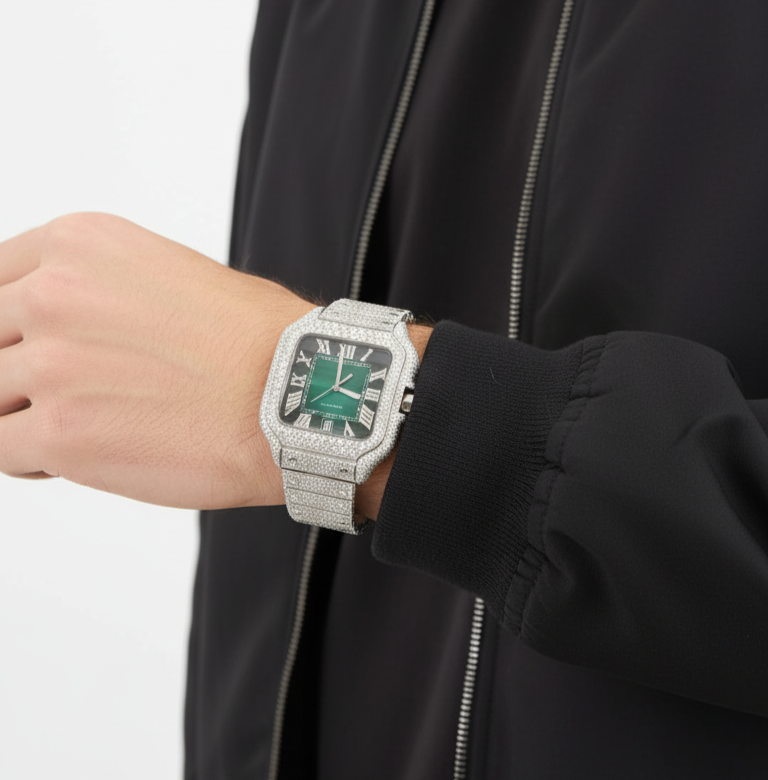
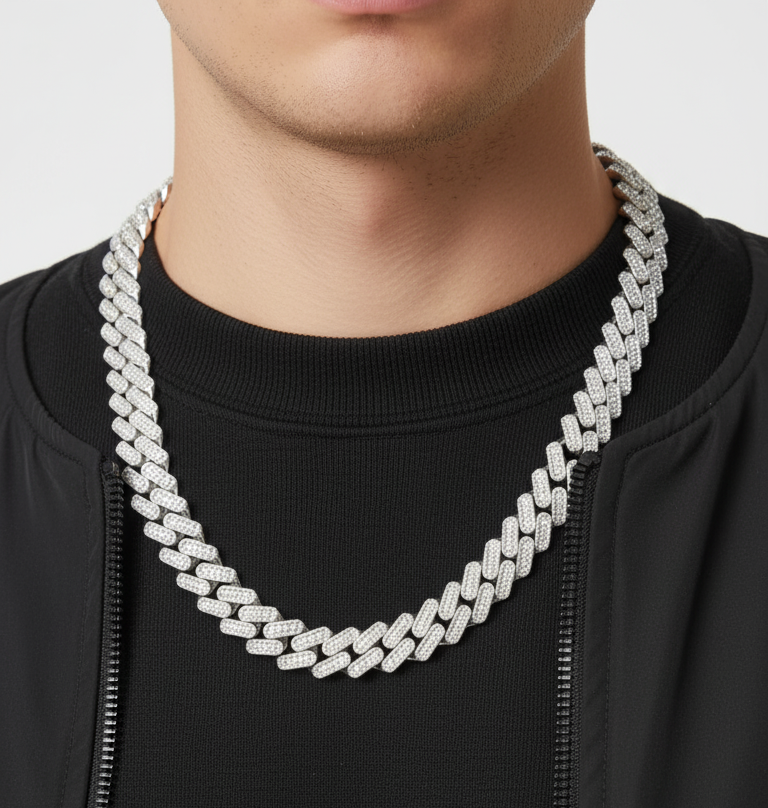
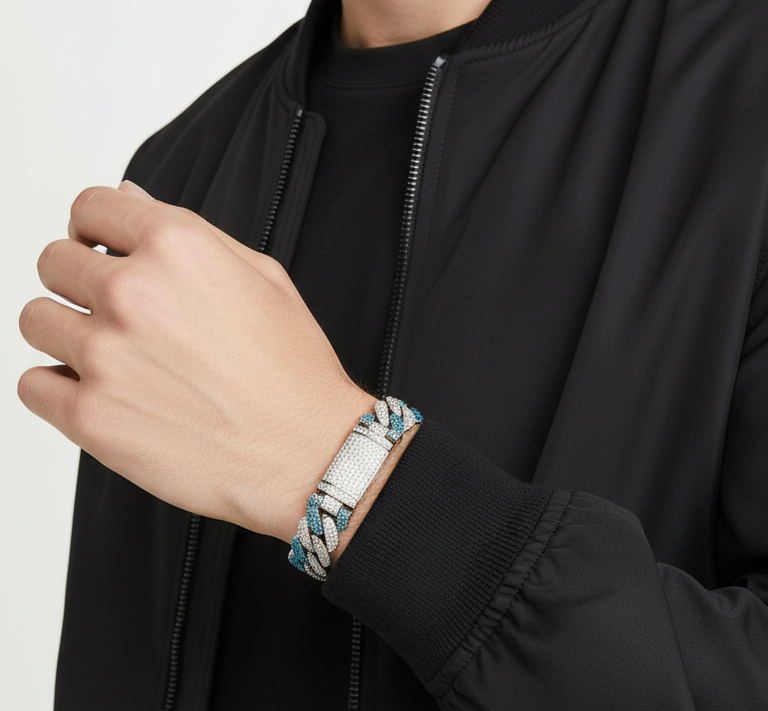
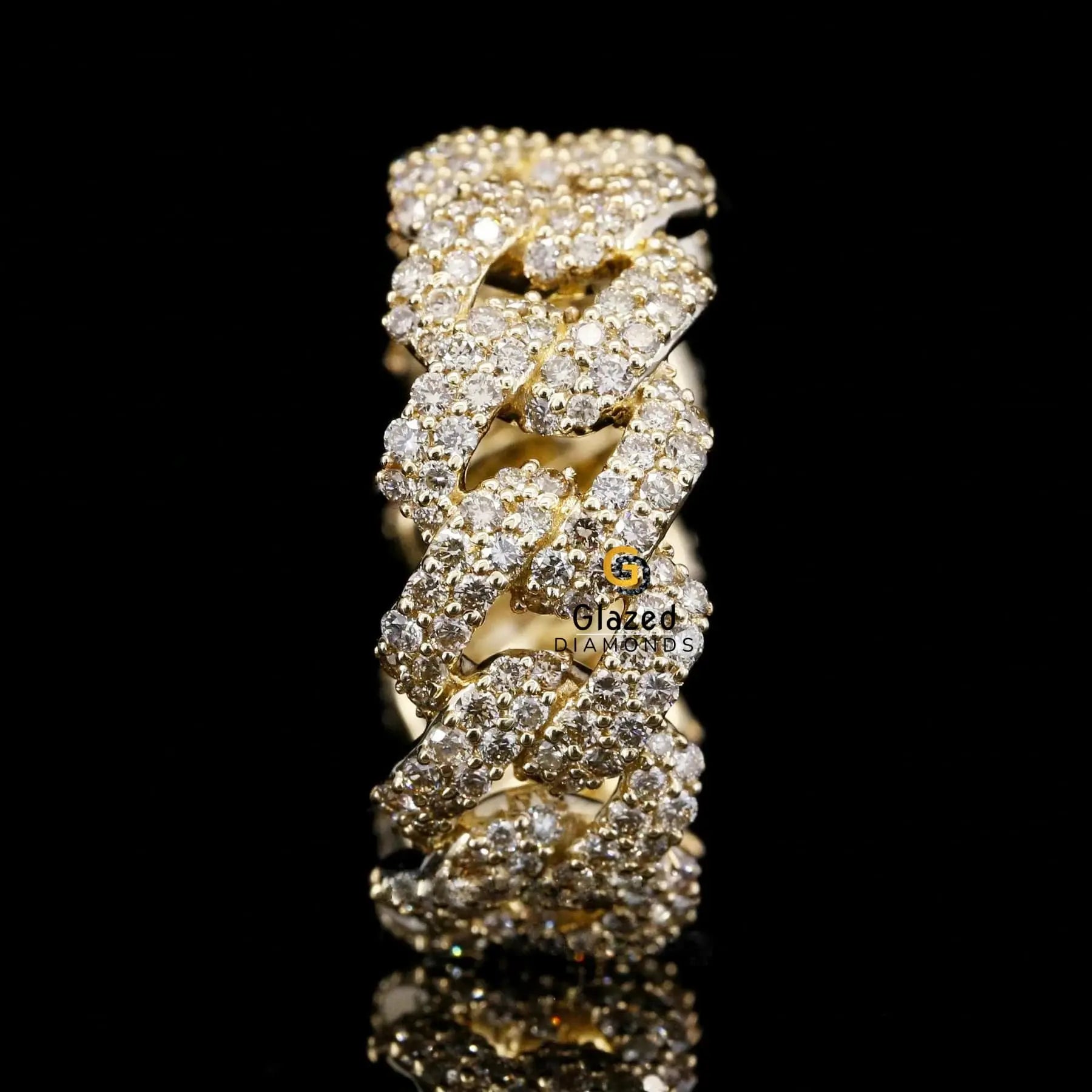
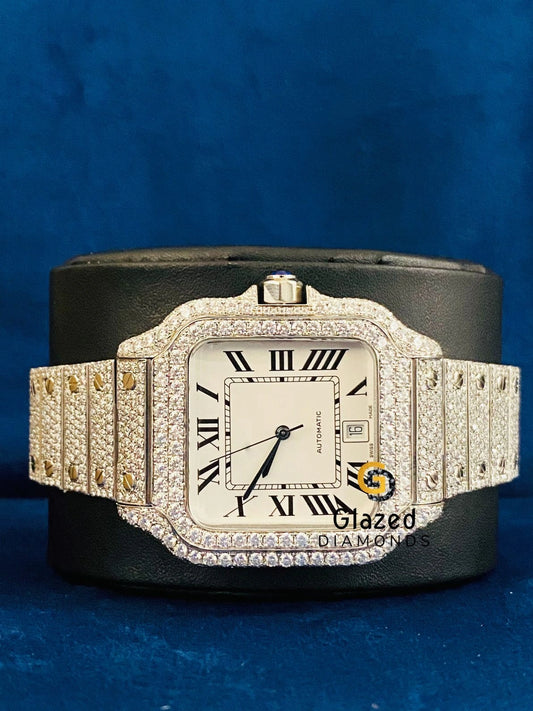
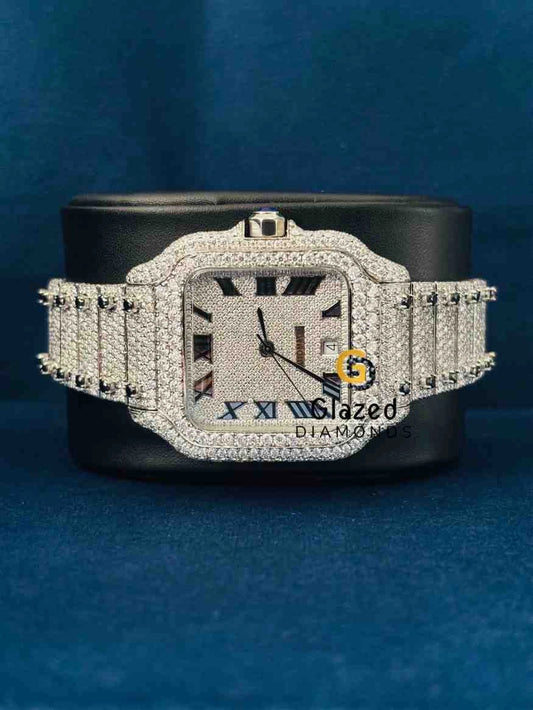
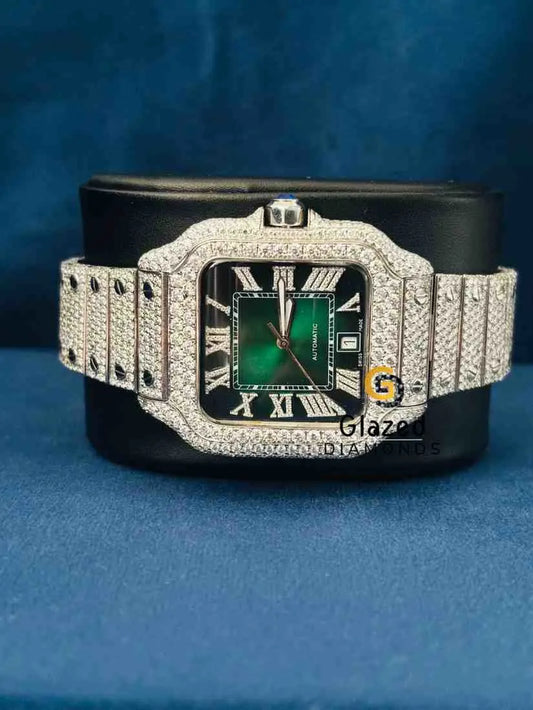
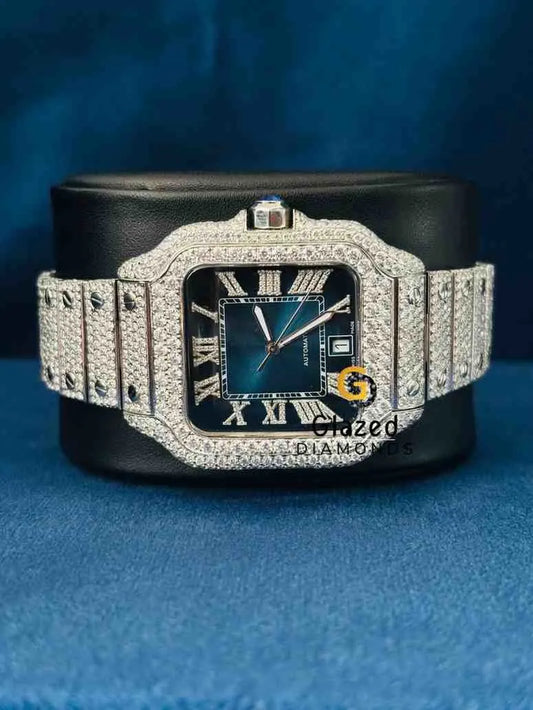
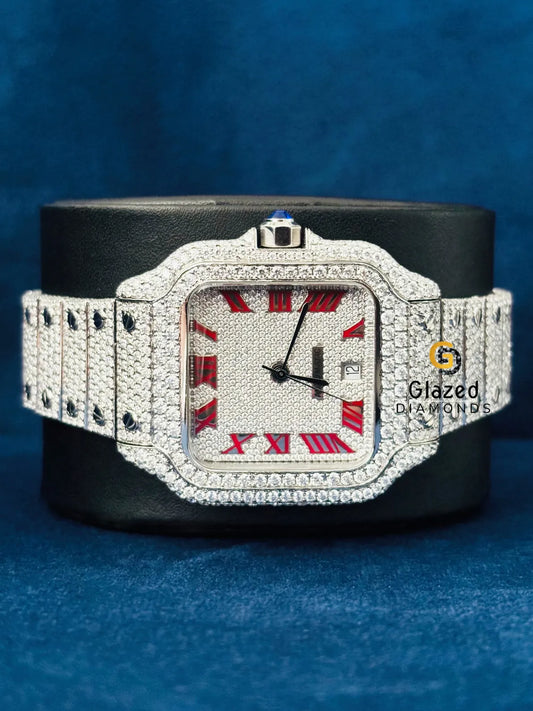
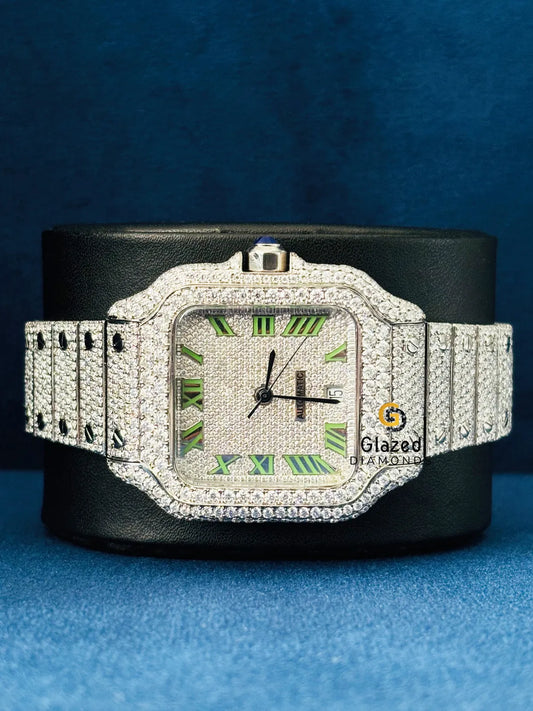
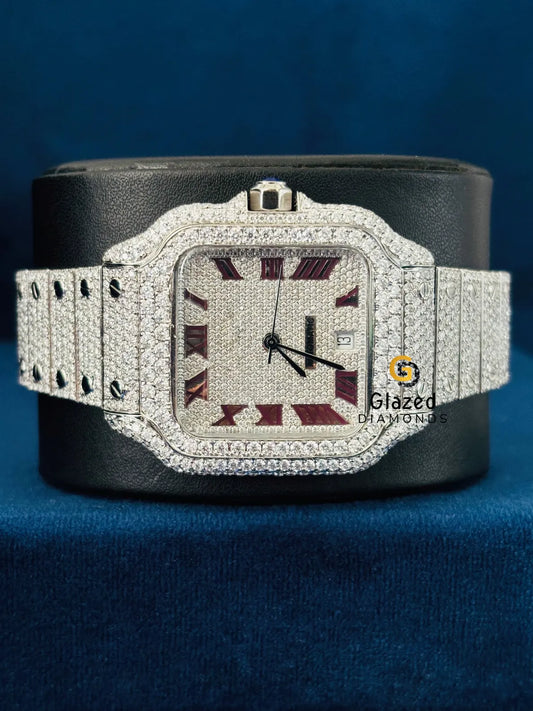
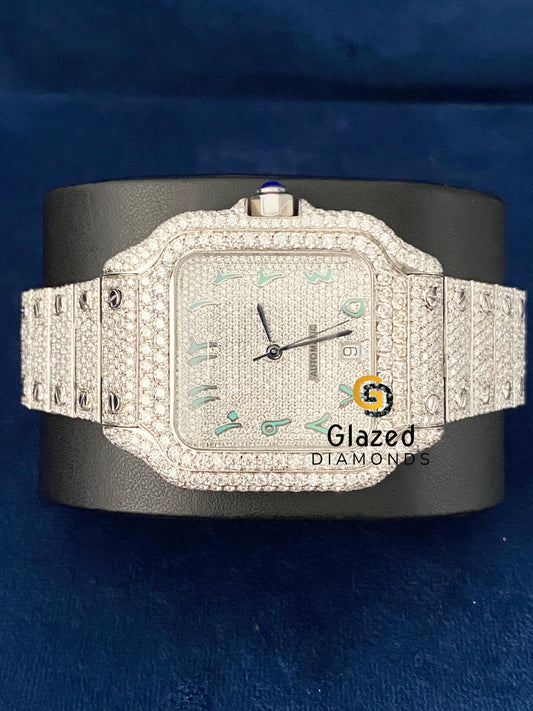
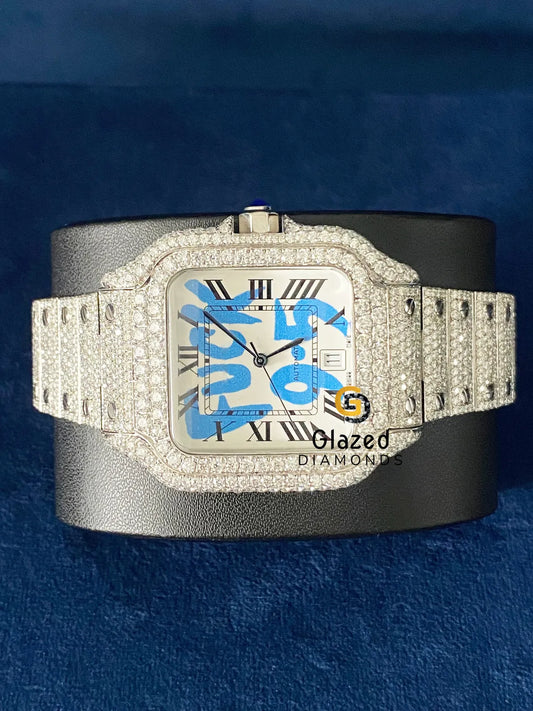
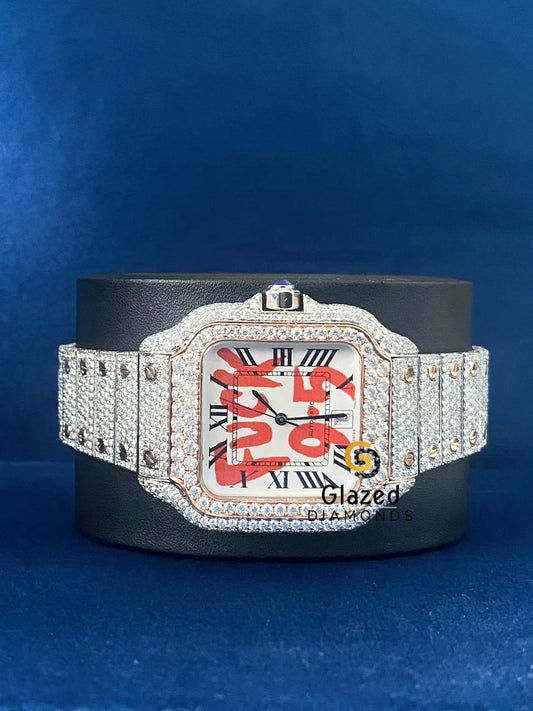
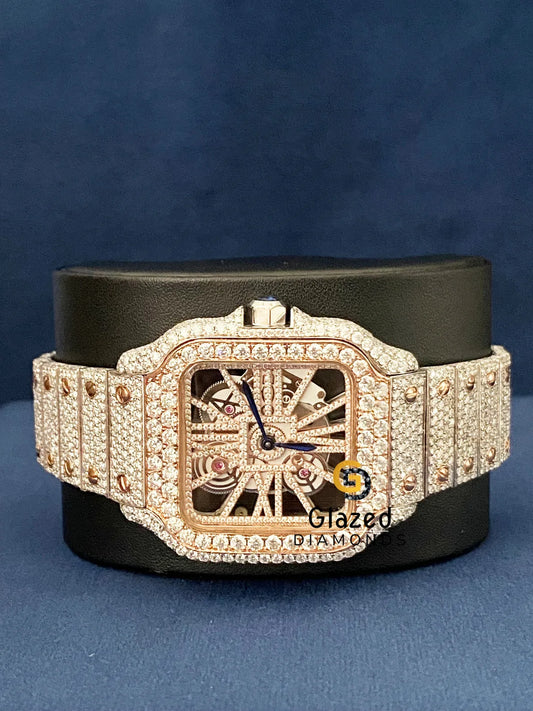
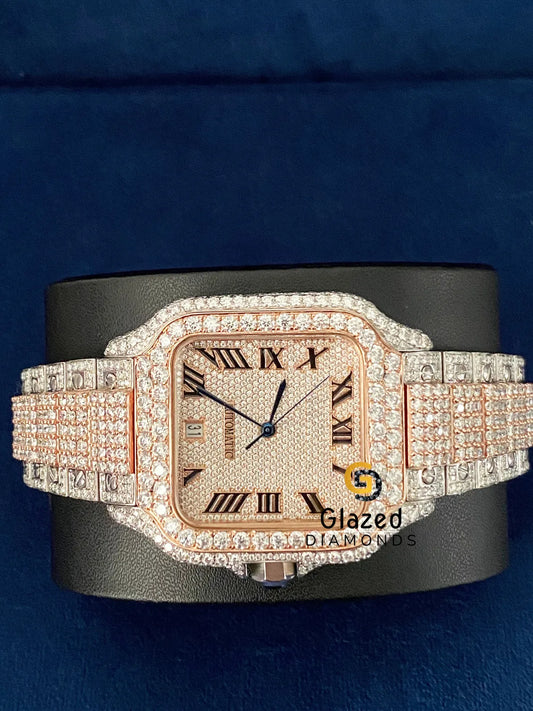
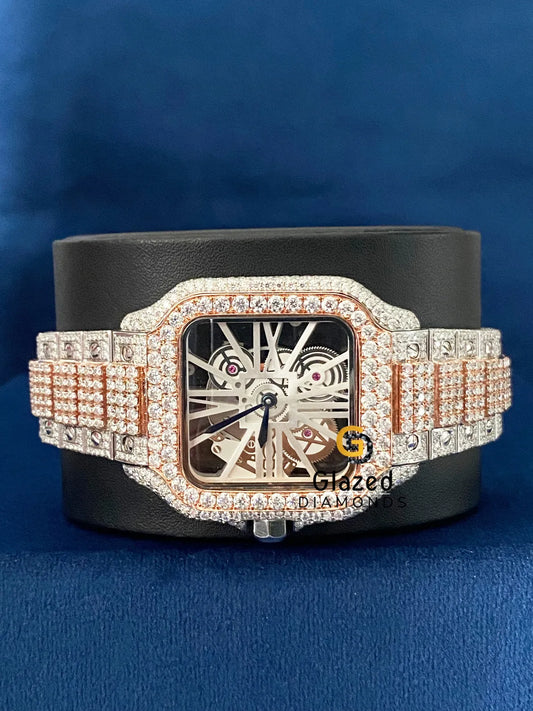
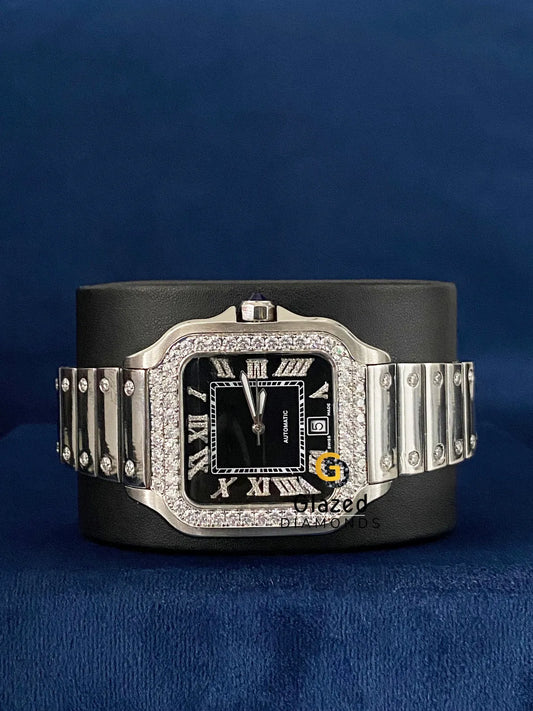
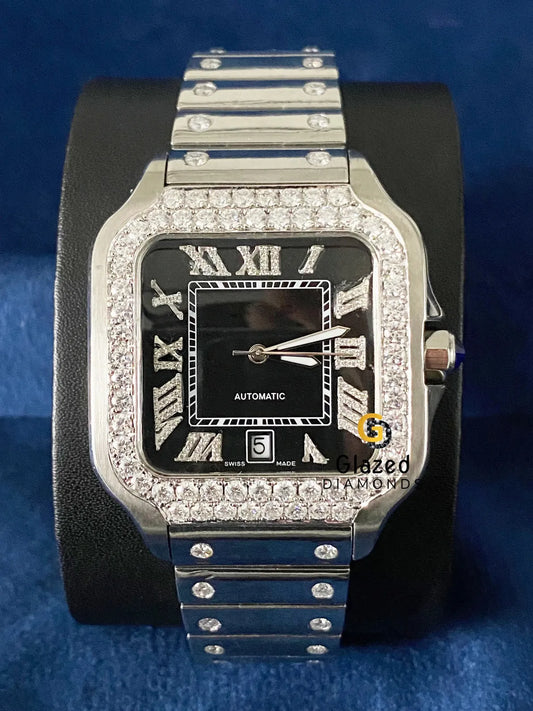
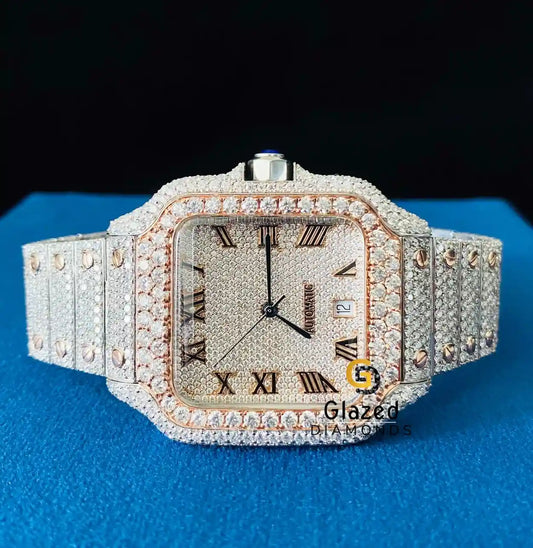
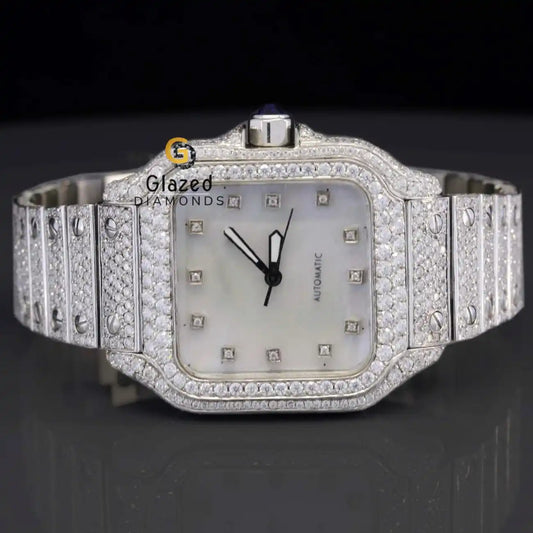
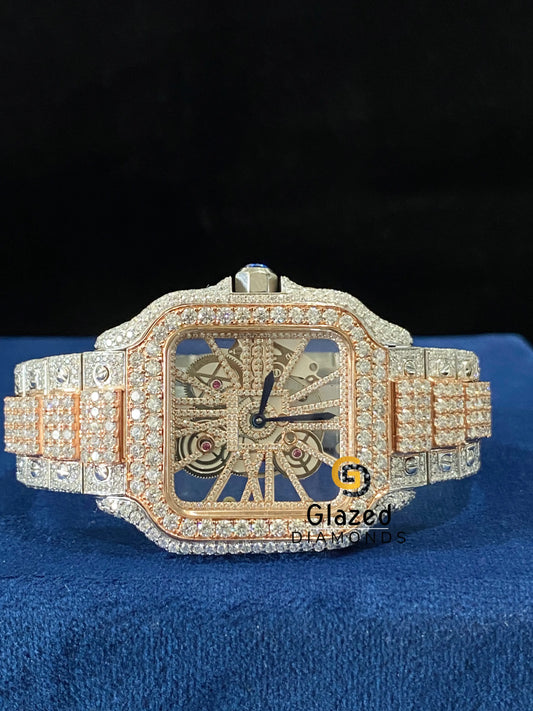
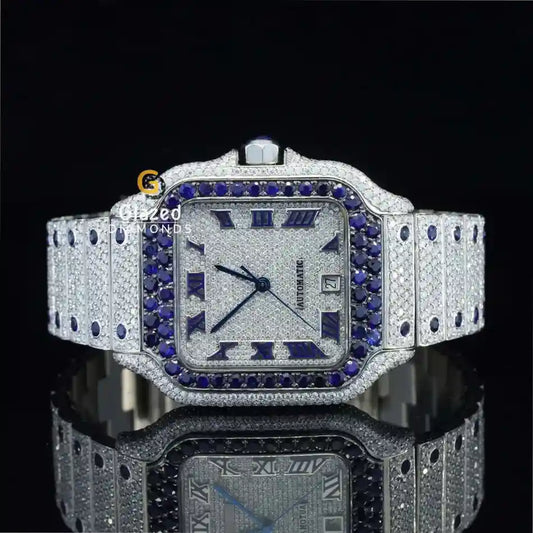
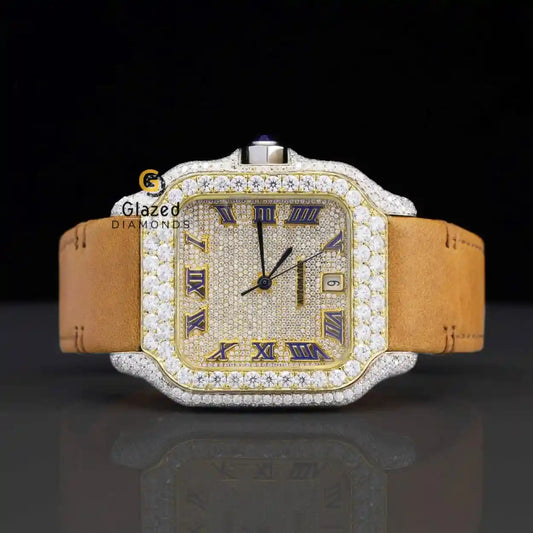
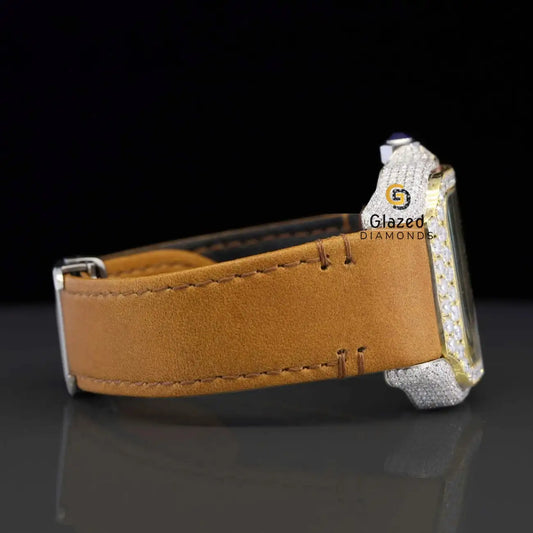
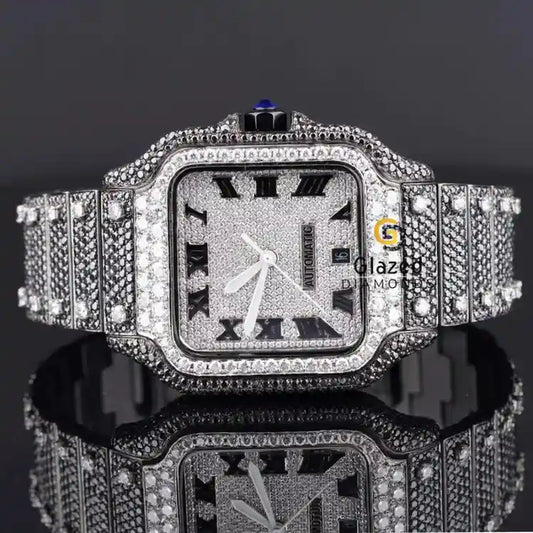
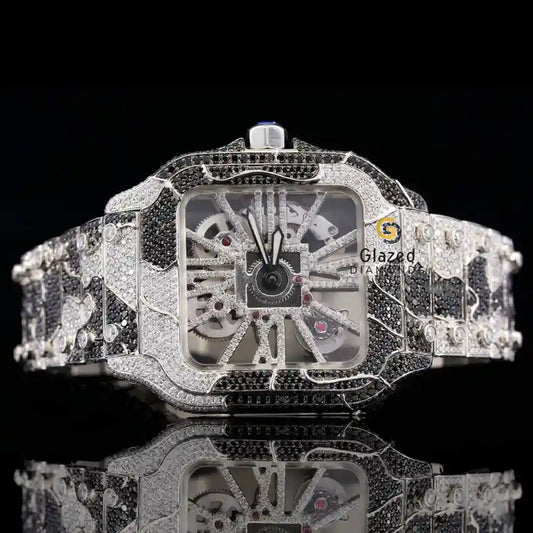
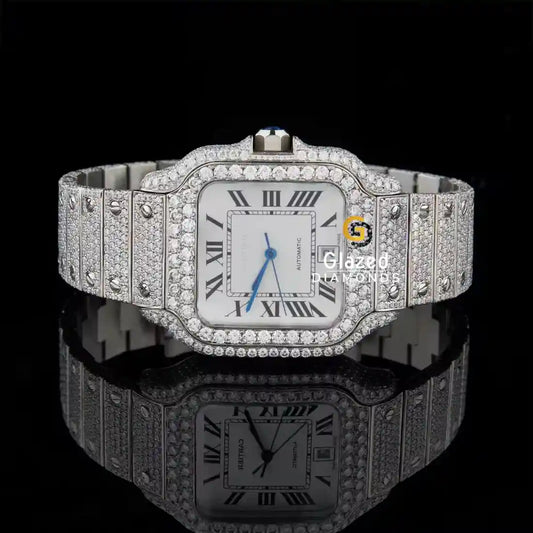
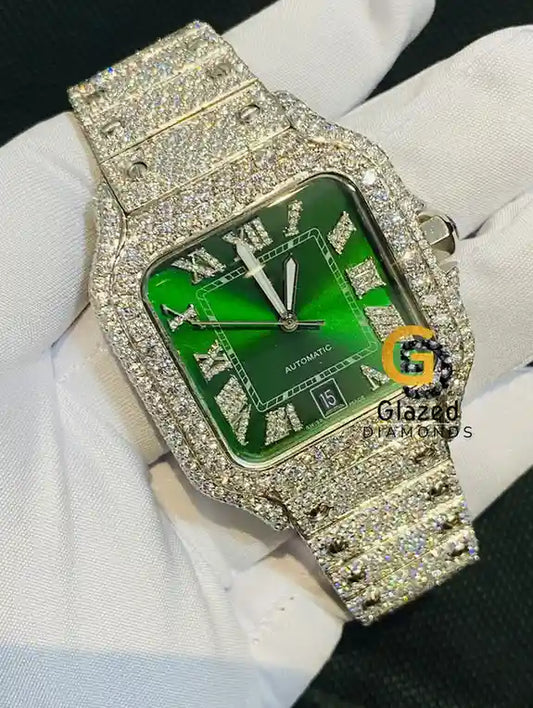
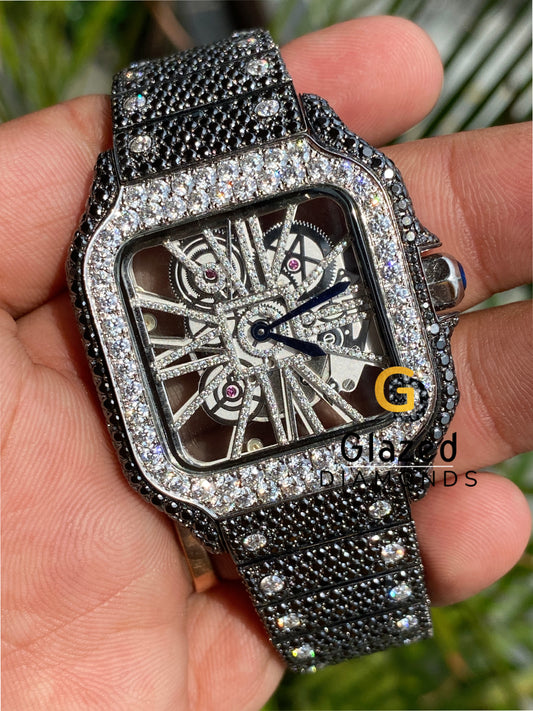
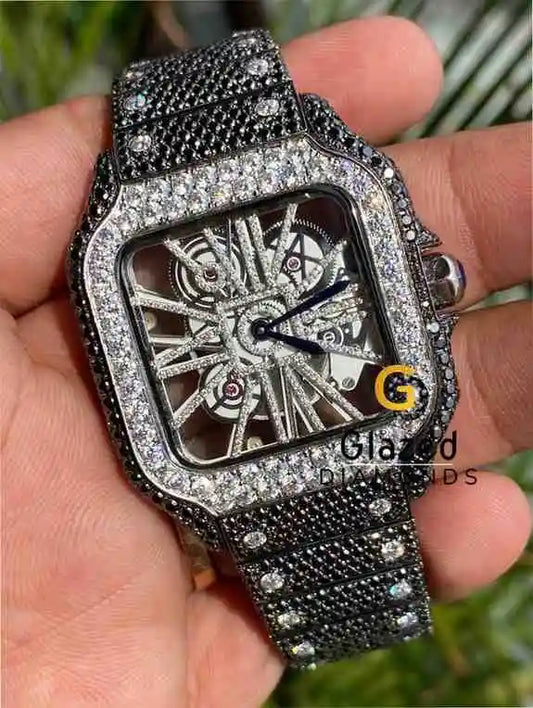
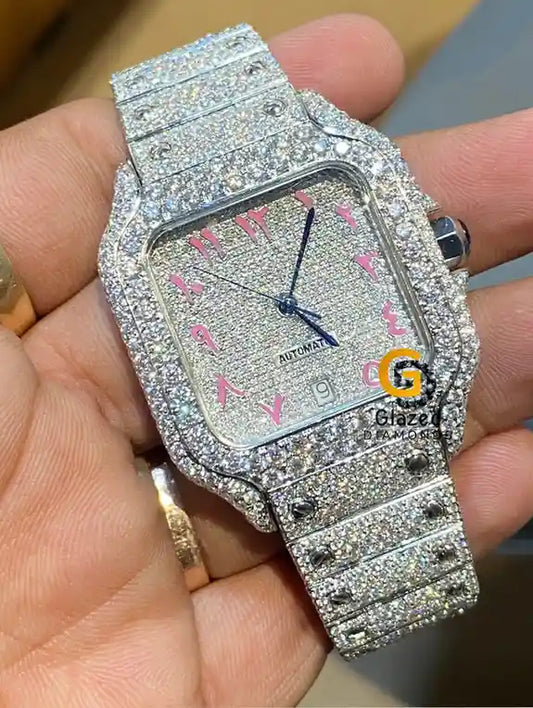
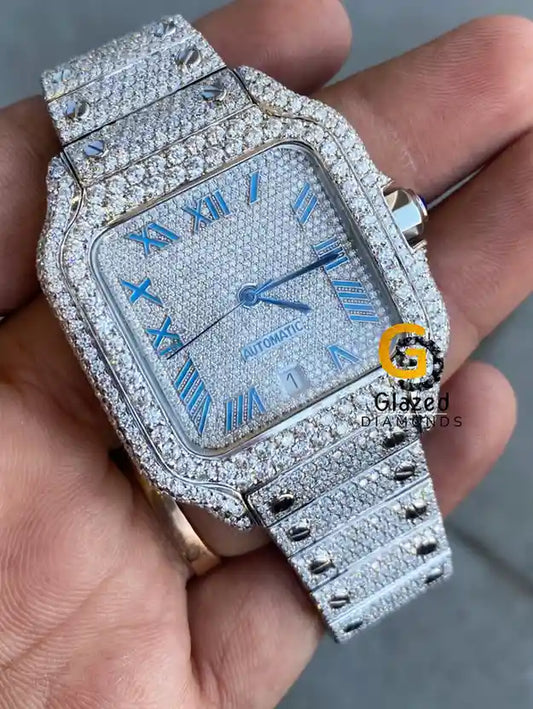
Finding a reliable moissanite Cartier watch vendor means securing consistent quality, transparent manufacturing processes, and designs that respect iconic aesthetics without crossing legal boundaries. Glazed Diamonds supplies custom Cartier-style watches — from iced out bezels to full bust down coverage — to retailers, resellers, and wholesale buyers across the USA who need professional-grade stone setting, accurate case proportions, and vendor infrastructure that scales with demand. Browse the full moissanite watch collection to see what is currently available.
Moissanite Cartier Latest Styles and Designs
The moissanite Cartier latest lineup covers the most in-demand aftermarket styles built around iconic case silhouettes. Current designs include:
-
Tank-style rectangular cases — Roman numeral dials, slim profiles, bezel-set or pavé coverage
-
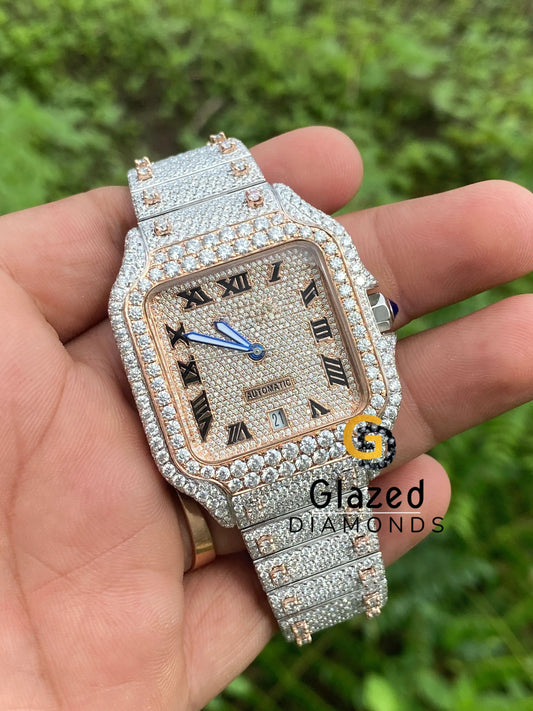
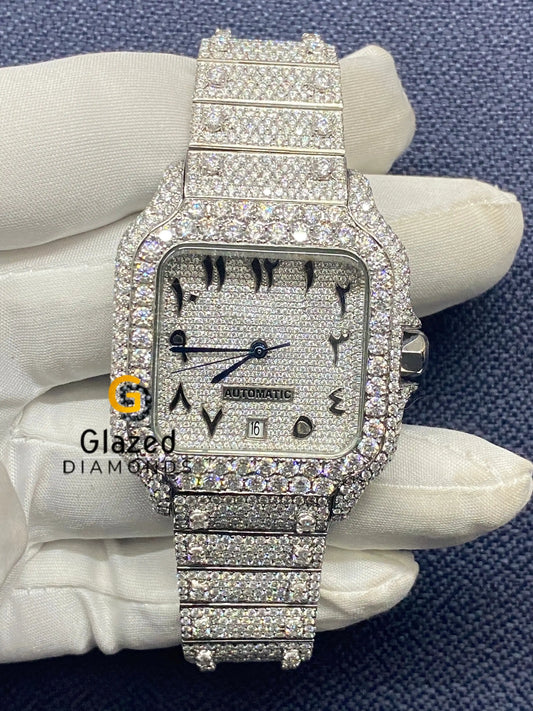
Santos-inspired square bezels — exposed screw details, full stone coverage options on bezel and case sides
-
Balloon Bleu-style round cases — curved sapphire crystal, crown guard integration, moissanite bezel and lug settings
-
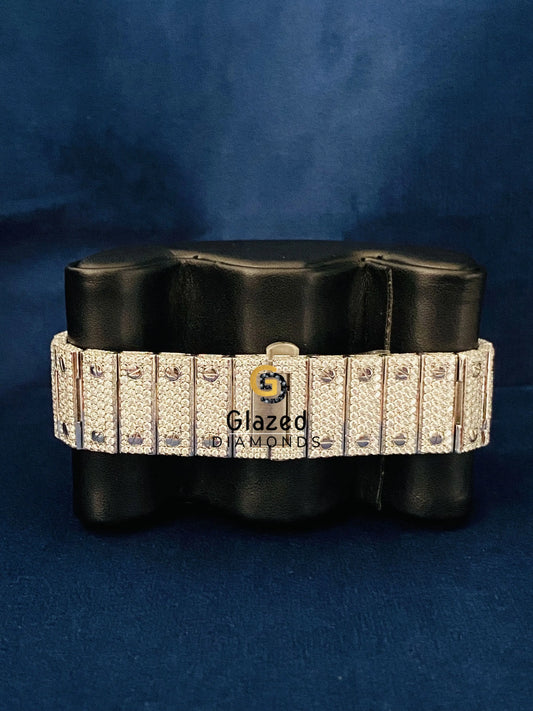
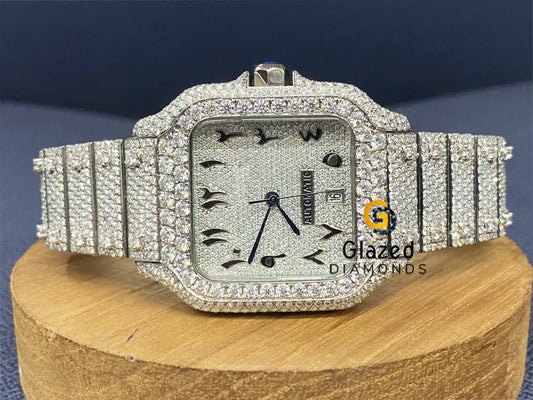
Bust down Cartier-style pieces — full VVS moissanite coverage across dial, bezel, bracelet, and case with no bare metal visible
-
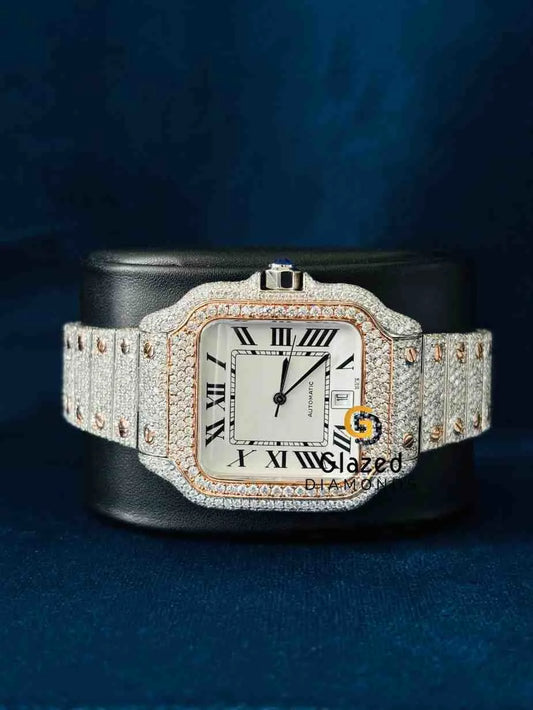
Two-tone finishes — yellow gold and steel combinations across multiple case shapes
These styles are driven by demand from USA buyers. Retailers sourcing for hip hop or streetwear-adjacent customers consistently pull from this range. View current iced out Cartier-style watches to see available inventory.
What Makes a Professional Moissanite Cartier Watch Vendor
The difference between a reliable vendor and a middleman shows up when you need customization depth, consistent stone quality, or inventory predictability. Professional vendor capability delivers the following.
Direct Manufacturing Relationships
Vendors with in-house production control supply timing, stone selection, and customization parameters. You are not waiting on third-party factories or getting different stone grades each order. Direct manufacturing means lead times stay predictable and quality standards remain enforceable.
Stone Certification Standards
VVS moissanite carries specific optical characteristics — 9.25 Mohs hardness, refractive index above 2.65, and fire dispersion that exceeds natural diamonds. As a VVS moissanite watch vendor, Glazed Diamonds documents stone grades with certificates that verify clarity, color (typically D grade), and testing results that distinguish moissanite from simulants. Every order ships with stone documentation your customers can reference.
Aftermarket Design Expertise
Cartier-style watches require specific design elements — the square Tank case with Roman numerals, the rounded Santos bezel geometry, or the Blue Balloon's crown guard integration. Vendors experienced in luxury-inspired work understand how to reference these aesthetics legally while creating distinct aftermarket pieces that do not claim manufacturer authorization.
Legal Positioning for Cartier-Style Custom Watches
Courts have established clear guidelines for how aftermarket customizers can market luxury-inspired designs. Understanding these boundaries protects your business while allowing creative freedom.
Aftermarket work must be clearly disclosed. Products positioned as "Cartier-style" or "inspired by luxury aesthetics" acknowledge design influence without implying brand authorization. This distinction matters — trademark law allows aftermarket customization when properly disclosed, but prohibits marketing that creates confusion about manufacturer involvement.
Glazed Diamonds positions all custom work as aftermarket luxury pieces. We reference design inspiration when relevant but never claim official relationships, certifications, or brand endorsements. This approach has been validated repeatedly in court decisions that support aftermarket customization rights when disclosure is transparent.
Stone Setting Methods for Luxury Watch Customization
How stones attach to metal determines whether a watch maintains brilliance for two years or twenty. Setting technique directly impacts durability, light performance, and wearability under daily stress.
Prong Setting Applications
Individual prongs secure each stone while allowing maximum light entry from multiple angles. This technique works best for bezel stones and dial markers where visibility matters most. Prong height needs careful calibration — too tall creates snag points, too short risks stone loss.
Channel Setting for Continuous Coverage
Rows of stones seated in metal channels provide smooth surfaces without prong interruption. Channel setting excels on bracelet links and case sides where snag resistance matters for clothing interaction. The tradeoff comes in reduced light entry compared to prong work.
Pavé Setting Density — Bust Down Cartier Watch Coverage
Full pavé coverage — referred to as a bust down Cartier watch in the market — requires precise stone spacing. Stones must sit tight enough to create continuous sparkle but spaced enough that metal stays structurally sound. This balance determines whether settings hold through temperature changes and daily movement or start loosening within months. Full bust down pieces from this collection cover the dial, bezel, bracelet, and lugs in VVS moissanite with no visible bare metal. Browse bust down moissanite watch styles for reference on full-coverage execution.
Moissanite Cartier Watch Wholesale — Vendor Infrastructure That Supports Bulk Orders
Moissanite Cartier watch wholesale buyers need more than product photos — operational capability determines what is actually executable at scale. These infrastructure elements define what you can build with us.
Minimum Order Flexibility
Wholesale structures vary — some vendors require 25-unit minimums per design, others work with mixed orders starting at 10 total pieces. Your cash flow and storage capacity dictate which model fits. Lower MOQs cost slightly more per unit but reduce capital risk on untested styles.
Customization Parameters
Professional vendors specify exactly what is adjustable — dial color options, stone density choices, metal finish variations. Clear parameters prevent the "we'll try" conversations that waste weeks before you learn certain modifications are not actually possible.
Lead Time Reality
Custom stone-set watches need 3–4 weeks minimum when done properly. Rush fees can sometimes compress this to 2 weeks but expect a 30–50% premium. Vendors promising 5-day turnarounds are either holding pre-made inventory (limiting customization) or cutting quality checks.
Material Selection Standards for Aftermarket Luxury Watches
Base materials determine whether a watch survives five years of daily wear or starts degrading within eighteen months.
Stainless Steel Grades
316L stainless provides corrosion resistance for daily exposure to skin oils, moisture, and temperature variation. Lower-grade alloys oxidize faster, causing stone settings to loosen as the metal base deteriorates. This matters particularly for pieces marketed as everyday luxury.
Movement Choice Impact
Japanese movements from Miyota or Seiko deliver reliable timekeeping at wholesale-friendly price points. Swiss movements add heritage appeal but increase unit costs substantially. Movement selection should align with your target customer's priorities — accuracy versus prestige signaling.
Water Resistance Engineering
Most custom-set watches achieve 3ATM resistance (splash proof, not submersible). Full 5ATM requires additional gasket engineering and testing that increases production cost. Setting realistic expectations with end customers prevents warranty claims about moisture damage.
Why Cartier-Inspired Designs Maintain Market Demand
Timeless Case Architecture — The rectangular Tank case from 1917 still reads contemporary because its proportions follow mathematical ratios that humans naturally perceive as balanced. Square Santos bezels with exposed screws create instant visual recognition without needing brand logos. These design elements work independently of brand association.
Versatility Across Dress Codes — Cartier-style designs transition from business settings to evening wear without appearing too casual or too formal for either context. This versatility expands the customer base beyond collectors into everyday luxury buyers who need pieces that work across multiple situations.
Hip Hop and Streetwear Demand — Cartier-style aftermarket pieces have maintained consistent pull in hip hop culture for over a decade. Iced out and bust down versions of these silhouettes appear across music videos, social media, and urban fashion — driving search demand that retail buyers can capitalize on. Retailers sourcing for this market also pull from the AP moissanite watch vendor collection for style variety.
Gender-Neutral Appeal — Many Cartier-inspired shapes work across gender lines — the Tank's rectangular case, the Santos's square bezel, the Panthère's integrated bracelet all attract buyers regardless of marketing categories. This flexibility increases your addressable market.
Private Label and Custom Branding Options
Some retailers need products that carry their own brand identity rather than manufacturer marks.
Logo Placement Options — Dials, caseback engraving, and clasp areas can accommodate custom branding. Dial work requires higher MOQs (typically 25+ pieces) since it involves custom printing setup. Caseback engraving works at lower volumes but has less customer visibility.
Packaging Customization — Watch boxes, pouches, and certificates can carry retailer branding at reasonable minimums (50–100 units). This creates cohesive brand presentation without requiring product modification. Packaging often delivers stronger brand reinforcement than caseback engraving since customers interact with it at purchase.
Documentation and Warranty Cards — Professional vendors provide templates for warranty cards and authenticity certificates that you can brand with your company details. This positions you as the source of quality assurance rather than referencing manufacturer warranties you cannot honor.
Quality Control Protocols Before Shipment
Stone Security Testing — Ultrasonic cleaning followed by pressure testing reveals loose settings that normal handling would not detect. This catches stones that seated incorrectly or prongs that did not close fully. Finding these issues in quality control costs less than processing customer returns later.
Functional Verification — Crown threading, pusher operation, and clasp mechanisms all get manually tested. Mechanical movements receive timing verification to confirm accuracy falls within acceptable ranges (typically +/- 15 seconds daily). These checks prevent obviously defective units from shipping.
Visual Standards — Trained inspectors examine pieces under magnification for fingerprints under crystals, uneven stone alignment, and finishing defects. Lighting inspection reveals polish inconsistencies or setting gaps that standard viewing conditions might miss. This attention separates careful production from rushed fulfillment.
Sourcing Strategy for US-Based Retailers
Regional Style Preferences — Coastal markets (California, Florida, New York) show higher demand for bold stone coverage and visible luxury signaling. Midwest and Southern markets often prefer subtler customization that reads solid without appearing excessive. This affects which designs move quickly versus sit in inventory.
Seasonal Purchase Patterns — Q4 drives gift purchases with higher price tolerance and preference for full coverage pieces. Q1–Q2 see budget-conscious buying focused on entry-level luxury. Timing wholesale orders around these patterns prevents overstocking slow-moving styles during low-demand periods.
Price Point Distribution — Successful retailers typically stock three tiers — entry pieces under $800 (bezel-only customization), mid-range $800–$1,500 (bezel plus dial), and full coverage $1,500+ (bust down Cartier-style with VVS moissanite across all surfaces). This structure captures different buyer segments without requiring extensive SKU proliferation.
Why Choose Glazed Diamonds
-
VVS Moissanite Stones — Every piece is set with D color, VVS grade moissanite. Stone certificates ship with each order.
-
Hip Hop Design Focus — Collection built around iced out and bust down aesthetics that move in USA streetwear and hip hop markets.
-
USA Buyer Targeting — Inventory, pricing, and fulfillment structured for US retailers and resellers. No overseas time zone friction.
-
Durable 316L Stainless Steel — Cases built to handle daily wear without stone setting degradation.
-
Collection Variety — Tank-style, Santos-style, Balloon-style, two-tone, skeleton, and full bust down pieces across multiple price tiers.
Glazed Diamonds operates as a direct vendor with full production visibility, not a dropshipper sourcing from rotating factories. Visit Glazed Diamonds to explore the full range of moissanite jewelry and watch collections available to USA buyers.
Working with Glazed Diamonds as Your Vendor Partner
Our USA-based team handles custom consultation through final inspection. You are communicating directly with people who control production decisions rather than navigating overseas time zones or language barriers when adjustments need to happen quickly.
We document everything — stone certificates verify VVS clarity and D color grades, movement specifications confirm accuracy standards, water resistance testing proves stated ATM ratings. This paperwork protects you when customers ask detailed questions or need service support later.
Our customization parameters are clearly defined upfront. We specify exactly which elements are adjustable (dial colors, stone density, metal finishes) and what requires higher MOQs (logo work, case modifications). This prevents the "we'll try" conversations that waste weeks before revealing certain changes are not feasible.