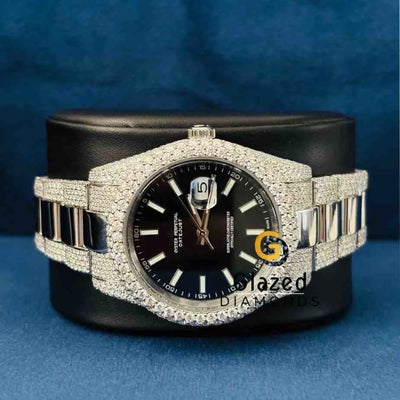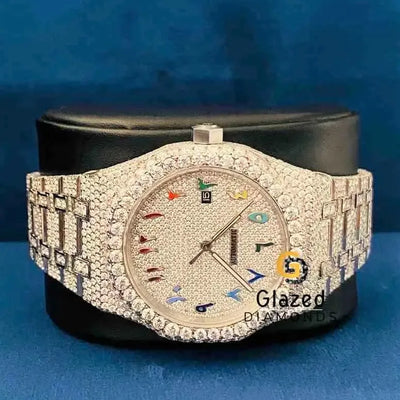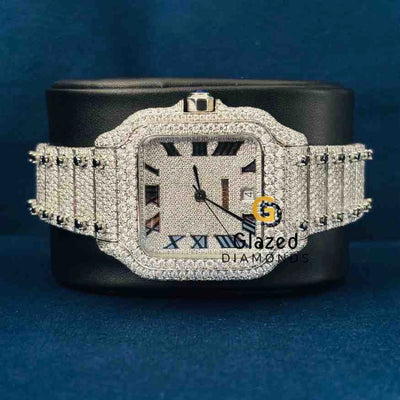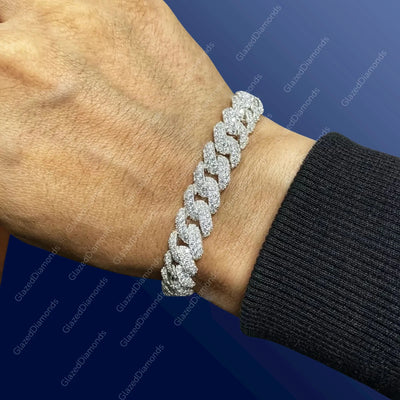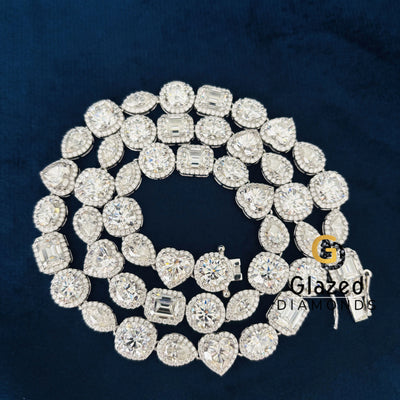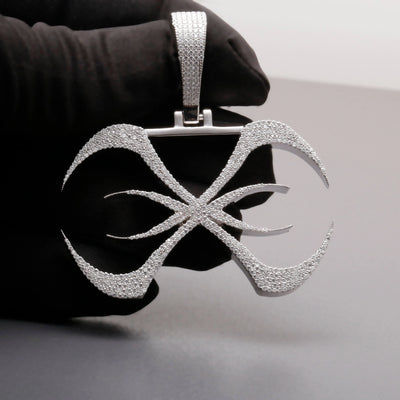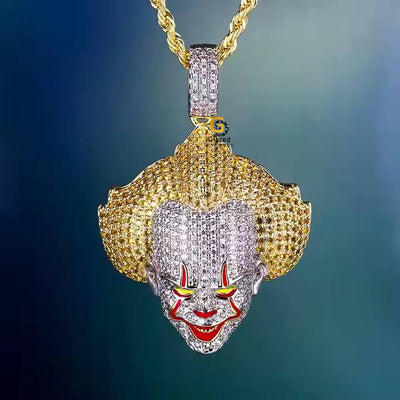



In the US, jewelry is a big, steady market, which is why “iced” looks keep showing up online and in stores. Recent estimates peg the US jewelry market around $75–77B in 2024, with continued growth. So you’ll see more sparkle, more styles, and more choices.
This guide explains what is iced out jewelry, the materials that actually matter, a fast quality checklist, and where to buy iced out jewelry with fewer headaches. We’ll also touch on returns and labeling rules that protect you in the US.

What Does “Iced Out” Mean?
“Iced out” means the piece is covered with many small stones, on faces, bezels, caps, or pavé surfaces, so it reads like one sheet of light. The base can be stainless steel, gold, or silver; the stones can be moissanite, diamond, or cheaper simulants like cubic zirconia (CZ). GIA separates true diamonds, lab-grown diamonds, moissanite, and simulants for clarity.
Key idea: luxury feel comes from clean stone matching, secure settings, and solid metal, not just “lots of stones.”
Stone Options You’ll See

-
Moissanite: Bright fire, strong hardness, consistent sizes for pavé, and friendly service costs if a stone ever needs replacing.
-
Diamond (natural or lab-grown): Classic white-light look; stricter grading and higher price, especially for full bezels.
-
CZ and other simulants: Lowest cost, but edges wear faster and sparkle drops sooner in daily wear. (GIA treats simulants distinctly.)
Metal Matters
-
Best day-to-day bases: 316L or 904L stainless steel for watches and bracelets; 10k–18k gold for fine pieces.
-
Plating: Prefer PVD over thin flash plating if you want gold-tone steel to last.
-
Red flag: “Alloy” with no detail. Soft unknown blends bend during setting and lose stone tension.
Setting Styles That Work
-
Bead-set pavé: Tiny, even beads hold matched rounds; reads as one calm field of light.
-
Channel: Straight walls secure baguettes or markers, great for edges and watches.
-
Micro-prong: For larger rounds on sturdy borders; prongs must sit low and snag-free.
If styles are mixed randomly around a bezel, the light pattern breaks and quality reads lower.
How to Judge Quality in 60 Seconds

Roll these checks through any product page:
-
Naming is honest: The page says “moissanite,” “lab-grown diamond,” or “diamond,” not just “diamond-like stones.” The FTC Jewelry Guides ask sellers to disclose lab-grown and imitation materials clearly.
-
Metal is specified: 316L/904L steel or karat gold is listed.
-
Close-ups exist: Macro photos of seats and prongs. No gaps, no glue sheen, no jagged beads.
-
Specs are concrete: Size, weight, carat range, and movement code (for watches).
-
Warranty reads plain: What’s covered on stones, plating, movement, and for how long.
-
Returns make sense: US return practices are shifting; know the window and any fees before you buy. (NRF expects ~$850B in return value in 2025 and ~15.8–19.3% return rates, policies are tightening.)
Price Tiers (and Why “Too Cheap” Usually isn’t a Win)
-
Entry ice: CZ on soft metal at the lowest price. Good for one-off looks, not for long wear.
-
Mid “smart luxury”: Moissanite on 316L/904L steel, tidy pavé, honest warranty, best mix of look + longevity for most buyers.
-
High luxury: Lab-grown or natural diamonds on gold with perfect matching and branded finishing; stunning, higher service costs.
If a listing claims premium stones at a rock-bottom price with no specs or macro shots, assume corners were cut.
Where to Buy Iced Out Jewelry and What to Ask Before Buying?

Reputable Online Retailers
-
Clear material labeling aligned with FTC language.
-
Macro photos and short natural-light videos.
-
Written specs (stones, metal, weight, size, warranty).
-
Returns policy you can understand in one read. (Free returns are less common now; many US stores charge or shorten windows.)
Brick and Mortar Stores
-
See the piece under mixed light and feel the weight.
-
Ask for scope shots or tester checks when relevant.
-
Get the same written specs on your receipt.
Designer and Custom Shops
-
Approvals in writing (renders, stone map, carat band).
-
Macro media before shipment.
-
Warranty and service path spelled out.
Are you looking for a trusted store that sells genuine iced out moissanite jewelry? Glazed Diamonds is our top recommendation. Cherish the vast collection from iced out moissanite watches to pendants, bracelets, etc. all at one place.
US-Specific Rules That Protect You
-
FTC Jewelry Guides: Require truthful terms for lab-grown diamonds and imitations; sellers must avoid deceptive names. This helps you know what you’re buying.
-
Labeling clarity builds trust: With lab-grown shares rising across US jewelry, transparent pages convert better and cut returns. (Industry tracking shows lab-grown growth and changing sales mix.)
Care Tips to Keep the Ice Bright
Most “fade” stories are surface film, not stone failure. Clean gently:
-
Bowl of lukewarm water + a few drops of mild dish soap, soft brush, rinse, pat dry with a soft cloth. Works for most fine jewelry metals and stones.
Skip harsh chemicals and abrasive cloths. For iced watches, focus on bezel edges, crown area, and first bracelet links, lotion hides there.
Conclusion
“Iced out” is a look, not a shortcut. The best pieces combine honest materials, tight stone matching, clean setting, and clear paperwork. Shop pages that label stones correctly (per FTC guidance), show macro photos, list metal and specs, and state warranty and returns in plain English.
That’s how you enjoy the shine on day one, and still feel good about it months later.
Do you want help short-listing strong iced pieces, moissanite heavy, lab-grown diamond classics, or mixed? Glazed Diamonds can point you to styles that pass these checks before they ever reach your cart.
FAQs
Is moissanite “real” jewelry for iced looks?
Yes, moissanite is a real lab-grown gemstone (silicon carbide) with strong hardness and fire. It is not a diamond but a legitimate fine stone. (See GIA’s distinctions.)
Are lab-grown diamonds the same as natural diamonds?
Chemically and optically yes; origin differs. US rules allow the word “diamond,” but the lab-grown origin must be disclosed clearly.
What return window should I expect?
It varies. Many US stores are trimming free returns due to high reverse-logistics costs; read the policy before purchase.
What’s the best metal for daily iced watches?
316L/904L stainless for durability and clean setting; PVD if you want gold-tone steel that lasts.
How often should I clean?
If you wear pieces often, a gentle soap-and-water clean every week or two keeps the sparkle high.