


The Rolex Rainbow Daytona is one of the most expensive production watches in the luxury market. It retails for around $75,000, trades on the secondary market for $300,000 or more, and features a bezel set entirely with multicolored baguette-cut sapphires. No other Rolex model generates this level of collector obsession — or this level of criticism.
It sits at the crossroads of high horology and fine jewelry. That intersection is exactly why it divides opinion so sharply.
Rainbow Daytona Price — Retail vs. Resale
The retail price for a Rainbow Daytona starts at approximately $75,000 depending on the metal and stone configuration. Reaching that price requires an established relationship with an authorized Rolex dealer and a waitlist that typically runs several years.
On the secondary market, the watch consistently trades between $250,000 and $500,000. Certain auction results have exceeded that range. The resale premium exists because Rolex allocates these pieces in limited numbers and demand has never eased.
The Gem-Set Bezel — What Makes it Technically Difficult
The bezel requires individually sourced baguette sapphires matched in cut, size, and progressive color tone — then hand-set in precise sequence to create an unbroken gradient. No two stones are identical.
This is among the most demanding processes in production watchmaking. The finished bezel looks effortless. The sourcing, grading, and setting behind it is anything but.
Which Celebrities Wear the Rainbow Daytona?
John Mayer is the most publicly documented Rainbow Daytona collector in the watch world. He owns multiple references and has spoken about them extensively across interviews and public appearances.
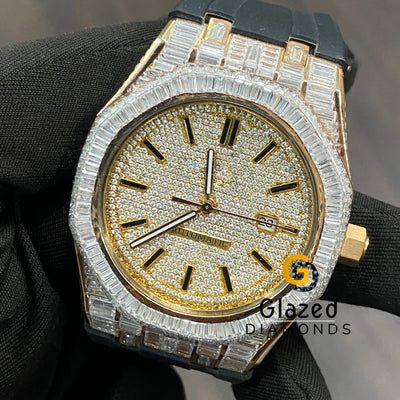
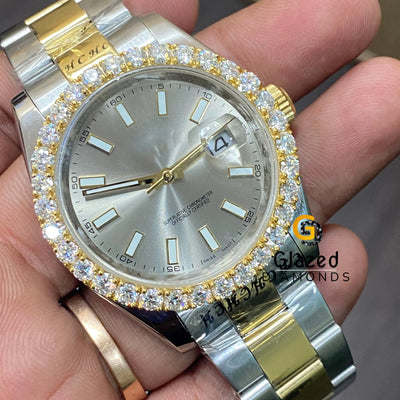
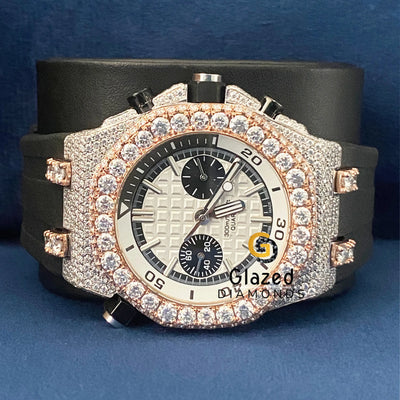
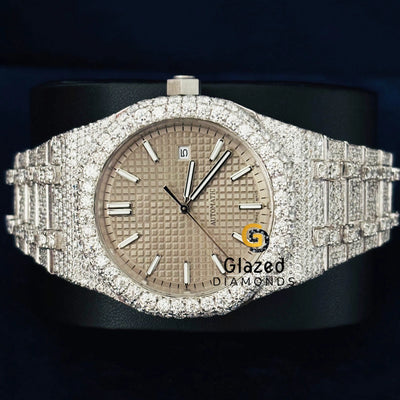
Jay-Z, Drake, and Pharrell Williams have each been photographed wearing gem-set Daytona references. The watch has become a recognizable status marker in hip-hop and entertainment culture — worn as a direct statement of financial standing and taste. The same iced-out energy has driven the rise of viral moissanite Rolex-style watches among buyers who want that same visual presence at a different price point.
Why Watch Purists Reject it
The Cosmograph Daytona was designed in the early 1960s as a precision racing chronograph. Its tachymeter bezel was functional. The dial was built for legibility at speed, not visual spectacle.
The Rainbow Daytona removes the tachymeter entirely and replaces it with gemstones. Critics argue this dismantles the original purpose of the reference. Supporters counter that gem-set Daytonas belong in a separate category — decorative timepieces for buyers who have no interest in lap timing. Both positions hold up under scrutiny.
White Gold, Yellow Gold, and Rose Gold Variations
The Rainbow Daytona is produced in white gold, yellow gold, and Everose gold. Each metal changes how the sapphire gradient reads on the wrist.
White gold creates a cooler, sharper contrast that makes the stones appear more vivid. Yellow gold warms the overall palette. Everose gold sits between the two and has become the preferred variation among many serious collectors since its release.
Conclusion
The Rolex Rainbow Daytona is technically complex, genuinely rare, and openly polarizing. It commands prices most watches will never approach, and its following spans traditional watch collecting and music culture in equal measure.
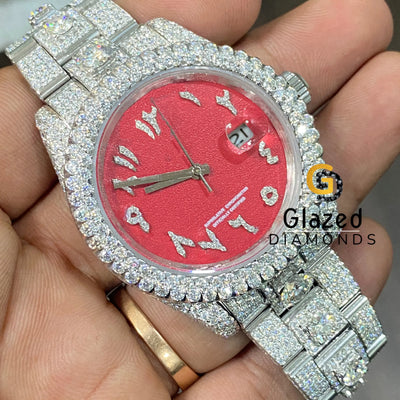
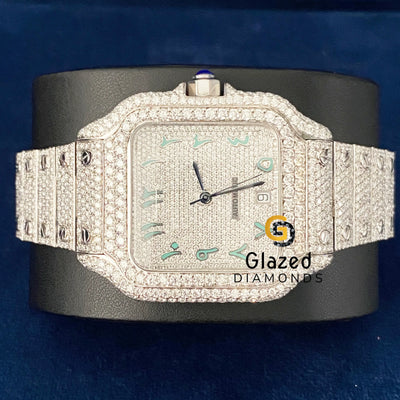
For buyers drawn to the gem-set, iced-out aesthetic without the auction-house price, iced-out Rolex moissanite watches set with VVS moissanite stones deliver comparable visual impact at a fraction of the secondary market cost. Browse the full range of moissanite watches for men or explore luxury diamond-style watches — Glazed Diamonds carries curated options built for buyers who want that level of iced-out presence. The complete jewelry and watch collection is worth a full browse if the Rainbow Daytona aesthetic is what drives the search.