
Most people shopping for a diamond eventually hit the same wall - VVS1 vs VVS2. Both sound premium. Both cost serious money. And both look nearly identical to the untrained eye. So what actually separates them, and does the difference justify the price gap?
What Does VVS Mean in Diamonds?
VVS stands for Very Very Slightly Included. It refers to diamonds that contain microscopic inclusions - internal flaws so small that even trained gemologists need 10x magnification to spot them.
The GIA (Gemological Institute of America) grades diamond clarity on an 11-point scale:
-
Flawless (FL)
-
Internally Flawless (IF)
-
VVS1
-
VVS2
-
VS1
-
VS2
-
SI1
-
SI2
-
I1, I2, I3
VVS diamonds sit just below Flawless and Internally Flawless on that scale. That positions them among the top 4 clarity grades available in the market - which is exactly why they carry the price tags they do.
VVS1 vs VVS2 - Key Differences
The difference between VVS1 and VVS2 comes down to 3 core factors:
1. Location of Inclusions
-
VVS1: Inclusions are located closer to the edge or bottom (pavilion) of the stone, making them harder to detect even under magnification.
-
VVS2: Inclusions tend to sit closer to the center or table of the stone, making them slightly easier for a grader to identify - though still microscopic.
2. Size and Visibility Under Magnification
-
VVS1 inclusions are smaller and fewer.
-
VVS2 inclusions may be slightly larger or more concentrated, but still invisible without 10x magnification.
3. Rarity and Price Impact
-
VVS1 is the rarer of the two grades.
-
A comparable VVS1 diamond typically runs 5-15% more expensive than a VVS2 diamond of the same carat, cut, and color.
For a 1-carat round brilliant diamond in the D-F color range, that price gap can mean anywhere from $500 to $2,000+ depending on the specific stone.
Can You See the Difference With the Naked Eye?
No. Both VVS1 and VVS2 diamonds are completely eye-clean. That means zero visible inclusions without magnification tools.
An "eye-clean" diamond looks flawless in normal viewing conditions - natural light, indoor lighting, across a dinner table. VVS1 and VVS2 both pass that test without question.
The difference only shows up under a loupe or microscope, in controlled grading conditions, evaluated by a trained gemologist. For the average buyer, the visual experience of wearing a VVS1 versus a VVS2 is identical.
Price Difference Between VVS1 and VVS2 Diamonds
VVS1 costs more because of rarity, not visibility. The stone is harder to find at that clarity level, which drives the premium.
According to data from Rapaport Diamond Report pricing benchmarks, a 1-carat VVS1 (D color, Excellent cut) typically runs $8,000-$12,000, while a comparable VVS2 lands around $7,000-$10,500.
That gap widens as carat size increases. At 2 carats, the VVS1 premium can stretch past $4,000 for the same specs.
For most buyers, that extra cost buys a certificate upgrade - not a better-looking diamond.
VVS vs VS vs Flawless - Where Do They Stand?
The main diamond clarity grades compare as follows:
|
Grade |
Inclusions |
Eye-Clean? |
Relative Price |
|
Flawless (FL) |
None |
Yes |
Highest |
|
Internally Flawless (IF) |
Surface only |
Yes |
Very High |
|
VVS1 |
Microscopic, edge |
Yes |
High |
|
VVS2 |
Microscopic, center |
Yes |
High |
|
VS1 |
Minor, hard to see |
Yes |
Moderate-High |
|
VS2 |
Minor, slightly easier |
Usually |
Moderate |
|
SI1 |
Noticeable under loupe |
Sometimes |
Lower |
VS2 is where things start getting practical for budget-conscious buyers. VVS territory is where collectors, investors, and buyers who specifically want a premium certificate tend to shop.
Which Clarity Is Better for Engagement Rings or Jewelry?
VVS1 makes sense when:
-
You want the highest graded clarity outside of Flawless
-
The diamond is above 2 carats (inclusions become slightly more visible at larger sizes)
-
The piece is an investment or heirloom
-
You want to future-proof resale value
VVS2 is the smarter move when:
-
You want VVS-tier quality without paying the VVS1 premium
-
The diamond is under 1.5 carats
-
The setting is a solitaire or minimal design where inclusions would be more noticeable
-
Budget matters and you'd rather allocate savings toward a better cut or larger carat
Between the two, VVS2 tends to be the better value for most buyers. The clarity is essentially identical to the naked eye, and the price difference gives you flexibility.
VVS-Style Jewelry at Glazed Diamonds
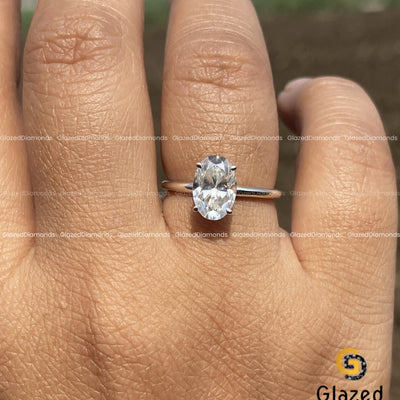
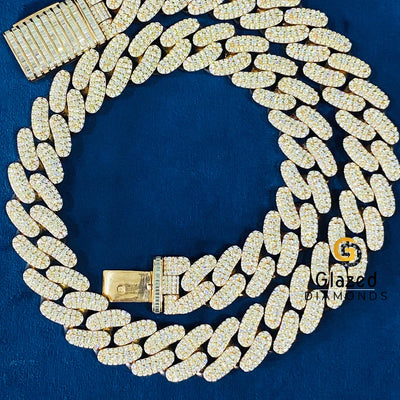
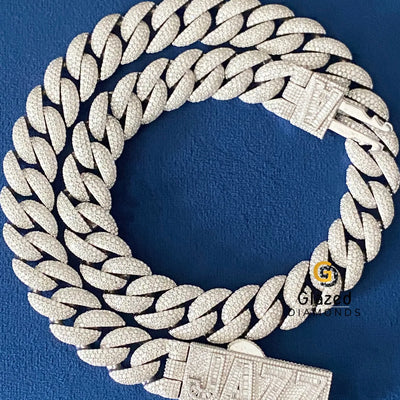
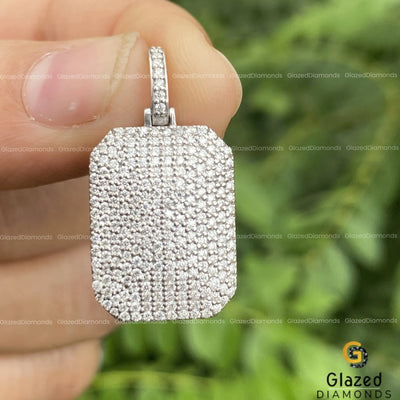
Buyers who appreciate the clean, high-clarity look of VVS diamonds often explore moissanite pieces that deliver comparable visual brilliance. Moissanite, especially at higher clarity grades, mirrors the light performance of VVS-level diamonds - without the same price barrier.
At Glazed Diamonds, the catalog focuses on iced-out chains, pendants, bracelets, and rings built specifically for buyers who want that VVS aesthetic. Every piece ships directly to the USA, and the cuts are designed to maximize light return the way high-clarity diamonds do.
If the VVS look is what you're after, moissanite gives you the same visual result at a fraction of the cost.
Frequently Asked Questions
Is VVS1 better than VVS2?
Yes, VVS1 is a higher clarity grade than VVS2. Its inclusions are harder to detect under magnification. However, both appear identical to the naked eye.
Can you see inclusions in VVS2 diamonds?
No, VVS2 diamonds are considered eye-clean. Their inclusions are extremely small and cannot be seen without magnification tools such as a jeweler’s loupe or microscope.
Is VVS2 worth buying instead of VVS1?
Yes, VVS2 offers better value for most buyers. It provides the same visual appearance as VVS1 but at a lower price. The difference is mainly in rarity, not visible beauty.
Is VVS clarity necessary for engagement rings?
VVS clarity is not required for engagement rings. VS1 or VS2 diamonds are also eye-clean and cost less. VVS is mainly chosen for premium certification.
Do VVS diamonds sparkle more than lower clarity diamonds?
No, sparkle is primarily determined by the diamond’s cut, not clarity. A well-cut VS diamond can sparkle just as much as a VVS diamond.