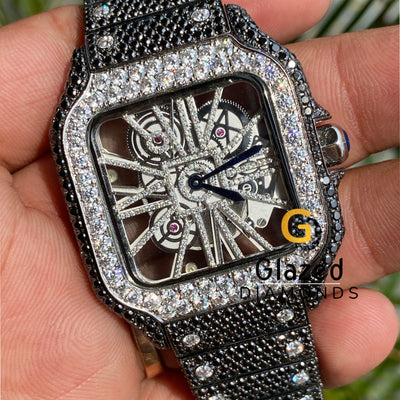

Morganite scores 7.5 to 8 on the Mohs hardness scale. Moissanite scores 9.25. That single number tells most buyers what they need to know when comparing morganite vs moissanite for fine jewelry. Beyond hardness, the two stones differ in color, brilliance, price, and long-term performance — all of which matter depending on how and where the jewelry will be worn. Glazed Diamonds carries a full range of moissanite jewelry, from iced out watches to rings and pendants, for buyers already exploring the moissanite category.
What Is Morganite?
Morganite is a gemstone from the beryl mineral family — the same family that includes emerald and aquamarine. It was first identified in 1910 and named after financier J.P. Morgan, who was a notable gemstone collector. Most jewelry-grade morganite today is mined, though lab-grown versions are also available.
Its color ranges from pale pink to peachy-pink. The presence of trace manganese within its crystal structure produces those characteristic blush tones. Deeper pink stones are less common and typically command higher prices.
Morganite is often set in rose gold, where the warm metal tones complement the stone's natural color. Prolonged UV exposure can gradually lighten the stone's color over time, which is worth noting for buyers choosing it as a center stone for daily-wear jewelry.
What Is Moissanite?
Moissanite is a lab-created gemstone composed of silicon carbide. French chemist Henri Moissan first discovered naturally occurring moissanite in 1893 inside a meteor crater. Natural moissanite is extremely rare, so virtually all moissanite used in jewelry today is produced in controlled laboratory settings.
On the Mohs scale, moissanite rates 9.25 — second only to diamond, which rates 10. Its refractive index of approximately 2.65 to 2.69 is higher than diamond's 2.42, which produces intense brilliance and fire — the dispersion of light into a spectrum of visible colors.
Moissanite is typically colorless or near-colorless, making it a strong visual alternative to white diamond. Because it is lab-grown, it is fully traceable and free of the supply chain concerns linked to mined stones.
Morganite vs Moissanite: Head-to-Head Comparison
Hardness and Durability
Moissanite rates 9.25 on the Mohs hardness scale. Morganite rates 7.5 to 8.
A gap of more than 1 point on the Mohs scale is significant in practical wear terms. Moissanite resists surface scratches from daily contact with hard surfaces, fabrics, and common household activities far better than morganite.
Morganite is still wearable for everyday use. However, it requires more careful handling. It should be kept away from harsh cleaning chemicals, abrasive surfaces, and ultrasonic jewelry cleaners, all of which can damage its surface over time.
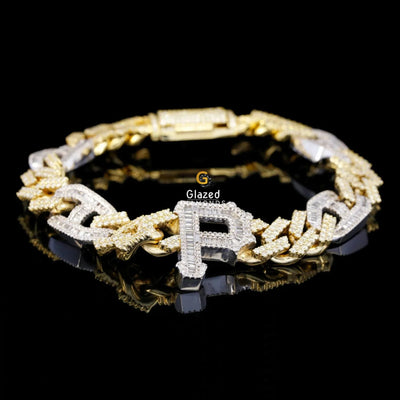
For rings and moissanite bracelets worn consistently, moissanite delivers better long-term durability with less maintenance.
Brilliance and Fire
Moissanite's refractive index sits between 2.65 and 2.69. Diamond's is 2.42. Morganite's falls between 1.57 and 1.60. That gap explains the visible difference in sparkle between the two stones.
Moissanite produces intense fire — a rainbow dispersion of light that is especially noticeable under LED lighting, sunlight, and indoor settings. Some buyers describe it as more brilliant than diamond under certain lighting conditions.
Morganite has a softer, warmer glow. Its brilliance is genuine but more subdued. Under strong lighting, the difference between the two is clearly visible to the naked eye.
Buyers who want maximum visual impact choose moissanite. Buyers who prefer a quieter, more romantic light quality tend to favor morganite.
Color
Morganite is naturally pink to peachy-pink. Exact shades depend on the stone's origin, cut quality, and treatment. Lighter stones are widely available; deep, saturated pink tones are rarer and more expensive.
Moissanite is colorless or near-colorless by default, closely resembling a white diamond. Colored moissanite stones are available but are lab-created to specific color grades, and less common than the standard near-colorless variety.
For buyers who want a distinctive colored center stone, morganite is the natural choice. For a diamond-like, colorless appearance, moissanite is the direct match.
Price
Morganite typically costs between $100 and $300 per carat. Pricing depends on color saturation, clarity, and carat weight. High-quality stones with deep pink tones sit at the upper end of this range.
Moissanite typically costs between $300 and $600 per carat for quality stones, with pricing varying based on size and grade. Despite being more expensive than morganite per carat, moissanite remains significantly more affordable than a mined diamond of equivalent size and appearance.
Both stones offer strong value compared to natural diamond. Morganite is the more budget-accessible option per carat. Moissanite offers greater durability and brilliance at a moderate price increase.
Which Is Better for an Engagement Ring?
The right choice between a morganite vs moissanite engagement ring depends on the buyer's lifestyle and priorities.
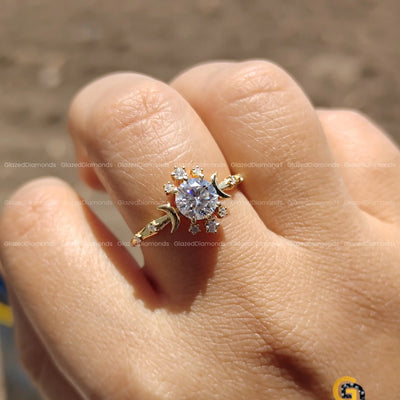
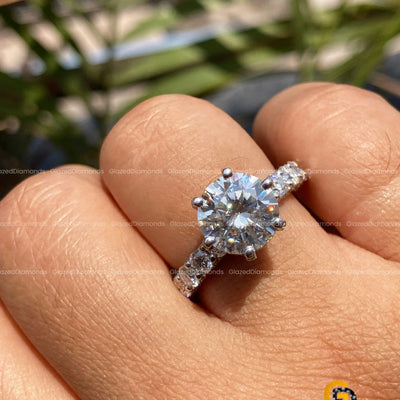
Moissanite is the stronger practical choice for daily wear. Its hardness means it holds up through years of consistent wear without losing its surface quality or brilliance. Buyers exploring moissanite engagement rings will find styles ranging from solitaire to halo settings that showcase the stone's fire effectively.
Morganite suits buyers who want a blush-toned, visually distinct center stone and are willing to handle the piece with care. It performs well in vintage-style settings and pairs naturally with rose gold. Those already browsing moissanite rings for comparison will find the durability difference becomes a deciding factor quickly.
Both are real gemstones with verified chemical compositions and crystal structures. Neither is synthetic glass or a low-quality simulant. Please review our returns policy before purchase to confirm the ring style and stone type meet your expectations.
Long-Term Wear: What to Expect
Moissanite retains its clarity and brilliance over decades of regular wear. Its hardness protects the surface from the everyday abrasion that dulls softer stones over time.
Morganite may require periodic professional cleaning and light re-polishing, particularly for rings exposed to daily wear. Its color can lighten gradually with prolonged UV exposure, though the change is slow. Proper storage and gentle cleaning extend the stone's appearance significantly.
For buyers considering moissanite pendants or any jewelry intended for consistent wear, moissanite is the lower-maintenance option across every jewelry category.
Premium Moissanite Jewelry from Glazed Diamonds
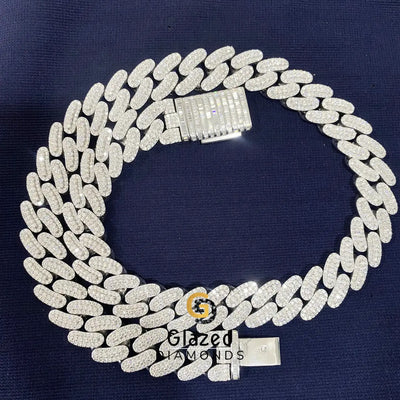
Glazed Diamonds supplies high-quality moissanite jewelry shipped directly to buyers across the USA. The full moissanite jewelry range includes rings, watches, pendants, chains, and bracelets — all built to VVS clarity standards and available at accessible price points compared to traditional diamond jewelry.
Buyers can filter by stone type, style, and price to find pieces that match their specific preferences.
Conclusion
Morganite and moissanite are both legitimate gemstone options, but they are not interchangeable. Morganite delivers a naturally blush-toned aesthetic suited to buyers who want a distinctive, colored stone and are comfortable with its care requirements. Moissanite delivers superior hardness, near-diamond brilliance, and low-maintenance wear across decades of use.
Most buyers choosing a ring for daily wear will find moissanite the stronger practical choice. Buyers prioritizing color and a romantic visual tone will find morganite harder to replace with any other stone. Every major factor needed to make that call is covered above.
Frequently Asked Questions
Is morganite or moissanite better for an engagement ring?
Moissanite is harder and more durable for daily wear. Morganite offers a softer pink aesthetic but requires more careful long-term handling.
What is the main difference between morganite and moissanite?
Moissanite is a colorless, high-brilliance lab-grown stone rated 9.25 on the Mohs scale. Morganite is a pink-to-peach beryl gemstone rated 7.5 to 8.
Is morganite cheaper than moissanite?
Morganite typically costs $100 to $300 per carat. Quality moissanite typically ranges from $300 to $600 per carat, making morganite the more affordable option per carat.
Does morganite look like moissanite?
No. Morganite is pink to peachy-pink. Moissanite is colorless or near-colorless. The two have very different visual appearances.
Which gemstone is more durable — morganite or moissanite?
Moissanite is significantly more durable, rating 9.25 on the Mohs scale compared to morganite's 7.5 to 8.
Can morganite fade over time?
Morganite can gradually lighten with prolonged UV exposure. Storage away from direct sunlight and regular gentle cleaning help maintain its color.
Does moissanite pass a diamond tester?
Moissanite registers as diamond on most standard diamond testers due to its thermal conductivity. Specialized moissanite testers can distinguish between the two.