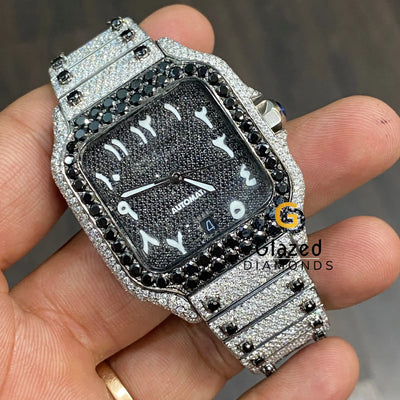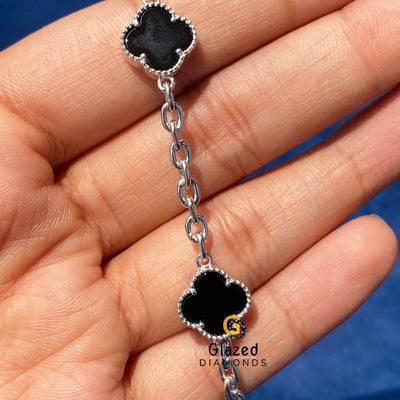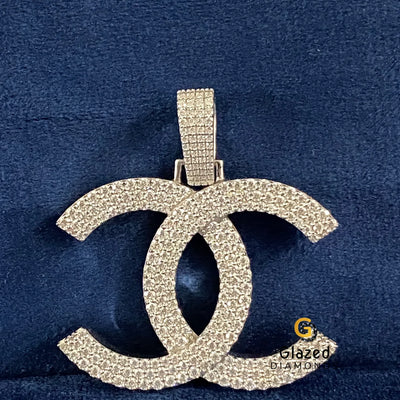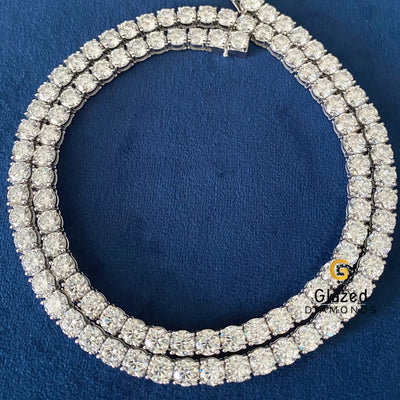

Moissanite vs lab diamond is one of the most searched jewelry comparisons in the USA right now. Both gemstones look similar at a glance, carry no ethical concerns tied to mining, and cost significantly less than natural diamonds. But they are fundamentally different stones with different chemistry, different sparkle profiles, and very different price points. Whether you are shopping for an engagement ring, a pendant, or iced out watches to complete a luxury look, understanding the difference between moissanite and lab diamond helps you buy with confidence and avoid buyer's regret. This guide covers hardness, brilliance, color, price, and long-term wearability so you can make an informed decision.
What Is Moissanite?
Moissanite is a gemstone made from silicon carbide. French chemist Henri Moissan first identified it in 1893 inside a meteor crater in Arizona, initially mistaking it for diamond. Natural moissanite deposits are extremely rare, so virtually all moissanite sold today is lab-created.
Key physical facts about moissanite:
-
Hardness: 9.25 on the Mohs scale
-
Refractive index: 2.65 to 2.69
-
Dispersion (fire): 0.104
-
Composition: Silicon carbide (SiC)
-
Light behavior: Doubly refractive
Moissanite's double refraction means light splits as it enters the stone, producing intense rainbow-colored fire that exceeds what diamonds generate. Its higher refractive index, compared to diamond's 2.42, gives it more sparkle under direct light.
For buyers exploring moissanite beyond watches, moissanite rings and moissanite pendants carry the same visual intensity at accessible price points.
What Is a Lab Diamond?
A lab diamond is chemically and physically identical to a mined natural diamond. It is made from pure carbon atoms arranged in the exact same crystal structure, produced using either high-pressure high-temperature (HPHT) or chemical vapor deposition (CVD) methods in controlled laboratory environments.
Key physical facts about lab diamonds:
-
Hardness: 10 on the Mohs scale (the maximum)
-
Refractive index: 2.42
-
Dispersion (fire): 0.044
-
Composition: Pure carbon (C)
-
Light behavior: Singly refractive
Lab diamonds are graded using GIA or IGI standards, the same certification applied to natural diamonds, covering color, clarity, cut, and carat weight. Every standard gemological test classifies a lab diamond as a real diamond.
Moissanite vs Lab Diamond: Key Differences
Hardness and Durability
Lab diamonds score a perfect 10 on the Mohs scale. Moissanite scores 9.25. Both are considered highly durable for daily wear in rings, bracelets, and watch bezels. The practical gap between 9.25 and 10 is small for most wearers over years of normal use.
One distinction worth noting: moissanite has indistinct cleavage, meaning it is less prone to large fractures when struck at an angle. Diamonds, despite their superior hardness, can cleave along crystal growth lines under the right impact. For everyday pieces like moissanite bracelets or rings, both stones perform reliably across years of wear.
Brilliance and Fire
Brilliance refers to white light reflection. Fire refers to rainbow-colored light flashes. These properties are determined by refractive index and dispersion.
|
Property |
Moissanite |
Lab Diamond |
|
Refractive Index |
2.65 – 2.69 |
2.42 |
|
Dispersion (Fire) |
0.104 |
0.044 |
|
Light Behavior |
Doubly refractive |
Singly refractive |
|
Sparkle Type |
High rainbow fire |
Classic white brilliance |
Moissanite produces roughly 2.5 times more fire than a lab diamond. Under direct light, it throws vivid, colorful flashes that are immediately noticeable. In hip-hop culture and luxury streetwear, this level of visual intensity is often preferred for high-impact pieces.
Lab diamonds produce balanced, classic sparkle with more white light and controlled fire, closest to what traditional diamond jewelry delivers. Buyers who want the conventional diamond look will find lab diamonds consistent with that standard.
Color and Visual Appearance
Lab diamonds are graded D through Z on the GIA color scale, from fully colorless to faint yellow. The most desirable stones for jewelry fall in the D to F (colorless) and G to I (near-colorless) ranges.
Moissanite is graded as:
-
Colorless: D to F equivalent
-
Near-colorless: G to I equivalent
-
Faint hue: J to K equivalent
Premium colorless moissanite appears virtually identical to a D to F lab diamond to the naked eye under standard lighting. Larger moissanite stones, generally above 2 carats, can show a subtle warm or grayish tint in certain lighting conditions. High-grade colorless moissanite minimizes this effect significantly.
Moissanite's double refraction can create a slightly different visual pattern under magnification. Without gemological tools, most buyers cannot distinguish the two stones in person.
Price Comparison
Price is the single most significant difference in the moissanite vs lab diamond comparison.
-
1-carat colorless moissanite: approximately $500 to $800
-
1-carat lab diamond (comparable quality): approximately $1,500 to $3,000
Moissanite costs 70 to 90 percent less than a comparable lab-grown diamond. That price gap allows buyers to purchase a significantly larger stone or a more elaborate setting within the same budget. A 2-carat moissanite is often priced lower than a 0.5-carat lab diamond of comparable quality.
On resale value, neither stone performs strongly. Lab diamonds retain approximately 20 to 40 percent of their purchase price. Moissanite typically returns 30 to 50 percent. Both should be purchased as jewelry, not as financial assets.
Moissanite vs Lab Diamond for Engagement Rings
For moissanite engagement rings, the main considerations are budget, desired sparkle style, and preferred stone size. Moissanite allows buyers to maximize carat size within a fixed spend. At 9.25 on the Mohs scale, it handles the daily demands of a ring setting without concern.
Lab diamonds appeal to buyers who want GIA or IGI certification confirming the stone's identity as a diamond, with full 4C grading documented. Some buyers value the symbolic connection to diamond's traditional status, which lab diamonds carry fully intact.
Both options are available in every major cut: round brilliant, oval, cushion, princess, and emerald. Both are conflict-free and require no mining. For buyers building out a full look alongside a ring, a moissanite Cuban link chain pairs cleanly with either stone in a coordinated set.
Which Is Better: Moissanite or Lab Diamond?
Neither gemstone is objectively superior. The right choice depends on personal priorities.
Choose moissanite if:
-
Budget is a primary factor and maximum stone size matters
-
High-intensity rainbow fire and sparkle is preferred
-
Diamond certification is not required
-
Environmental footprint is a concern (moissanite production uses less energy)
Choose a lab diamond if:
-
GIA or IGI certification and full 4C grading are required
-
Classic white diamond brilliance is the preferred look
-
Maximum long-term scratch resistance matters
-
The stone passing all standard diamond tester readings is important
Glazed Diamonds carries curated options across both stone types, from iced out watches and moissanite engagement rings to full jewelry sets. Explore the complete range at Glazed Diamonds to find the right piece for your budget and style. Please review the returns policy before purchase.
Conclusion
The moissanite vs lab diamond decision is straightforward once buyers understand what each stone actually delivers. Moissanite wins on price, fire intensity, and stone size for budget. Lab diamonds win on certification, hardness rating, and classic diamond aesthetics. Both are ethical, conflict-free, and built to last in fine jewelry settings. The real question is what matters most to you: maximum sparkle per dollar, or a certified diamond that is chemically identical to what comes from the earth. That answer is different for every buyer, and it should be.
Frequently Asked Questions
Is moissanite the same as a lab diamond?
No. Moissanite is silicon carbide; lab diamonds are pure carbon. They are entirely different gemstones with distinct optical and physical properties.
Which lasts longer, moissanite or lab diamond?
Both are durable enough for lifetime wear. Lab diamonds score 10 on the Mohs scale; moissanite scores 9.25. The difference is minimal for most daily wear applications.
Does moissanite look fake compared to a lab diamond?
Not to the naked eye. The visible difference is sparkle style: moissanite produces more rainbow fire, while lab diamonds deliver cleaner white brilliance.
Is a lab diamond more expensive than moissanite?
Yes. Lab diamonds typically cost 70 to 90 percent more than comparable moissanite.
Can moissanite pass a diamond tester?
Some moissanite registers as diamond on standard testers. Dedicated moissanite testers can distinguish between the two stones accurately.
Which is better for an engagement ring, moissanite or lab diamond?
Moissanite offers more fire and lower cost; lab diamonds offer certified diamond identity and slightly greater hardness. The right choice depends on budget and preferred sparkle.
Does moissanite lose its sparkle over time?
No. Moissanite's hardness and refractive properties are permanent. It does not cloud, fade, or lose brilliance with proper care.