

Diamond vs moissanite in sunlight is one of the most useful comparisons a jewelry buyer can make before committing to a stone. Natural outdoor light exposes every optical difference between these two gems — differences that controlled studio photos often hide. Whether the stone is going into a ring, a pendant, or a fully iced-out moissanite watch collection, understanding how each gem behaves in direct sunlight gives buyers a real-world performance picture. This guide covers brilliance, fire, rainbow flashes, and visual impact — the full outdoor picture for both stones.
What Makes a Gemstone Sparkle?
Two physical properties control all gemstone sparkle. Every visual difference between diamond and moissanite in sunlight traces back to these two numbers.
Refractive Index (RI): The RI measures how much a stone bends light as it passes through. A higher number means more light is captured and returned to the eye as white sparkle. Diamond has an RI of 2.42. Moissanite has an RI of 2.65 to 2.69.
Dispersion (Fire): Dispersion measures how efficiently a stone splits white light into spectral colors — the rainbow flashes visible in sunlight. Diamond has a dispersion rate of 0.044. Moissanite has a dispersion rate of 0.104, which is more than double.
These two measurements explain every visible difference between the two stones outdoors.
Diamond in Sunlight: What You Actually See
Diamonds return a combination of white brilliance and subtle color flashes. The sparkle is sharp, precise, and controlled — not overwhelming. Under direct outdoor light, a well-cut diamond produces clean white reflections with restrained bursts of spectral color at the edges.
Diamond is singly refractive. Light travels through it in a single path, producing a balanced, refined sparkle pattern. The visual result reads as sophisticated and classic. The flashes are concentrated, not scattered.
For buyers who value understated luxury, diamond's sunlight performance is its core appeal.
Moissanite in Sunlight: What You Actually See
Moissanite produces significantly more visible sparkle in direct sunlight than diamond. Its higher refractive index returns more total light, and its dispersion rate more than doubles diamond's, creating intense rainbow flashes with every angle change.
Moissanite is doubly refractive. Light splits into two separate rays as it travels through the stone. This doubles the number of light paths inside the gem, producing a denser, more layered sparkle pattern than diamond can create.
In direct sunlight, the difference is visible to most people without any gemological training. Moissanite produces bold, vivid rainbow flashes across its entire surface. This effect becomes more pronounced in larger stones and round brilliant cuts.
The Moissanite Rainbow Effect in Sunlight
The moissanite rainbow effect in sunlight is a direct result of its 0.104 dispersion score — more than double diamond's 0.044.
Under outdoor light:
-
White sunlight enters the stone
-
The stone splits it into red, blue, yellow, and green wavelengths
-
Each wavelength exits at a different angle, producing visible color flashes across the surface
-
The double refraction adds a second layer of light paths, intensifying the effect
This effect is most visible in stones above 1 carat equivalent and in cuts designed to maximize light return, particularly round brilliant. It is not a flaw or a quality issue. It is a direct function of moissanite's optical physics.
Diamond vs Moissanite Brilliance: Side-by-Side Data
|
Property |
Diamond |
Moissanite |
|
Refractive Index |
2.42 |
2.65–2.69 |
|
Dispersion (Fire) |
0.044 |
0.104 |
|
Refraction Type |
Single |
Double |
|
Mohs Hardness |
10 |
9.25 |
|
Sunlight Sparkle Style |
White, crisp, refined |
Rainbow-heavy, intense, bold |
Both stones are highly durable. Neither fades, clouds, or loses its sparkle under sunlight exposure over time.
Which Stone Looks Better in Outdoor Lighting?
The honest answer is that they produce different optical experiences — and which one looks "better" depends entirely on what the buyer wants.
Buyers who choose moissanite for outdoor performance typically want:
-
Maximum visibility and sparkle intensity
-
Bold, colorful rainbow flashes over subtle white light
-
High visual impact in larger stones and statement moissanite rings
-
A stone that catches light and attention outdoors
Buyers who choose diamond for outdoor performance typically want:
-
Clean, white, understated brilliance
-
Controlled sparkle without heavy color dispersion
-
A classic, refined look in traditional settings
-
A stone that reads as precise and minimal
In practical terms: standing outdoors in natural light, a moissanite stone will draw more visual attention than a diamond of the same size. Whether that is the goal depends on the buyer's aesthetic priorities.
Does Stone Size Change the Sunlight Effect?
Yes, significantly. The larger the stone, the more the difference between diamond and moissanite becomes visible outdoors.
In stones under 1 carat equivalent, the two gems appear very similar side by side and most people cannot distinguish them without close inspection. In stones at 2 carats and above, moissanite's rainbow effect becomes clearly visible to the naked eye in outdoor light.
For buyers selecting moissanite engagement rings with a large center stone, this distinction is worth factoring into the decision. A 2-carat moissanite in direct sunlight will display visibly more intense rainbow flashes than a comparably sized diamond.
Moissanite Sunlight Performance in Iced-Out Jewelry
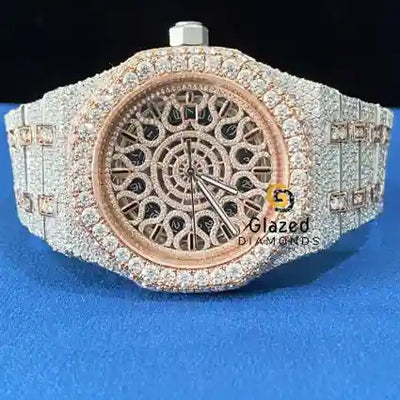
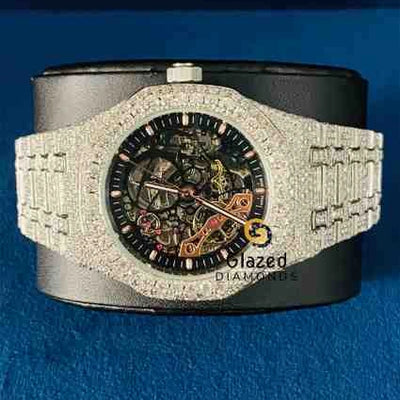
Moissanite's optical properties translate directly to high-visibility jewelry performance. Its elevated fire and dense sparkle output make it a practical choice for fully set pieces where visual impact in outdoor and event lighting is the primary goal.
Across US hip-hop and luxury streetwear culture, moissanite has become the preferred stone for iced-out settings precisely because of this sunlight advantage. Moissanite pendants on Cuban chains, fully set watch bezels, and pave-set bracelets all benefit from moissanite's higher dispersion rate when worn outdoors or under stage and event lighting.
The choice is no longer purely about budget. Moissanite's optical output in sunlight makes it the technically superior choice for buyers who prioritize maximum visual density.
Why Buyers Choose Glazed Diamonds for Moissanite Jewelry
Glazed Diamonds carries VVS moissanite jewelry for the US market — including watches, rings, chains, moissanite jewelry across all categories, and custom pieces. All orders ship directly to the USA. Please review the returns policy before purchase.
Conclusion
Diamond vs moissanite in sunlight is not a question of which stone is better — it is a question of which optical effect fits the buyer's goal.
Diamond delivers clean, white, controlled brilliance. The sparkle is classic, restrained, and reads as refined luxury.
Moissanite delivers bold rainbow fire with more total light output. The sparkle is dense, colorful, and commands outdoor attention.
Both stones are durable enough for lifetime wear. Neither clouds or fades. The decision comes down to one preference: understated precision, or maximum visual impact.
For buyers prioritizing outdoor sparkle and high-visibility performance, moissanite wins the comparison on pure optical output.
FAQs
Does moissanite shine more than diamond in sunlight?
Moissanite produces more total sparkle in sunlight than diamond. Its refractive index of 2.65 to 2.69 exceeds diamond's 2.42, and its dispersion rate of 0.104 is more than double diamond's 0.044. The result is more intense, more colorful light output in direct outdoor light.
Can you tell the difference between moissanite and diamond in sunlight?
Side by side in direct sunlight, the difference is visible to most people. Moissanite produces bold rainbow flashes. Diamond returns more white light with less color dispersion. Without a side-by-side comparison, most people cannot distinguish them at a distance.
What is the moissanite rainbow effect?
The moissanite rainbow effect is the intense colored light display moissanite produces in sunlight. It results from its dispersion rate of 0.104 — more than twice diamond's 0.044. It is a natural optical property of the stone's chemical structure, not a defect.
Does diamond vs moissanite brilliance differ indoors vs outdoors?
The difference is most visible under direct sunlight and bright outdoor lighting. Under LED or standard indoor lighting, both stones sparkle strongly and the contrast between them is less dramatic.
Does moissanite look fake in sunlight?
Moissanite does not look fake. It looks different from diamond. Its rainbow fire is more intense, which reads as bold and high-visibility. Buyers who prefer understated sparkle may favor diamond's sunlight performance. Buyers who want maximum visual impact outdoors typically prefer moissanite.
How does moissanite fire vs diamond fire affect iced-out watch stones?
For fully set iced-out jewelry and watches, moissanite's higher fire is a direct performance advantage. More rainbow flashes per stone means more combined visual output across a fully paved bezel or bracelet in outdoor and event lighting.