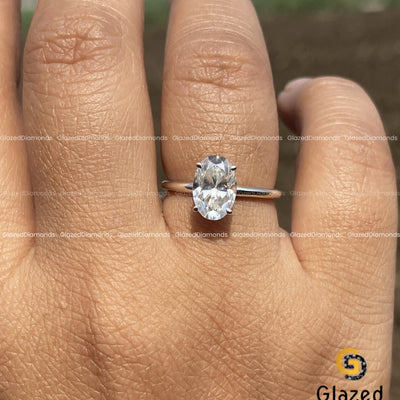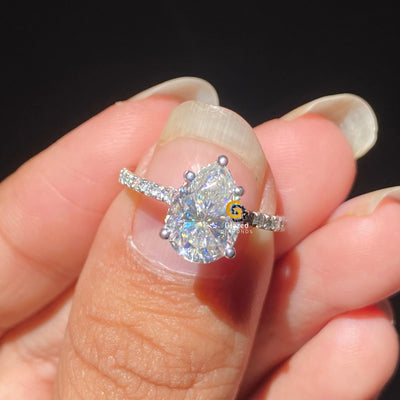



Diamond fluorescence in sunlight is the visible glow certain diamonds produce when UV rays in natural light excite their internal crystal structure. Roughly 25–35% of diamonds show some level of fluorescence — a fact most buyers only discover after purchasing a stone. For buyers comparing diamond and moissanite options, the moissanite watches collection shows how moissanite's distinct optical behavior performs under the same outdoor lighting conditions.
This post covers what causes fluorescence, how GIA grades it, when it improves or hurts a diamond's appearance, and how it affects pricing. Buyers researching how color grade interacts with fluorescence will find the complete guide to diamond color useful alongside this page.
What Causes Diamond Fluorescence in Sunlight?
Fluorescence happens when UV light strikes trace elements inside a diamond, most commonly nitrogen or boron atoms that became trapped in the crystal structure as the stone formed underground over billions of years. The crystal absorbs UV energy and re-emits it as visible light.
Natural sunlight contains UV radiation. Fluorescence is most visible outdoors on a bright day and less visible under standard indoor lighting. It is not a flaw. It is a natural optical property that varies from stone to stone based on formation conditions.
Why Does My Diamond Glow Blue?
Blue is the most common fluorescence color. The majority of fluorescent diamonds emit blue light because of how nitrogen-related structural elements interact with UV radiation at the atomic level.
Other colors exist but are far rarer. Yellow and orange fluorescence appear in some fancy color diamonds. White fluorescence is occasionally reported but uncommon in standard white diamonds.
The strength of the blue glow depends entirely on the stone's fluorescence grade assigned during certification.
GIA Diamond Fluorescence Grades Explained
GIA grades fluorescence on five levels, which appear on every GIA grading report:
-
None — No reaction under UV light
-
Faint — A barely visible glow in direct UV exposure
-
Medium — A visible glow in bright sunlight or UV lighting
-
Strong — A clearly visible glow that can affect face-up appearance
-
Very Strong — An intense glow that may cause the stone to appear hazy or milky
Checking this grade on the certificate is a basic step before purchasing any diamond. Buyers who want to understand the complete grading system alongside fluorescence can review the 4Cs diamond quality guide, which covers cut, color, clarity, and carat in full.
Does Diamond Fluorescence Make a Diamond Look Better or Worse?
The impact depends entirely on two factors: the diamond's base color grade and the intensity of its fluorescence.
When Fluorescence Improves Appearance
In diamonds graded I, J, K, or lower on the color scale, blue fluorescence partially offsets the slight yellow tint visible in those stones. The blue emission counteracts yellow, making the diamond appear whiter in outdoor light. Buyers in the I–K color range often consider faint to medium fluorescence a benefit.
When Fluorescence Causes Problems
In colorless diamonds graded D, E, or F, strong or very strong fluorescence can cause a hazy, milky, or washed-out appearance in bright light. GIA studies confirm this effect occurs in a small percentage of very strongly fluorescent stones. The industry calls this the "over-blue" effect.
Faint and medium fluorescence grades in colorless diamonds typically produce no visible negative impact during normal wear.
Does Fluorescence Affect Diamond Value?
Fluorescence affects pricing differently depending on color grade.
For lower-color grades (I and below), medium to strong fluorescence can slightly increase perceived value. The visual benefit of improved whiteness is seen as a positive by many buyers.
For high-color grades (D, E, F), strong fluorescence typically results in a price discount of 5–15% compared to non-fluorescent stones with equal clarity and cut grades. The discount reflects buyer preference, not a structural defect.
Faint fluorescence has no consistent price impact across color grades.
Diamond Fluorescence in Photos vs. Real Life
Jewelry photography is almost always done under UV-free studio lighting. A strongly fluorescent diamond will photograph differently than it appears outdoors.
Two stones can look nearly identical in product images but behave very differently in natural sunlight. Evaluating a diamond under both UV light and direct daylight gives a far more accurate picture of how it will look in daily wear.
Moissanite Fluorescence vs. Diamond Fluorescence
Moissanite does not fluoresce the same way diamond does. Its optical behavior comes from a higher refractive index (2.65–2.69 compared to diamond's 2.42), which produces stronger light dispersion and a different kind of brilliance.
Rather than emitting a blue glow under UV, moissanite reflects broader rainbow light patterns. This comes from how it refracts and splits white light, not from fluorescence as defined in diamond grading. The result is a visual character that is distinct from diamond in any lighting condition.
Buyers interested in how the two compare in natural outdoor light can read the full breakdown on diamond vs. moissanite in sunlight. For a complete side-by-side of properties and differences, the moissanite vs. diamond guide covers both stones in depth.
Conclusion
Diamond fluorescence in sunlight is a measurable, graded optical property. It is not a defect, but it does affect appearance and pricing in ways most buyers are not told upfront. The impact is positive in lower-color diamonds and potentially negative in colorless grades when fluorescence is strong or very strong. Always verify the GIA certificate before committing to a purchase. Moissanite, with its different optical structure and distinct light behavior, is a well-documented alternative worth understanding. Both options, along with the education to support every decision, are available at Glazed Diamonds.
FAQs
What is diamond fluorescence in sunlight?
Diamond fluorescence in sunlight is the visible glow a diamond emits when UV rays in natural light excite its internal crystal structure, causing it to release visible light.
Why does my diamond glow blue in sunlight?
Blue is the most common fluorescence color in diamonds. It results from nitrogen-related structural interactions within the crystal lattice that re-emit UV energy as blue visible light.
Is diamond fluorescence good or bad?
It depends on the color grade. Fluorescence can visually improve lower-color diamonds (I–K) by reducing yellow tint. In high-color diamonds (D–F), strong fluorescence can cause a milky or hazy appearance.
Does fluorescence affect diamond value?
Yes. Strong fluorescence in high-color diamonds typically produces a price discount of 5–15%. In lower-color grades, it can be a visual and perceived-value benefit.
What are the GIA diamond fluorescence grades?
GIA grades fluorescence as None, Faint, Medium, Strong, or Very Strong. These grades are included on every certified GIA grading report.
Does moissanite have fluorescence like a diamond?
Moissanite does not fluoresce the same way. Its brilliance comes from a higher refractive index that disperses light differently, producing rainbow-like light patterns rather than a UV-triggered blue glow.
Can fluorescence be seen in all lighting conditions?
Fluorescence is most visible outdoors in direct natural sunlight, which contains UV radiation. It is typically not visible or barely visible under standard indoor lighting, LED lighting, or studio photography conditions.
Should I avoid buying a diamond with fluorescence?
Not automatically. For I–K color grade stones, medium fluorescence is often a visual benefit. For D–F colorless diamonds, strong or very strong fluorescence warrants caution due to the risk of a hazy appearance. Faint fluorescence across all color grades has no consistent negative impact.