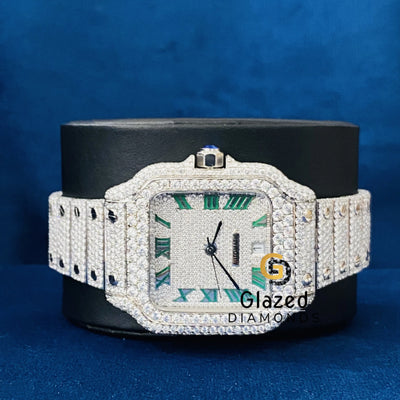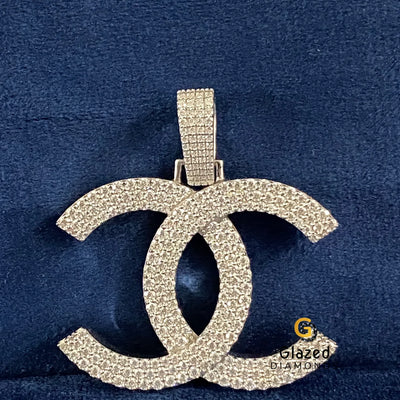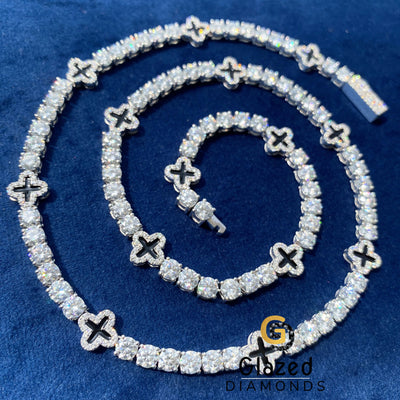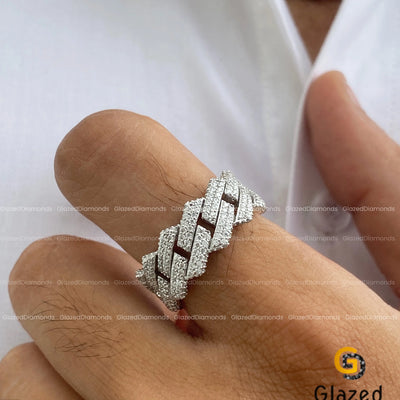


Are moissanite diamonds real? That depends entirely on how you define "real." Moissanite is a 100% genuine gemstone with its own mineral classification, chemical composition, and hardness rating, but it is not a diamond. The two stones look nearly identical to the untrained eye, yet they are made of completely different materials. Buyers exploring iced out moissanite watches, rings, and chains frequently ask this question before committing to a purchase. This guide explains exactly what moissanite is, what separates it from natural diamonds, and why it has become the dominant stone in modern luxury and hip-hop jewelry.
Are Moissanite Diamonds Real or Fake?
Moissanite is not a fake diamond. It is a real gemstone with its own mineral identity, chemical structure, and optical characteristics. Classifying moissanite as fake is the equivalent of calling a sapphire a fake ruby. They are simply different stones.
Moissanite is composed of silicon carbide (SiC). Diamonds are composed of pure carbon. These are two entirely different chemical compounds, which is why gemologists classify them as separate minerals with separate grading standards.
Natural moissanite was first discovered in 1893 by Nobel Prize-winning chemist Henri Moissan inside a meteor crater at Canyon Diablo, Arizona. He initially identified the crystals as diamonds. Eleven years later, laboratory analysis confirmed they were silicon carbide, a material with no presence in natural diamonds.
Because natural moissanite crystals are extremely rare (most measure under 1.5mm and weigh less than 0.015 carats), virtually all moissanite used in jewelry today is lab-grown. Lab-grown moissanite carries the exact same physical and chemical properties as its natural counterpart, produced under controlled scientific conditions that replicate how the mineral forms in nature.
Is moissanite a real gemstone?
Yes. Moissanite is a real gemstone.
It is not a synthetic diamond, not cubic zirconia, and not an imitation stone. It exists in nature, holds its own mineral classification, and is evaluated using its own established gemological standards.
What Is the Difference Between Moissanite and Diamonds?
Moissanite and diamonds share a visual similarity but differ in several measurable and significant ways. Understanding these differences gives buyers the knowledge to choose with full confidence.
Chemical Composition
-
Moissanite: silicon carbide (SiC)
-
Diamond: pure carbon (C)
This difference in composition is the foundational reason the two stones are classified as separate gemstones. No amount of cutting, polishing, or setting changes this fact.
Hardness
Diamonds score a 10 on the Mohs hardness scale, the highest rating of any natural material. Moissanite scores 9.25, which makes it the second-hardest gemstone used in fine jewelry. Both stones resist everyday scratching effectively, making either a practical choice for rings, watches, and statement pieces worn daily.
Brilliance and Fire
Moissanite has a higher refractive index than diamond: 2.65 to 2.69 compared to diamond's 2.42. A higher refractive index means light bends more intensely through the stone, producing what gemologists call fire, which is the vivid dispersion of light into rainbow-colored flashes.
Moissanite produces approximately twice the fire of a natural diamond. Under direct sunlight or strong artificial lighting, this creates a more colorful, prismatic sparkle. Diamonds produce a whiter brilliance with subtle blue and grey tones. The difference is visible when stones are placed side by side but is not apparent at a casual glance, particularly in smaller carat sizes.
Price
Price is one of the most significant practical differences between moissanite and diamonds.
-
A 1-carat natural diamond typically ranges from $3,000 to $10,000 or more, depending on cut, color, and clarity.
-
A comparable moissanite stone costs a fraction of that price.
The gap exists because natural diamonds are mined and governed by supply scarcity. Moissanite is lab-grown, which removes mining costs and supply chain constraints entirely. For buyers who want a large, brilliant stone with proven durability, moissanite delivers at a significantly lower price point. Shoppers building a jewelry wardrobe can browse the moissanite rings collection to see what full stone coverage looks like across different settings.
Color
Modern lab-grown moissanite is consistently produced in the colorless to near-colorless range, hitting the D-E-F color grades. Earlier moissanite from older production runs could carry a faint yellow or green tone under certain lighting, but current manufacturing standards have largely eliminated that issue.
Diamonds use a standardized GIA color grading system from D (colorless) to Z (visible color). Moissanite is evaluated on a similar scale but graded in color ranges rather than individual letter grades.
Double Refraction
Moissanite is birefringent, meaning light traveling through it splits into two separate beams. Diamonds are singly refractive. Under magnification, this creates what gemologists call doubling, where facet edges inside the stone appear doubled. This is one of the primary methods trained jewelers use to distinguish moissanite from diamond without laboratory equipment.
Why Moissanite Is Used in Modern Jewelry
Moissanite's growth across the jewelry market is driven by three clear factors: durability, brilliance, and price accessibility.
At 9.25 on the Mohs scale, moissanite withstands daily wear without scratching or dulling over time. It performs reliably in pendants, bracelets, rings, and watches, all jewelry formats where stone durability under constant wear is a real concern.
Its high refractive index produces sparkle that outperforms many natural diamonds, particularly in larger, fully iced settings where the quantity and interaction of stones create the visual statement. This is a key reason moissanite dominates iced-out jewelry design.
In hip-hop and luxury streetwear, moissanite has become the standard stone for bust down watch designs and moissanite Cuban link chains. Full stone coverage at scale requires hundreds of individual stones. Moissanite makes that achievable at a price that makes sense, while every stone remains a genuine gemstone, not glass or cubic zirconia.
Moissanite also carries no ethical issues tied to mining. Every stone in modern jewelry is lab-grown, which removes sourcing and supply chain concerns entirely.
Why Buyers Choose Moissanite Jewelry at Glazed Diamonds
Glazed Diamonds offers a curated catalog of high-quality moissanite jewelry for the USA market, covering watches, chains, pendants, rings, and bracelets, all built around VVS-grade moissanite stones in premium metal finishes. Each piece is designed for buyers who want genuine gemstone quality with a high-impact modern aesthetic. Please review our returns policy before purchase.
Conclusion
Moissanite is a real gemstone. It is not a diamond, and it is not fake. It is silicon carbide, a distinct mineral with its own hardness rating, fire, and optical signature that sets it apart from both natural diamonds and imitation stones. Buyers who understand this make decisions they are confident in, not ones they second-guess six months later. Moissanite offers genuine durability, intense brilliance, and real price accessibility. That combination has made it the stone of choice for modern luxury and hip-hop jewelry buyers who refuse to compromise on visual impact. Browse the full moissanite jewelry catalog to find pieces built around this standard.
Most buyers spend weeks debating moissanite versus diamond. The stone that fits your lifestyle, your budget, and your aesthetic is the right call regardless of what anyone else wears.
FAQs
Are moissanite diamonds real diamonds?
No. Moissanite is a real gemstone, but it is not a diamond. It is made of silicon carbide, while diamonds are made of pure carbon.
Is moissanite a fake diamond?
No. Moissanite is a separate gemstone with its own chemical composition, hardness, and optical properties. It is not an imitation or fake version of any other stone.
What is the difference between moissanite and diamond?
The primary differences are chemical composition, light dispersion, and price. Moissanite produces more colorful fire than diamond and costs significantly less for the same carat size.
Is moissanite a real gemstone?
Yes. Moissanite is a naturally occurring mineral composed of silicon carbide. Because natural moissanite is extremely rare, all jewelry-grade moissanite is lab-grown.
Why does moissanite look like a diamond?
Both stones are colorless to near-colorless, cut in similar facet patterns, and highly reflective. Their visual similarity results from comparable optical properties, though moissanite produces more colorful light dispersion under strong lighting.
Will moissanite pass a diamond tester?
Moissanite conducts heat similarly to diamond, so it can register as diamond on standard thermal conductivity testers. Electrical conductivity testers can accurately distinguish between the two stones.
Is moissanite a natural stone or lab-created?
Moissanite exists in nature but is extremely rare. All moissanite used in modern jewelry is lab-grown under conditions that replicate the stone's natural properties exactly.