


Is moissanite worth anything? The short answer is yes, but its value works differently from natural diamonds. Moissanite is a lab-created silicon carbide gemstone known for exceptional brilliance, durability, and accessible pricing. Buyers often choose moissanite for its visual performance and affordability rather than long-term investment value. This guide explains how moissanite is priced, whether it holds resale value, and how it compares to diamonds in the modern jewelry market.
What Is Moissanite and What Makes It Valuable
Moissanite is a gemstone composed of silicon carbide, first identified in 1893 by French chemist Henri Moissan inside a meteorite crater in Canyon Diablo, Arizona. Natural moissanite is extremely rare. Almost all moissanite sold today is grown in a laboratory under controlled conditions, which delivers consistent quality and eliminates the cost associated with mining.
The gemstone scores 9.25 to 9.5 on the Mohs hardness scale, second only to diamond, which scores a perfect 10. That level of hardness makes moissanite highly resistant to scratching and well suited for everyday wear across rings, moissanite pendants, bracelets, and watches.
Optically, moissanite outperforms diamond in several measurable categories. Its refractive index ranges from 2.65 to 2.69, compared to 2.42 for diamond. Its fire dispersion rating is 0.104, more than twice the 0.044 fire rating of diamond. In practical terms, moissanite produces more intense colorful light flashes and measurably higher brilliance than diamond, making it one of the most optically powerful gemstones available at any price point.
For buyers who want to understand what moissanite actually is at a deeper level before purchasing, the stone's physical properties set a clear foundation for its value.
Why Moissanite Is Cheaper Than Diamond
The price difference between moissanite and diamond comes down to rarity, production cost, and market positioning, not quality.
Natural diamonds form over billions of years deep within the Earth and require expensive, large-scale mining operations to extract. That combination of scarcity and extraction cost drives the retail price significantly higher.
Moissanite is produced in a laboratory. Silicon carbide can be grown under controlled conditions consistently, meaning supply is not constrained the way natural diamonds are. Lower production costs translate directly into lower retail prices for buyers.
A 1-carat colorless moissanite typically retails between $300 and $800, depending on cut, color grade, and vendor. A comparable natural diamond of similar grade can range from $4,000 to $12,000. That gap, roughly 10 to 20 percent of diamond pricing, is the core reason moissanite has attracted a fast-growing segment of the jewelry market.
Lab production also means moissanite carries no ethical concerns tied to mining practices. Buyers focused on traceable, conflict-free sourcing treat this as an additional layer of value when making purchasing decisions.
Does Moissanite Have Resale Value
Moissanite does have resale value, but buyers should approach it with realistic expectations rather than investment-grade thinking.
Diamond jewelry typically resells at 25 to 50 percent of its original retail price. Moissanite, despite carrying a lower entry price, can return approximately 50 to 60 percent of purchase cost on the secondary market when sold through the right channels, including peer-to-peer jewelry resale communities.
The lower the initial purchase price, the lower the absolute dollar loss at resale. A buyer who paid $500 for a moissanite piece and recovers $275 has a comparable percentage outcome to a diamond buyer who paid $5,000 and recovered $2,500. The actual financial exposure on moissanite is substantially smaller.
Factors that improve resale potential include:
-
Larger carat weight
-
Colorless or near-colorless grade (D-F equivalent)
-
VVS clarity rating
-
Classic, timeless design rather than heavily trend-driven styles
-
Original purchase documentation and grading certification
Buyers who approach moissanite as wearable luxury rather than a speculative asset are better positioned to appreciate the full value proposition. The complete moissanite jewelry collection at Glazed Diamonds focuses on timeless cuts and quality settings built to hold aesthetic value over time.
Moissanite vs Diamond Value: A Practical Comparison
The moissanite vs diamond value question requires separating purchase value from long-term resale value, as they tell different parts of the story.
At purchase: Moissanite delivers more brilliance per dollar than any other gemstone. For buyers who want maximum visual impact within a defined budget, moissanite is the stronger financial decision at retail.
At resale: Natural diamonds hold a stronger secondary market presence due to decades of cultural positioning, established grading infrastructure, and brand recognition. Moissanite has a growing but less mature resale market by comparison.
As a daily wear piece: Moissanite does not cloud, fade, or tarnish. Its hardness and structural stability mean the stone maintains the same optical performance for decades. The long-term wearable value is genuinely strong.
For buyers who want a more detailed breakdown, a full moissanite vs diamond comparison covers the key differences across appearance, durability, and pricing in depth.
What Determines the Price of Moissanite Jewelry
Several factors control moissanite gemstone price across the market:
Color grade: Colorless moissanite in the D-F equivalent range commands higher prices than near-colorless or earlier-generation stones with yellow or green tints. Modern VVS colorless moissanite is the benchmark for premium pricing.
Carat weight: Larger stones cost more. Unlike natural diamonds, moissanite pricing does not increase exponentially with size. A 5-carat moissanite costs a fraction of what a 5-carat diamond would, making large statement pieces financially accessible.
Cut quality: A well-cut moissanite maximizes light return and fire. Round brilliant, cushion, and oval cuts tend to perform strongest optically. Poor cut quality reduces brilliance regardless of color or clarity grade.
Setting and metal: The metal setting, whether 14k gold, 18k gold, 925 silver, or two-tone, contributes significantly to the final retail price of a finished piece.
Vendor and documentation: Stones sold with proper documentation from credible sources and backed by reputable vendors typically carry a small premium that reflects quality assurance, not just branding.
Is Moissanite Jewelry Worth Buying?
Moissanite jewelry is worth buying when evaluated on its actual performance metrics: optical brilliance, hardness, durability, and cost efficiency per dollar spent.
It is not a speculative investment vehicle. No gemstone, including most natural diamonds sold at retail, reliably appreciates in value for the average buyer. The natural diamond market has experienced significant price compression in recent years, in part due to the growth of lab-grown alternatives.
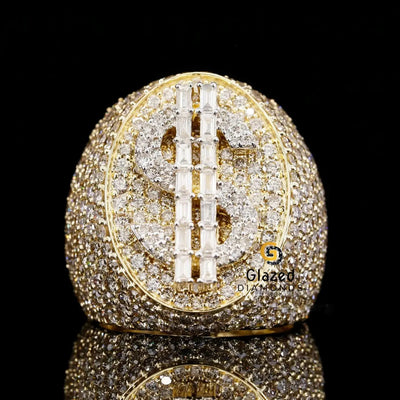
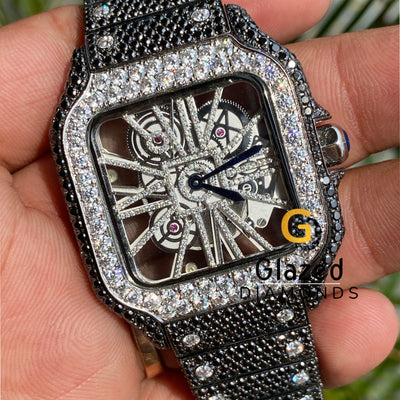
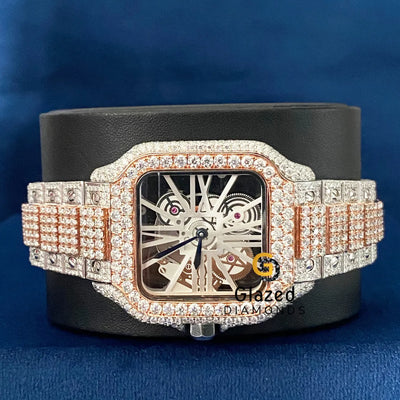
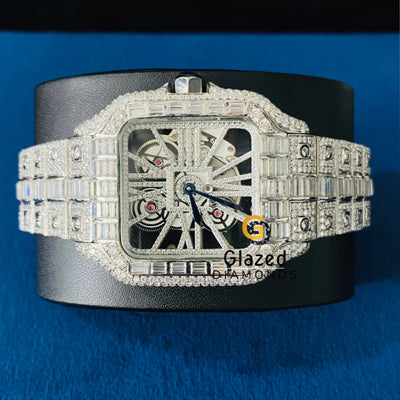
Moissanite is a high-performance gemstone at a buyer-friendly price point. Moissanite bracelets, iced out chains, pendants, and watches in moissanite deliver the visual weight of luxury jewelry without the premium attached to mined stones. For the USA buyer comparing total value delivered per dollar spent, moissanite consistently ranks at the top of available alternatives.
Please review our returns policy before purchase.
Is Moissanite a Good Investment?
Moissanite is not typically purchased as an investment asset. Its primary value comes from durability, brilliance, and affordability rather than long-term resale appreciation. Most buyers choose moissanite for wearable luxury rather than financial return.
Why Buyers Choose Glazed Diamonds for Moissanite Jewelry
Glazed Diamonds is a luxury moissanite jewelry brand offering VVS-grade moissanite pieces including watches, rings, chains, and pendants for the USA market. Every piece is crafted to deliver premium optical performance with collector-level attention to design and setting quality. The catalog covers everything from statement watches to everyday fine jewelry built for the modern buyer.
Conclusion
Moissanite is worth something real: strong optical performance, proven durability, and cost efficiency that no mined gemstone can match at retail. It is not a financial investment. It is a high-quality gemstone that delivers more fire, more brilliance, and more buying power per dollar than any mined alternative in its price range. Buyers who understand the difference between wearable value and asset value will find moissanite a consistently strong choice across rings, watches, pendants, and chains.
FAQs
Is moissanite worth anything? Yes. Moissanite carries real purchase value as a high-performance, durable gemstone. It is not an investment asset, but it delivers strong wearable value for the price paid.
Does moissanite have resale value? Moissanite can resell at approximately 50 to 60 percent of its purchase price through dedicated peer-to-peer markets, though results vary based on size, grade, and design.
Is moissanite valuable compared to diamond? Moissanite costs roughly 10 to 20 percent of a comparable diamond at retail. It carries a smaller resale market but delivers superior optical performance per dollar.
Why is moissanite cheaper than diamond? Moissanite is lab-grown from silicon carbide, which removes mining costs and allows scalable supply. Natural diamonds are rare, mined under expensive conditions, and carry decades of cultural pricing that moissanite does not.
What is the moissanite gemstone price for 1 carat? A 1-carat colorless moissanite typically retails between $300 and $800 depending on cut, color grade, and vendor.
Does moissanite lose value over time? The stone itself does not degrade physically. Market resale value depreciates like most consumer jewelry, but the gemstone retains its optical properties indefinitely.