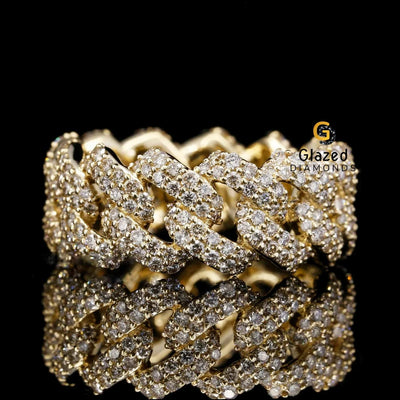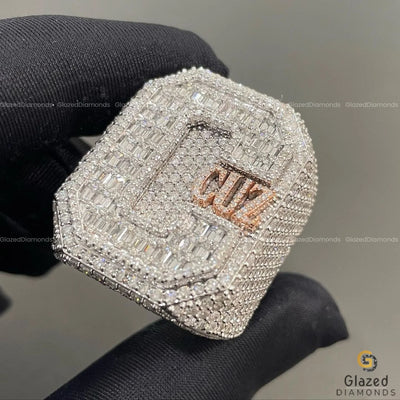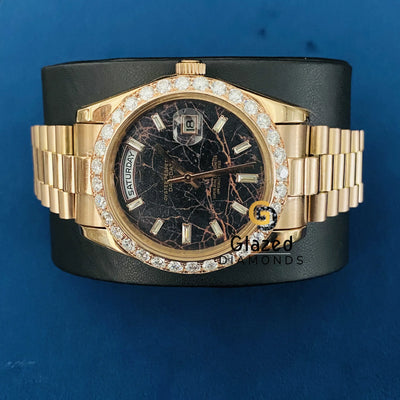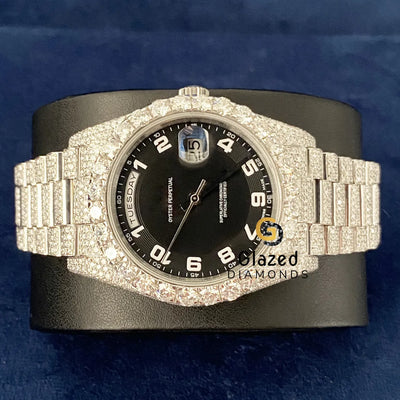


Real moissanite is a genuine gemstone used in moissanite watches and jewelry, with unique properties that make it easy to identify from diamonds and fake stones.
Knowing what you have — or what you're buying — protects your money and removes the guesswork from every purchase.
What is Moissanite?
Moissanite is a gemstone made of silicon carbide (SiC). It was first discovered in 1893 by French chemist Henri Moissan inside a meteorite crater in Arizona. Natural moissanite is extremely rare — almost all moissanite sold today is lab-created, which makes it a genuine synthetic gemstone, not a fake one.
It ranks 9.25 on the Mohs hardness scale, just below diamond at 10. It has a refractive index of 2.65–2.69, which gives it more brilliance and fire than a diamond. These are measurable, documented properties — not marketing claims.
Moissanite is a real gemstone. It is not a diamond, and it is not a diamond substitute. It is its own stone with its own properties. For a deeper look at the science, the guide on what is moissanite breaks down its origin, composition, and grading in full detail.
How to Tell If Moissanite Is Real
1. The Double Refraction Test
Moissanite is doubly refractive. When light passes through it, the facet edges appear doubled when viewed from the side with a loupe or 10x magnification. Diamond is singly refractive — no doubling. Cubic zirconia is also singly refractive.
This is the most reliable at-home optical test. Look through the side of the stone at the bottom facets. If you see doubled lines, the stone is very likely moissanite.
2. The Diamond Tester Test
Most standard diamond testers read moissanite as diamond because both stones conduct heat at similar rates. So if your stone passes a basic thermal diamond tester, that does not confirm it's a diamond — it may well be moissanite.
More advanced testers with a moissanite setting (sometimes called dual testers or multi-testers) can distinguish between the two by measuring electrical conductivity alongside thermal conductivity. Moissanite conducts electricity. Diamond does not. A dual tester will identify moissanite accurately.
A basic tester result alone is not proof either way. Use a dual-mode tester for a definitive reading.
3. The Brilliance and Fire Test
Under light, moissanite produces strong rainbow-colored flashes — more than diamond. This is its characteristic "disco ball" effect caused by its high dispersion rate (0.104 vs diamond's 0.044). Cubic zirconia produces flashes too, but the color separation is less sharp and the stone loses brilliance quickly with daily wear.
Real moissanite holds its sparkle over time. CZ dulls noticeably within months.
4. The Fog Test
Breathe on the stone directly. Diamond clears within one to two seconds because it doesn't hold heat. Moissanite also clears quickly — usually within two to three seconds. Glass or low-quality imitations stay foggy for five seconds or longer.
This test is not definitive on its own but works well as an initial check.
5. Check for a Certificate
Genuine moissanite often comes with a GRA (Gemstone Recognition Authority) certificate or similar documentation. A certified moissanite stone will have lab-verified details including cut, carat equivalent, clarity grade, and color grade.
No certification doesn't automatically mean fake — but certification confirms authenticity and quality. When buying moissanite rings or moissanite engagement rings, always ask whether a stone comes with documentation. For more on what certificates cover, the page on moissanite certificates explains the grading system clearly.
Moissanite vs Diamond vs Cubic Zirconia: Comparison Table
|
Property |
Moissanite |
Diamond |
Cubic Zirconia |
|
Hardness (Mohs) |
9.25 |
10 |
8.5 |
|
Refractive Index |
2.65–2.69 |
2.42 |
2.15–2.18 |
|
Refraction Type |
Double |
Single |
Single |
|
Brilliance |
Very high |
High |
Moderate |
|
Durability |
Excellent |
Excellent |
Good (dulls over time) |
|
Passes basic diamond tester |
Yes |
Yes |
No |
|
Passes dual moissanite/diamond tester |
Identified as moissanite |
Identified as diamond |
Reads as neither |
|
Price vs diamond |
Significantly lower |
Highest |
Lowest |
Understanding moissanite vs cubic zirconia is useful for anyone evaluating stones on a budget, since CZ is commonly sold as moissanite by lower-quality vendors.
Does Real Moissanite Look Fake?
No. High-quality moissanite — particularly DEF colorless grades — looks nearly identical to a diamond to the naked eye. The only visual difference most people notice is the stronger rainbow fire moissanite produces under direct lighting.
Low-quality moissanite or stones with yellowish or greenish tints can look less convincing. Always check the color grade when purchasing. D, E, and F grades are colorless and the most visually comparable to diamond.
VVS moissanite jewelry refers to stones with Very Very Slightly Included clarity grades — meaning near-zero inclusions visible even under 10x magnification. This grade is the most popular for iced-out pieces, moissanite bracelets, and statement rings because the stones are eye-clean with maximum light return.
How to Spot Fake Moissanite
Not all stones sold as moissanite are genuine. Watch for these red flags:
-
No certificate or documentation from a recognized lab
-
Extremely low price below market average for moissanite
-
Fails the double refraction test — single refraction means it's likely CZ or glass
-
Dulls within weeks — real moissanite does not lose brilliance with normal wear
-
No readable facet doubling under 10x loupe
Fake moissanite is usually CZ or glass sold under the moissanite name. The double refraction test and dual diamond tester eliminate guesswork fast.
Conclusion
Real moissanite is a durable, brilliant gemstone with measurable properties that distinguish it clearly from diamond, CZ, and imitations. The double refraction test, dual diamond tester, and certification check are the three most reliable ways to confirm authenticity.
Moissanite is not trying to pass as a diamond. It is its own stone — harder than most gems, more brilliant than diamond under certain lighting, and built to last decades with proper care.
For anyone researching moissanite rings, chains, or watches, the full range of certified pieces is available at Glazed Diamonds, where each product listing includes stone details to support your buying decision.
FAQs
Is moissanite a real stone?
Yes. Moissanite is a real gemstone composed of silicon carbide. It occurs naturally but is extremely rare, so virtually all moissanite sold commercially is lab-created using a controlled growth process.
Will moissanite pass a diamond tester?
A standard thermal diamond tester will read moissanite as diamond because of similar heat conductivity. A dual-mode tester that also measures electrical conductivity will correctly identify moissanite as a separate stone from diamond.
How can you tell moissanite from CZ?
The most reliable method is the double refraction test. Moissanite is doubly refractive — facet edges appear doubled under magnification. CZ is singly refractive. Moissanite also holds its brilliance long-term while CZ dulls quickly with wear.
Is moissanite the same as a lab diamond?
No. Moissanite is silicon carbide (SiC). Lab diamonds are carbon (C), chemically identical to mined diamonds. They are different materials with different optical and physical properties.
Does moissanite look fake in an engagement ring?
High-grade colorless moissanite looks virtually indistinguishable from diamond to the naked eye. For moissanite engagement rings specifically, the stone's brilliance is often considered superior because of its higher fire and light dispersion.
What is natural moissanite?
Natural moissanite is moissanite that formed in nature, first found inside a meteorite in Arizona in 1893. It is so rare that natural moissanite gemstones are essentially unavailable for commercial jewelry. All moissanite in jewelry today is synthetic — meaning lab-created, not fake.